
A city within a city
If the term "territory" is more appropriate for our naval schools, then for the American Naval Academy - "city" or even "state" is more suitable. Supreme power in Annapolis is exercised by the superintendent, Vice Admiral Richard Naughton, who is called the president behind his back, and getting an audience with him is probably as difficult as with the master of the White House himself, although the superintendent's residence, fenced off with "private property" signs, is located near the entrance. Officers' houses are not equipped with warning signs, but they are named - on the top step of the porch, the military rank and full name of the owner are written out. Streets and structures also have proper names. The midshipmen's dormitory, for example, is called Bancroft Hall - in honor of John Bancroft, the commander of US land and naval forces, who founded the academy. It is claimed that this is the largest dormitory in the world, with corridors stretching eight kilometers.
And it all started with a small army fort and ten acres. Today, the US Naval Academy has 330 acres of well-kept land, its own small training fleet, a yacht club, a complex of educational and sports facilities, as well as its own training nuclear reactor. During our visit, all academic squares and avenues were covered with snow. But for some reason, no one came out to fight the snowdrifts. No matter how closely we looked, we never managed to see a midshipman with a shovel: the American naval administration in principle considers it irrational to use a future naval officer, whose training costs the country $285,000, for maintenance work. A special company with appropriate snow-clearing equipment has been hired for these purposes. But since forecasters promised the imminent arrival of spring, the maintenance workers were clearly in no hurry.
Ladies and gentlemen
Rumors that only children of wealthy Americans study at Annapolis are greatly exaggerated. Rich slackers prefer universities with less strict rules.
The Naval Academy is an educational institution mainly for people from the middle class, who after graduation (only 80% of midshipmen make it to graduation) get the opportunity to break into the highest circles of society. For example, Jimmy Carter, a 1947 graduate, became president and Nobel laureate. Another Nobel laureate who received his education at Annapolis is Albert Michelson, an 1873 graduate, who very accurately calculated the speed of light. The honorary lists of graduates of the US Naval Academy in Annapolis also include 200 congressmen, presidents of five hundred leading American companies, three chairmen of the Joint Chiefs of Staff, four thousand admirals and generals, and 54 astronauts.
For example, the commandant of midshipmen, Captain (first rank) Joy Lidig (the second person at the academy after the superintendent), does not hide that with his not very wealthy parents, he could only get an elite education at Annapolis. True, this required a recommendation from a member of Congress. Some current midshipmen even entered the academy with a recommendation from the US President. But these texts with influential signatures do not give advantages upon admission. Last year, out of 14 thousand applicants, only 1,200 people were accepted.
20% of freshmen are women. Moreover, no discounts for the weaker sex are given. A lady in the American Navy must be able to do everything that men do. The last male bastion in the US Navy, where the fair half of American humanity is not yet allowed, is submarines, but it too can fall at any moment under the onslaught of emancipation.
Here, apparently, it should be clarified that a recommendation for admission to the Naval Academy is not a form of patronage, but a kind of guarantee. The person recommending, as it were, vouches with his good name that his protégé will under no circumstances disgrace the honor of a true American and Naval officer, and is generally worthy of belonging to the caste of the elect.
By the way, the first commandments in the midshipman honor code are by no means political: not to lie, not to steal, not to cheat, and not to tolerate these ungentlemanly qualities in others. That is why no one hides bags, personal computers, or wallets (a midshipman receives a stipend of $600). In the entire history, only one case of theft has been noted: a former graduate took a memorial saber from the academy museum. After his death, it surfaced at an auction and, with the assistance of the FBI, returned to its rightful place.
Lying is also punished extremely severely - up to expulsion. True, the suspect has the opportunity to defend his name before the midshipman council and even, as in a real court, present witnesses on his behalf. If the council finds him guilty, the final word belongs to the commandant. Only he is authorized to show mercy. But if the midshipman council hands down an acquittal, however badly the commandant might feel about the suspect, he is obliged to carry out the will of the council.
According to Lidig, he cannot recall a single conflict at the academy on religious or ethnic grounds, much less fisticuffs - that is not gentlemanly. And Captain Lidig says without any false modesty: "To lead the best young people of America is a great honor for me!"
Plebeians and patricians
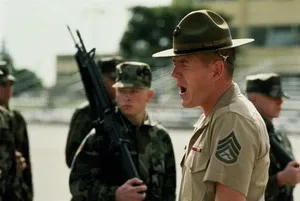
Special attention should be paid to the pedagogical and educational experience developed in Annapolis. There is no hazing here so familiar to us, which the Soviet Army fought unsuccessfully and our own army continues to fight just as unsuccessfully. More precisely, it exists, but in an official form. First-year students in Annapolis are called plebes. They are not allowed to leave the town, must always be in uniform, must always walk in step, they are forbidden to appear in places of entertainment, and during working hours they are required to keep the doors of their rooms open. Not only an officer, but also every senior student has the right and is simply obliged to "help the plebe get used to military reality" in every possible way. Simply put, seeing a plebe, he is entitled to examine him in any discipline, check the order in his room, and punish him with socially useful work. But at the same time, the younger one must not be insulted or used for personal purposes. As, for example, is done in our country.
What is fundamentally important is that all senior midshipmen, the entire academy community, participate in the upbringing of young people. The main goal is to teach yesterday's schoolchildren to obey. The second stage is to teach them to command, to make leaders of them, but this happens already in the senior years. And before that, as they say, one has to live to see it, which, alas, is not achieved by everyone.
Incidentally, after graduating from the American naval academy, you can become not only a naval officer, but also a naval aviator and even a marine. The final decision is made after the third year. But even earlier, the midshipman has to choose an academic specialty: weapons and power engineering, exact sciences, or humanities. Those who give preference to the humanities are required to study foreign languages. Russian, because of its difficulty, is not particularly popular. But for Midshipman Peter Zhukov, a third-generation emigrant, it is almost native. David Buck (nicknamed Benzobak) lived in Russia with his parents for two years and chose Russian out of sympathy for our young ladies. He says that he would not advise even an enemy to marry an Annapolis graduate—she would turn the family hearth into an aircraft carrier in one stroke.
One can believe that. But Lieutenant Julia Mason, the academy champion in the 100-meter breaststroke, found a way out: her chosen one is a Marine Corps officer. Only a real "leatherneck" could resign himself to the fact that his fiancée comes to dates in uniform. Actually, US Navy midshipmen even have 25 different uniform variants, from dress uniform for receptions to bath uniform. But Julia will most likely get married in a white dress and certainly in the academy chapel—this right is raffled off with lottery tickets. What can you do—there is a considerable queue for ceremonies in the country's main naval church.
There are also some problems with parking for midshipmen's cars. In one classroom we found a bunch of midshipmen poring over some sheets of paper. We thought they were writing letters to their homeland. It turned out they were applying for car loans. This is allowed after the third year. The older the midshipman, the more freedoms he has.
A citizen
must be
As already noted, Annapolis graduates receive their specialization in the branches of the naval forces already outside the academy walls, at special training centers. Here they are given basic knowledge and instilled with civic qualities. Simply put, they are taught to love America and American society in all its manifestations—national and confessional.
On the day when the correspondents of "Itogi" were at the academy, the midshipmen were offered Mexican cuisine for lunch. At King Hall, almost in the literal sense, 4,300 people gathered at one table at once—the entire complement. Somewhere in their ranks were three Lithuanians, one Estonian, and one Kyrgyz, who, after graduating from the academy, will presumably lead the "Issyk-Kul lake flotilla." And in general, representatives of 20 foreign countries study at the US Naval Academy.
Incidentally, the founder of the American navy, John Paul Jones, received the rank of admiral while serving in Russia. Then intrigues began at the court of Catherine II, and the admiral had to leave for France. When they decided to transfer his ashes to Annapolis, there was no trace of the grave. The burial of the Russian-American admiral was identified by its characteristic smell—his coffin was filled to the brim with high-quality wine alcohol. Americans laugh: "He was a real admiral!"
But that was probably the last hard-drinking sailor of the States. Now both at the academy and in the US Navy there is a strict dry law. And if one of the midshipmen violates this rule or, say, uses a hint program on exams, the person who notices the violation must inform the command.
From our point of view, that is an uncomradely act. From the American point of view, it is civic. As the director of educational affairs, Captain Robert Schultz, explained to us, a real military sailor must have the constitution and laws first, and only then comradeship. And collectivism is understood completely differently there. A military collective is considered united when a class can do something together. And for plebes there is a special ritual for this occasion. They must, leaning on each other, climb up the specially greased stele (Herndon Monument) and remove from its top a previously placed uniform cap. A joke, a game—but it looks absolutely amazing.
But in the US Naval Academy, one is not persecuted for words and beliefs. According to Captain Schultz, many midshipmen, and officers too, do not support the war in Iraq and do not approve of the preventive war doctrine developed by the George W. Bush administration. Even convinced Marxists are not going to be persecuted here. But, true, only as long as they have not moved from words to deeds. Then it is a different conversation. Your beliefs must not prevent you from loving America and defending its interests!
Since 1945, the United States has participated in 270 wars and various combat episodes. In 255 cases, the navy was used. Such statistics allow Americans today to consider themselves the world's first maritime nation and to treat the British somewhat condescendingly. Of course, British history and US history are difficult to compare. Perhaps that is also why Americans have not erased a single page from their past. There is no such concept as "forgotten wars" here, and veterans of all armed conflicts are equally honored. It does not matter whether Americans were victors or vanquished in them.
After classes end, the United States Naval Academy in Annapolis goes into Brownian motion. Everyone runs here. They say that you can even catch the superintendent on the academy's alleys. Therefore, apparently, it is almost impossible to find a portly admiral or general in the US armed forces. Excess weight is like a sentence to early retirement. And no one in America is in a hurry to part with their epaulets ahead of time. And not only because serving in the army or navy is a very profitable occupation. As it seemed to us, Americans in general are quite vain, and military service is considered one of the three most respected professions in society, after the president and senator. Especially if you graduated from the Naval Academy in Annapolis.
Nikolai ZIMIN,
Oleg ODNOKOLENKO.