
Indigenous residents of picturesque corners of the world demand protection from crowds of foreign tourists
However, neither on postcards nor in guidebook brochures will you ever see demonstrations of local residents demanding to be shielded from crowds of annoying tourists who literally make their lives unbearable.
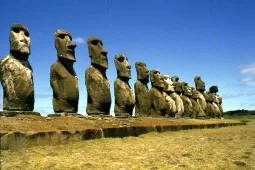
In early September, the First Deputy Minister of Internal Affairs of Chile, Patricio Rosende, flew over three thousand kilometers to Easter Island. He did not undertake the long journey to admire the stone statues. The high-ranking official spent two days unsuccessfully trying to persuade local residents to turn their wrath into mercy.
Easter Island is always crowded. The island is unlucky because it is a transit point on the way from Chile to Tahiti. The 5,000 islanders believe that crowds of tourists will soon lead their volcanic island to an environmental catastrophe. In August, they blocked the only airport, Mataveri, pitching tents on the runway and blocking it with trucks. "We are only asking the government to better control those who come to the island," says Luz Zasso, the mayor of Easter Island. "For example, we want them to have cards that show the purpose of their visit and what they plan to do on the island. On the Galapagos Islands, by the way, such a system is already in place."
On the Galapagos Islands, restrictions on tourists have indeed already been introduced. Their numbers have grown more than fourfold in less than 20 years – from 40,000 in 1990 to over 170,000 last year. In 2007, 2,173 flights were made to the Galapagos, not to mention thousands of ships. The loudest voices for limiting tourism come from ecologists. Just a few weeks ago, scientists found a malaria mosquito that threatens the unique ecosystem of the islands. It was brought to the Galapagos by tourists. The situation is not simple. Two years ago, the Galapagos Islands were included in the UNESCO list of 31 World Heritage Sites that are in danger of destruction.
Residents of not only exotic Pacific islands are dissatisfied with tourists. Even in Venice, voices are growing louder, calling on the Italian government to limit the number of foreign visitors. Enrico Mingardi, head of Venice's public transport department, recently proposed only accepting tourists who notify in advance of their arrival. Moreover, it is not allowed to reschedule the visit. Opponents of such radical measures, which they incidentally call undemocratic, suggest persuading visitors to visit less famous but equally beautiful sights of the city, rather than crowding only in St. Mark's Square, where there is no room to drop an apple at any time of the day.
Meanwhile, the President of the Maldives, Mohamed Nasheed, plans to impose a "green" tax on tourists. Foreigners coming to this island nation in the Indian Ocean will be charged three dollars per day, which will go towards mitigating the consequences of their stay, among other things.
The lion's share of tourism revenue, which tourists themselves love to talk about, leaves the country and goes to large travel companies and tour operators. As for local residents, whose lives are often literally poisoned by tourists, they get only meager crumbs, for which they have to pay with damaged ecology, loss of peace, and other troubles. The exchange is clearly unequal, so more and more residents of tourist attractions are beginning to wonder: do they even need this tourism?
Sergei LAVINOV.
Novye Izvestia