
To see all the diversity of Silesia, you need to travel across the entire voivodeship from north to south.
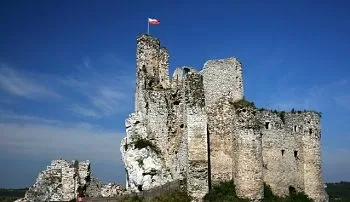
– Three days means three different subregions, as we call them. The northern one is the Kraków-Częstochowa Upland, that is, the Jurassic Upland. This unique territory, the only one in Poland (in Europe there is also one in France), consists of limestone rocks of various shapes protruding above the surface. The upland is dissected by deep river valleys. On these white rocks in the 15th and 16th centuries, defensive structures – castles and fortresses – were built.
Two tourist routes run through the upland: the 'Eagle Nests Trail' and the 'Jurassic Fortifications'. By the way, the 'Eagle Nests Trail' is the first hiking trail created in Poland; its length is 163 kilometers. Today it exists in both hiking and cycling versions.
After one day on the Upland, after admiring the most beautiful landscape views, I suggest our tourist come to historical Silesia. And here again we need to talk about uniqueness, because it is one huge agglomeration, that is, a cluster of cities. Leaving one city, you immediately enter another, and the borders between them are not visible: you were just in Bytom, and now you are in Ruda, and five minutes later in Bytom again, because the borders between cities do not run along straight roads.
The agglomeration has 2 million 700 thousand inhabitants, making it the largest in Poland if considered as one urban organism, with cultural and industrial heritage. All these cities arose around deposits of black coal, which was mined here and used first in blacksmithing and then in metallurgy.
An example is the city of Zabrze and its Guido mine. Three levels are open to tourists: at a depth of 170 meters underground – for children and schoolchildren; 'level 320' – for adults, there is also a business zone with conference rooms, a concert hall, and a pub. The deepest level of the Guido mine is 355 meters underground. Here there is an extreme route through the mine, which is in a state as if the miners had left it yesterday. Tourists change into work clothes, put on rubber boots and helmets with flashlights – and the excursion with elements of mine work lasts 4 hours.
Modern cities are so densely built that it is impossible to place, for example, large exhibition halls in their center. And in the center of Katowice, the International Congress Centre was built, with an area of 8 thousand square meters. The largest business events in Europe are held here. In the cultural zone there are other objects worth visiting: the new building of the Museum of Silesia, which is essentially underground, and the building of the National Polish Radio Symphony Orchestra.
Well, and on the way to the Beskids, you can also visit Pszczyna. This area, which was once the center of the Duchy of Ples, is called the pearl of Upper Silesia. It is connected with a story that unites Poland and Great Britain. Here was the residence of Princess Daisy, wife of the owner of the Pszczyna lands. Now in her palace there is perhaps one of the largest museums of interiors, with furniture and objects almost 100% original.
And so we reached the Beskids – this is the third day – that is, our mountains, which some call hills. Yes, the Beskids are low but very beautiful mountains, covered with forests. Here you can engage in active tourism, hike in the mountains, and simply enjoy the beautiful views. I recommend visiting two cities – Żywiec and Tychy, where beer of two most famous Polish brands – 'Żywiec' and 'Tyskie' – is produced.
As Polskie Radio notes, by following the advice of the director of the Silesian Tourism Organization, Agnieszka Sikorska, you can visit and fall in love with Silesia in just three days.