
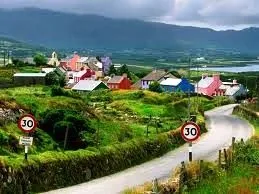
Up to the end of the year, hundreds of thousands of residents may leave Ireland in search of work abroad
According to forecasts, around 100,000 people will leave Ireland by the end of 2010. Pessimists suggest that the exodus could be even larger.
The latest wave of emigration, like a century and a half ago, is caused by the dire economic situation. But there are differences, primarily in geographical destinations. While in 1846-1851 the Irish went to America and Britain, now, according to the "Work Abroad" exhibition held at the RDS conference center in Dublin, the destinations are Canada, Australia, and the Persian Gulf states.
The last time there was a significant exodus of Irish workers was during the economic crisis of the 1980s. But then, however, the situation was quickly rectified thanks to decisive government action. The reduction of corporate taxes led to an influx of huge foreign investments, mostly from the United States. Thanks to low taxes, major American companies such as eBay, Facebook, and Google set up their European headquarters in Ireland, creating thousands of well-paid jobs.
Money from abroad helped create the "Irish" economic miracle. In the 1990s and the 2000s, emigrants began actively returning home. There were so many "returnees" that two years ago, shortly before his election defeat, former Prime Minister Bertie Ahern boasted loudly that he had broken Ireland's centuries-old curse – the export of Irish people.
However, the boom was financed mainly on borrowed money. "In 2003-2007, to finance the inflation of the construction bubble and the real estate bubble, the Irish banking system imported money equivalent to 50% of GDP," said Patrick Honohan, director of the country's central bank.
During the years of rapid economic growth, cheap loans were almost forced upon the Irish. Bankers advised clients to take out mortgages for 120% of the inflated value of their homes and apartments and spend the money on vacations abroad or buying new cars. The financial crisis put an end to these excesses. The construction boom stopped literally within days. First, German architects and Polish builders went home. Then other foreign workers followed, and then the Irish themselves began to pack their bags.
The official unemployment rate in the country is 13.6%, but according to trade unions, it is actually 20%. Every week, 10,000 people lose their jobs, and at Dublin International Airport, heartbreaking scenes of wives saying goodbye to husbands, parents to sons, brides to grooms can be seen daily. The vast majority of those who remain are barely making ends meet, don't know how to pay mortgage interest, and often lose their homes. Not surprisingly, last year there were 345,000 vacant houses in the country.
In the last three years, the Irish securities market has lost 75%, and commercial property prices have fallen by 65%. As usual, the financial system, which handed out cheap loans left and right, mainly for the construction of hotels, office buildings, and shopping centers that nobody needs now, found itself in the most difficult position. As a result, the debt of Irish banks to the European Central Bank now stands at €45.2 billion.
Two years ago, the Irish government announced plans to rescue five major banks, including the largest state-owned Anglo Irish Bank, whose debts amount to €25.7 billion. For a small country, this is a huge amount of money – for example, annual tax revenue is €24.9 billion. In Ireland, they wait not three years but two for what was promised: the exact figures for state support of the banking sector were announced at the very end of last week. To survive, bankers will need €30.4 billion, which is more than the entire national debt of Ireland before 2007. The rescue of the financial sector will cost each family €30,967. If the government keeps its two-year-old promise and buys the banks, the budget deficit this year will be 32% of GDP.
Portugal, Italy, Greece, and Spain, the most troubled countries in Europe, have already adopted austerity measures. Ireland, which finds itself in a very difficult situation now, still has to do so. Dublin, if it wants to get loans from the IMF and international financial markets, will be forced to take similarly unpopular measures in December when the budget for the next year is adopted.
Sergey Manukov. 