
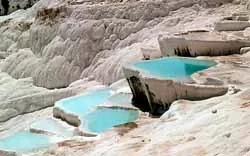
Pamukkale - a picturesque spot and an amazing natural phenomenon - is located in Western Anatolia, north of the city of Denizli and 250 km from Antalya Airport. This area is rich in hot thermal springs. Discharges of hot waters containing calcium oxide have led to the formation of limestone deposits on rocky travertine terraces. This created a stunning effect: waters rich in mineral salts, falling from high ledges, formed whimsical, fossilized snow-white cascades and artificial pools formed by hot springs. The water in them contains a lot of lime and carbon dioxide, and therefore has healing properties. Pamukkale translates from Turkish as 'cotton castle'. And indeed, from afar, this snow-white mass conjures up images of huge cotton plantations.
Unfortunately, the preservation of this national park was under threat a few years ago. The desire to touch the natural wonder arose in such a large number of tourists that the fantastic rocks began to lose their whiteness. So the main part of the mountain is closed today for walks and swimming. But nevertheless, experts assure that not everything is so sad - new hot springs may be born in these mountains.
The healing properties of the waters of Pamukkale have been known since ancient times. According to legend, the waters of Pamukkale became the source of eternal beauty for the famous Egyptian queen Cleopatra, who knew a lot about rejuvenating procedures. She often bathed in a pool on the mountain, which today is named after her. Perhaps this is just a legend, but it is known for certain that the ancient city of Hierapolis was built near the thermal springs. Archaeologists call this city holy; there were indeed many churches and sacred places. After all, according to legends, the healing springs possessed mystical powers, the gods of health and healing granted these waters their favor and mercy, and therefore people built temples around them, as well as treatment centers, baths and bathhouses. Today, the remains of several Roman baths, monumental gates with two towers, magnificent sculptures and reliefs have been preserved.
From any Mediterranean hotel in Turkey, tourists are offered a one- or two-day excursion to Pamukkale and the ancient city of Hierapolis. But in the course of one short excursion, it is impossible to appreciate the unusual beauty and healing properties of these places. For miraculous treatments, it is worth going for a week, while a wellness tour can easily be combined with a seaside vacation.
In the vicinity of Pamukkale and in the Denizli area, there are decent hotels that offer a range of wellness and therapeutic programs based on the waters of local thermal springs. For example, balneotherapy: hyperthermic and isothermic baths with thermal water, mud applications (used on doctor's recommendation). Physiotherapy involves individual and group physical exercise sessions in the thermal pool, as well as physiotherapy procedures that help relieve muscle tension, improve blood circulation and remove toxins from the body.
Mud therapy - applying mineral-rich therapeutic mud to various parts of the body. This has a therapeutic effect for various skin diseases, depression, migraines, neurological diseases, stress, gynecological diseases, and also helps strengthen the nervous system and remove toxins from the body. Procedures such as thalassotherapy, aromatherapy, anti-rheumatic therapy, courses for treating dermatological diseases including psoriasis, as well as weight loss programs and anti-cellulite procedures are also offered. In addition, resort hotels use mud and drinking mineral waters to treat diseases of the digestive system, and also offer anti-stress programs.
Currently, given the interest of tourists in wellness holidays, the Turkish government plans to build four thermal villages in the Denizli resort area, which will be declared tourist zones. They plan to build everything necessary for travelers: besides hotels, also restaurants, shops and amusement parks. The issue of building new resort areas is already being considered, so it is possible that in the near future tourists will get new hotels offering wellness and medical treatments. For now, one should look at hotels near Pamukkale, such as Colossae Hotel Thermal (five-star), the four-star Richmond Hotel and Thermal Hotel Pam. Each of them offers a whole set of medical, wellness and rejuvenating procedures. There are also pools (indoor and outdoor) with natural thermal waters, and that is enough to feel more energetic and younger.
• It is worth noting that when building new hotels, investors pay special attention not only to their location but also to their equipment. And upon completion of construction, future accommodation for tourists is equipped with the most modern technology, and furniture for hotels is ordered with an eye to comfort for guests and convenience for staff. As a result, guests of the new hotel are pleasantly surprised by the interior design of their rooms and often become regular customers.