
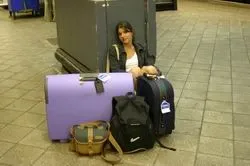
EXPERIENCED STUDENTS TRAVEL WITH DISCOUNTS
Signs of student life hardly change from year to year and from country to country. As many years ago, today a real student easily exchanges the comfort of home warmth and the taste of mother's treats for the freedom of a dormitory with eternal boiled sausages. However, if the best institute memories of the parents of today's students are limited to multi-day hikes in the mountains and baked potatoes with songs around the campfire, the new generation can boast of trips around the world on pocket money earned during the summer.
To help students see the world, 56 years ago, on the initiative of UNESCO, the International Confederation of Student Tourism was created. It accumulates discounts that transport companies, restaurants, cinemas and museums in different countries are ready to provide to students. To get all discounts and privileges at once, you need to apply for one of three cards: the international student identity card - ISIC (International Student Identity Card), Go-25 or Euro-26. The cost of the card does not exceed €10, and its validity period is from one year to sixteen months. To get it, it is enough to have one photo and a passport, preferably a foreign one. The funniest thing is that a student ID is not required, so any young person from 12 to 25 years old can get the card - age is the only restriction.
Any of the cards allows you to feel like a VIP client of most airlines, get access to museums and restaurants around the world with a significant discount, exchange currency at train stations and airports without commission, and call other countries at special reduced rates. You can fly within European countries for just €30 and change dates even on the cheapest air tickets with virtually no financial losses. So the main thing for today's student traveler is not to have a lot of money, but to know where and how they can save.
How to get there
Usually, the largest share of travel expenses comes from flights and transfers. However, discounts and privileges for students begin already at this stage.
First, most major airlines allow student travelers to book the cheapest tickets in advance and buy them just one day before departure. Moreover, you can buy a ticket in one direction only for half the fare, or in both directions, but with an open return date. If you bought a round-trip ticket with fixed dates and then decided to extend your trip for a few more days, the return can be rescheduled repeatedly within 364 days. True, you will have to pay an additional $25 to $50 for each such rescheduling.
Second, numerous discounts allow you to save up to $100 on the purchase of an air ticket. Moreover, unlike an exam, a student card holder can safely oversleep the departure of their plane: in this case, within a year the ticket can be exchanged or returned with minimal losses. If you return the ticket before departure, your money will be fully refunded - this allows you to change the date and place of departure home repeatedly throughout the year as you wish. As a result, a student can afford to travel "by air" for almost the same money as by bus or train.
Another way to save money during air travel is to use the services of so-called low-cost airlines. In Europe and America, this format is not new - since 1994, more than 60 discount airlines have appeared. So, you can often see offers for air travel from London to Paris for just $30. You need to look for these cheap tickets on the Internet, which is not a problem for most students, but you can only pay for them with credit cards, which is already more difficult.
Low-cost airlines reduce prices by using inexpensive municipal or private airports, identical aircraft (most often Boeing 737 and Airbus A320), which have only economy class service. You cannot count on additional services on board: low-cost airlines do not provide food, drinks, or newspapers. Although, as a rule, flight times do not exceed 1.5-2 hours, so there are enough students willing to put up with such minor inconveniences. The rules for buying tickets from these air carriers are the same as those of traditional ones: the earlier you book a seat on the plane, the cheaper the ticket will be. Favorable fares are usually not at the most convenient times: the biggest discounts are on night or morning flights from Tuesday to Thursday. Moreover, searching for tickets, if you want to plan the entire trip, will take quite a lot of time: as a rule, low-cost airlines do not provide fare schedules for a long period.
Special discounts for students during international train or bus travel are quite rare. But you can count on them in the host country. So, in London, holders of international student cards receive 20% discounts on public transport fares; in France and Holland, students will save 10% on buses and metro; in Spain - 25%; in Finland and Ireland - half price. In Sweden, you can travel at half price only by bus and only on weekends, and you can travel around Egypt by train with a 50% discount even all day long. In Canada and Austria, any rail travel will cost 40% less; in the USA, card holders will pay 15% less for bus travel. In South Africa, train travel costs students three quarters of the price.
You can also rent transport with a discount: large companies in Germany are ready to knock a quarter off the price for students; in Italy, renting a car, motorcycle, bicycle, or scooter will cost a student identity card holder 20% less.
Where to stay
The next fairly significant expense item is accommodation. However, students can count on special conditions here as well: many hotels in Europe, South America, the USA and Canada are ready to accommodate them on particularly favorable terms.
For example, in Canada, discounted accommodation is available in hotels in Calgary and Ottawa. US hotels offer rooms with 10-15% discounts. And in Chile and Argentina, during the holiday season, schools and churches are ready to provide students with their premises for overnight stays free of charge. In the UK and Finland, hotels offer students rooms with discounts of 10-50% depending on the season, and in England you can find offers from 15 pounds per night. In Germany, hotels attract with prices from €15 per night, and in some hotels in Greece, every fourth night is on the house. In Spanish hotels, student status allows you to knock up to €30 off the room rate, and in cheap Italian hotels you can live with a 20% discount and not pay for every seventh night. In Denmark, as in Latin American countries, there is a system of 'rooms for one night': from mid- to late August, you can stay in them for one night free of charge.
Students without cards and without a persistent habit of comfort can reduce their living expenses even more by staying in so-called hostels - small hotels with guaranteed cleanliness, but with showers and facilities on the floor and sleeping rooms that can accommodate up to 30 people at the same time.
The beginnings of hostels were laid many centuries ago by roadside inns that offered cheap overnight accommodation to undemanding travelers. However, the first hostel in today's sense of the word appeared only in 1907, when German teacher Richard Schirrmann began providing travelers with overnight accommodation in school classrooms for a very modest fee. After classes, all the school desks were moved into the corridors, and sacks of straw were spread on the floor. By tradition, in the morning the travelers helped sweep the floor and put all the desks back.
A century later, hostels have changed a lot. Just a few years ago, it was a place exclusively for overnight sleep, which after a not quite filling breakfast, usually consisting of a cup of coffee and a toast with butter and jam, had to be left by a certain hour. Now, however, the inscription 'no lockout' increasingly appears on the list of accommodation conditions: this means that the youth hostel does not close at all during the day. If there is no such inscription, it is better to find out the hostel's opening hours in advance: for example, a 'no curfew' sign means that being late by a certain hour threatens a night outdoors.
Respectable hostels today are equipped with air conditioning, telephones, televisions and Internet access. However, despite all the changes, the democratic spirit in hostels remains - the cost of a night's stay is still equal to two cups of coffee. At the same time, the old good rule applies: 'the less money you have, the more friends you will have around you': in large hostels, up to 30 people can sleep in one room at the same time, and then in the morning long queues form in the corridor to take a shower.
Some hostels require booking places in advance - as a rule, this is done via the World Wide Web. However, in most of them, you can spend the night without prior arrangement.
When choosing a hostel, it is worth paying attention to the division of rooms in the description of the premises: in some of these youth hostels there is no division of guests at all, in others the sleeping rooms are divided by the 'M' and 'F' principle. Some hostels are equipped with kitchens - this allows you not to splurge on lunches in restaurants and cafes, but to cook yourself. At the same time, as a rule, it is here that you can find the most interesting entertainment: from excursions to haunted castles or gangster neighborhoods to invitations to closed parties and the most popular discos.
It is believed that the best value for money hostels are located in India: a night in a youth hostel will cost only $6. The most expensive will be accommodation in hostels in the UK - you will have to pay at least €18 per night. But even in London there are so many of them that you can choose accommodation with a view of the royal palace: for example, a night in one of these hostels with a view of Notting Hill will cost €31, a hostel a few minutes from Hyde Park offers rooms from ?18.5. In Paris, a night in a hostel with windows overlooking Rue Lafayette costs €25. If the view from the windows does not really matter, and you don't mind walking to the main city attractions, you can stay in one of the hostels on the outskirts of the city - this will help you save at least €10 per night.
Starting prices for accommodation in Madrid hostels are €15, and you will have to share the room with at least seven other guests. Those who are willing to pay ?20 per night can qualify for six-bed accommodation in youth hostels in the very center of the city. In Prague, hostels lure students with prices from €10.5 per night, in Dublin from €15, and in Rome from €15.5.
However, for domestic students, regular hotels have a significant advantage over hostels: the fact is that without a hotel room reservation, embassies often refuse to issue a visa, and getting a booking confirmation from a hostel can sometimes be very difficult. Therefore, only lucky holders of a multiple-entry visa can count on youth hostels.
How to have fun
Holders of international student ID cards can expect special treatment when visiting theaters, cinemas, museums, cafes and restaurants. For example, in Atlanta, Chicago and New York, students enter some museums for free, and in others with discounts of $2 to $4. Discounts on theater and museum tickets in Austria, Italy and Bulgaria upon presentation of a student card reach 50%, and in Germany some theaters can be entered by paying only 20% of the price.
In some internet cafes, student card holders can use the Internet for free and in unlimited quantities. Restaurants and bars have a special menu for students: for example, in the Netherlands you can have a substantial dinner for €7,5. In some cafes, card holders can get free drinks. However, it is better to ask about the card's benefits right away when visiting a cafe or restaurant: for example, in Norway, discounts do not apply on holidays.