
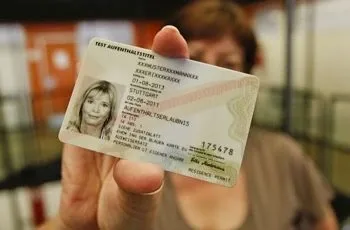
Deutsche Welle contacted the Foreigners' Office in Frankfurt am Main to understand the nuances of obtaining a work visa.
Is a work visa required for an internship?
If the internship in Germany lasts no more than 90 days, you need to apply not for a work visa, but for a Schengen visa for business visits (Geschäftsvisum). The application should be submitted before the trip at a German diplomatic mission. Since August 1, 2017, a new rule has been in effect, allowing students and graduates of non-European universities to complete internships in EU countries lasting up to six months. In this case, the visa is also arranged in advance in the student's home country.
Additionally, a work visa is not required if you are interning under scholarships from the European Commission, working as a foreign student during holidays, or participating in youth exchange programs lasting no more than three months. A full list of such programs can be found on the website of the German Federal Foreign Office.
How to obtain a work permit?
A work permit in Germany is issued for a specific job. This means that the applicant first submits documents, including the employment contract, to the embassy or consulate in their home country. Then the diplomatic mission sends a request to Germany, where the work permit is processed.
Usually, the decision is made by the Federal Employment Agency (Bundesagentur für Arbeit), sometimes this document is issued by the Foreigners' Office (Ausländeramt). In case of a positive response, the applicant receives a national visa with permission to work in Germany. With such a visa, they must contact the Foreigners' Office in Germany to obtain a residence permit (Aufenthaltserlaubnis).
Is a visa not needed with a Pole's Card?
If you have a so-called "Pole's Card," which gives the right to work in Poland, or a residence permit in another EU country, you still need a separate visa for employment in Germany.
For example, if you have a permanent residence permit (Niederlassungserlaubnis) in France or Italy but want to work in Germany, you still have to apply for a work visa for Germany. To do this, you must leave Europe and submit a visa application at a German consulate or embassy. Different conditions apply to holders of a permanent EU residence permit (Erlaubnis zum Daueraufenthalt-EU) – they can come directly to Germany and request a work visa.
Can you stay in Germany after studying?
Graduates of German universities can apply for a residence permit for job search (Aufenthaltserlaubnis zur Arbeitsplatzsuche) immediately after completing their studies. This rule applies to both bachelor's and master's graduates. Such a visa allows you to look for a job for up to 18 months. The document is issued only if you previously held a student visa (Aufenthaltserlaubnis zum Studium) in Germany.
Ukrainians cannot work without a visa
Since June 11, 2017, citizens of Ukraine with biometric passports can travel within the Schengen area without a visa. However, this does not mean they can now work in Europe without a work visa and permit.
Ukrainians can come to Germany as tourists, visit friends and relatives, or make business trips for no more than 90 days within a 180-day period. The recently introduced visa-free regime does not grant the right to employment.