
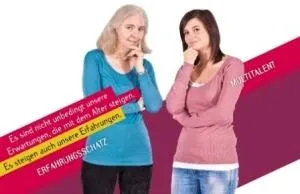
There is nothing surprising about the German population aging so quickly: German women are at the bottom of the birth rate list in Europe
The Eurostat annual report for 2011, consisting of 692 pages including 450 tables, photographs and maps, reflects the life of the 27 member states of the European Union. The main indicators for 16 "categories" are given for the period 1999–2009. They show, for example, that every fifth German is over 65. Their number in Germany is almost twice as high as in 1950; by 2060 it will almost double again, and the number of 80-year-olds could even triple.
A newborn German girl can expect to reach the age of 82 years and 7 months; a newborn boy must be content with 77.7 years. Meanwhile, the average age of residents in Germany is 43.7 years, which is the highest in the European Union. The life expectancy of the average European increases by 2-3 months each year, and the "youngest" in Europe are the residents of Ireland, with an average age of 33.8 years.
There is nothing surprising about the German population aging so quickly: German women are at the bottom of the birth rate list in Europe – 1.38 children! Compared to 1950, this figure has halved. Statistics show that the situation will only get worse, because with such low birth rates, the balance of immigration and emigration is also negative.
Back in 2009, 4.9 marriages per 1000 Europeans were concluded annually. In Germany, the answer to the priest's question "Do you take this woman/man to be your wife/husband..." is even lower: only 4.6 per 1000 residents. Cyprus stands out in this regard: 7.9 weddings per 1000 residents are registered there per year.
The most common causes of death for Europeans were heart attacks, strokes or cancer.
Another sad record has been set in Europe: 37.4% of all children were born out of wedlock! Twenty years ago, the figure was half that. In Germany in 2009, almost one in three children (32.7%) were born to unmarried mothers. The worst indicator was in Estonia (59.2%), the best in Greece (6.6%).
The mechanism to counter this development, in the opinion of EU Commissioner for Employment, Social Affairs and Inclusion László Andor, should be a "harmonious combination of family and work."
According to doctors, pensioners in Germany are now healthier than before, but Germans are breaking records in terms of being overweight! Almost every sixth German woman over the age of 18 is registered as overweight. And since the saying "the way to a man's heart is through his stomach" is true, the percentage of overweight people among the stronger sex is even higher.
The good news for the aging population is that the average 65-year-old European still has at least 8 years of healthy life. Most likely, writes «Русская Германия», in this regard the European Union declared 2012 the "European Year of Active Ageing" (Europаisches Jahr des aktiven Alterns).