
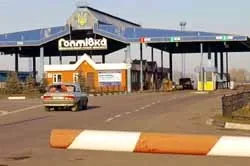
Photo: Ukrinform
Tajikistan, for example, is still being cautious. The authorities of this republic are clearly frightened by the possible consequences of unemployment of their citizens not only at home but also abroad. The government of Tajikistan, according to the Minister of Labor and Social Protection of the Republic, Shukurdzhon Zukhurov, has already made an official request to the Russian authorities to increase quotas for its citizens. According to Zukhurov, increasing the annual limit for Tajik guest workers from 600,000 to 800,000 people 'is necessary to legalize all labor migrants located on the territory of Russia,' since 'in the season (from March to October) this exact number of Tajiks go to work in various regions of the country.' The official expressed hope that 'Russia will assist Tajikistan, as a friendly country, in the planned transition to full legalization of labor migrants' activities on its territory.' Especially since the majority of Tajiks who travel to Russia for work, according to the minister, are employed in construction, and only 25% of his compatriots are engaged in trade.
The government of Ukraine is using harsher forms of appeals – it has already sent a note to the Russian Foreign Ministry and is now awaiting clarification of the new migration rules, which clearly contradict previously concluded agreements on a preferential regime for citizens of the two neighboring states on each other's territory. According to the head of the press service of the Ukrainian Foreign Ministry, Andriy Deshchytsia, 'Kyiv's concern was raised by the statement of the Federal Migration Service of Russia that these rules apply to all Ukrainian citizens,' including tourists.
State Duma deputy Konstantin Zatulin also spoke in defense of Ukrainian citizens, addressing a request to Prime Minister Mikhail Fradkov. In his address, the deputy recalled that since 2004, under a bilateral intergovernmental agreement, 'citizens of Ukraine have the right to stay on the territory of Russia without registration for 90 days, just as Russians do on the territory of Ukraine,' and pointed to the contradiction of this norm with the provisions of the Federal Law of July 18, 2006 'On Migration Registration of Foreign Citizens and Stateless Persons in the Russian Federation.'
The Federal Migration Service believes that the law has invalidated the old agreement, and all foreigners must register for migration within three days of crossing the state border of Russia. At least, the press service of the migration agency stated that now 'the provision on a three-month registration privilege that previously applied exclusively to Ukrainian citizens has lost force.'
It is possible that these acute issues became the subject of discussion at a closed government meeting on issues agitating guest workers, which Mikhail Fradkov held last week, fulfilling last year's promise to weekly monitor the implementation of the new migration policy. But perhaps more was expected from the government in terms of statements about a correction of market policy, the possibility of which was announced last week by Minister of Economic Development German Gref. The head of the Ministry of Economic Development gave hope to guest workers by suggesting that in the event of an unfavorable situation with food products in markets, the introduction of a complete ban on the use of foreigners in the trade sector could be postponed from April 1, 2007 to a later date. Discussion of measures to supply retail markets with goods from domestic producers was on the agenda of the mentioned meeting at the prime minister's. And judging by the absence of loud statements, the head of government did not see facts in the reports of his subordinates that would prompt him to back down and postpone the purge of markets from 'non-native' traders.
New rules are not understood in Russia itself
Ukraine and the Russian Federation intend to hold expert consultations on migration registration of foreign citizens on the territory of Russia. This clarification is posted on the official website of the Russian Foreign Ministry, referring to a meeting between State Secretary and Deputy Foreign Minister Grigory Karasin and the Ukrainian Ambassador to Russia, Oleg Dyomin. In particular, Karasin informed Dyomin about the essence of Russia's new legislation in the field of migration registration of foreign citizens. 'In the context of existing Russian-Ukrainian agreements and to clarify nuances in this important area, it was agreed to hold Russian-Ukrainian expert consultations on this issue in the coming days,' the Russian Foreign Ministry noted. As is known, on January 15, the laws 'On Migration Registration of Foreign Citizens and Stateless Persons in the Russian Federation' and 'On Amendments to the Federal Law "On the Legal Status of Foreign Citizens in the Russian Federation"' came into force in Russia. The Ukrainian Foreign Ministry appealed to the Russian Foreign Ministry with a request to clarify whether the new migration rules apply to Ukrainian citizens.