
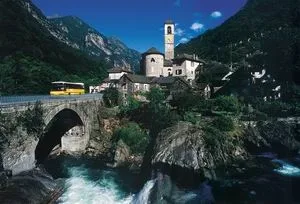
Today Switzerland offers a high quality of life and education, a rich choice of schools and educational systems. All these are strong arguments in favor of sending a child to study in this country. The school curriculum is determined by... geography. Switzerland's location and the internationalism and cosmopolitanism characteristic of the Swiss character have led to the fact that there is no single national education system, no single ministry of education, not even a single language.
Each canton has its own education system, and schools have different curricula. Some general frameworks and requirements are established by the cantonal departments of education and federal commissions. The Association of Swiss Independent Schools and associations of private educational institutions of the cantons also contribute to this activity. Depending on the language region in which the school is located, one can study under the French, German, Italian, and Swiss programs. In addition, many educational institutions teach according to English and American programs. There are approximately 12 students per teacher in the classroom.
Matura
If we talk about the most intensive academic program, it is the Swiss federal secondary school program - Swiss Federal Matunte, or briefly - Matura. Depending on the field of study, it is divided into five types - from A to E. Type A - ancient languages (Latin and Greek), B - modern languages plus Latin, C - mathematics and natural sciences, D - modern foreign languages, E - economic sciences.
The curriculum for each type includes 12 compulsory subjects. Among these disciplines there are three basic ones (native language, second state language, mathematics), seven compulsory ones (history, geography, physics, chemistry, biology, music/drawing, physical education) and two special, specialized subjects depending on the chosen program type (A-E). Thus, already at 13-14 years old, students decide, if not on a specific profession, then at least on the sphere of their future interests. And at this age, a schoolchild begins to prepare for certificate exams and for admission to a specific university faculty.
A big plus of this program for foreign students is that upon its completion one can receive higher education at Swiss universities for a purely nominal fee.
Abitur
The German-speaking part of Switzerland offers the Abitur program with a diploma of the same name. Upon its completion, the graduate will be accepted with open arms at the universities of Basel, Zurich, Bern, St. Gallen and Fribourg, as well as at the higher school in Lucerne. In these six of the twelve Swiss universities, the working language is German. Graduates of Swiss schools with an Abitur diploma will also not be refused admission to German universities. The program itself is somewhat similar to Matura. It also consists of several sections: humanities (foreign languages, literature, art), social sciences (history, sociology, political science) and technical (mathematics, natural sciences). Students choose a specialization here even earlier - at 11-12 years old.
Baccalaureat francais
The French secondary school program Baccalaureat francais (BAC) consists of two stages. The first takes five years, after which 16-year-old students take exams for a secondary education certificate (Diplome national du Brevet). The second stage is designed for another three years (16-19 years) and leads to a bachelor's certificate (Diplome du Baccalaureat de l’enseignement du second degre). With a BAC certificate, one can enter not only French-speaking universities of Geneva, Lausanne, Neuchatel, but also higher education institutions in France and French-speaking Belgium.
Maturita
A small number of schools offer education under the Italian program Maturita with subsequent admission to the Italian University of Switzerland, Universite de la Suisse italienne, or to any higher education institution in Italy.
It, like the programs described above, offers fairly early specialization. From 11 to 14 years old, children receive basic training in all general subjects, then choose one of the directions (classical, technical, natural sciences) and purposefully prepare for university admission.
Anglo-American section
As for the English and American programs (or schools), according to educational agencies, they are the most popular. Education here is structured in the same way as if a child were studying in the UK or the USA. Education under the English program GCE A-level (General Certificate Education Advanced Level) fully corresponds to the A-level program in the UK.
The American section offers study for a US high school diploma (High school), which allows admission to a university in any state. Education takes four years, starting at 13-14 years old (in the American system grades 9-12). During this period, the student must earn the required minimum of credits in the disciplines they have chosen and pass a number of tests.
International baccalaureate
The universal international program International Baccalaureate (IB) deserves special attention. It was conceived in Switzerland in the late 1960s as an ideal model of pre-university education, common to all countries. Teaching is conducted only in English. Students with an IB diploma are today admitted without exams by most universities in the USA and Canada, Great Britain and Ireland, France and Belgium, as well as Norway, Sweden, and other states. IB education takes two years and is designed for schoolchildren from 16 to 19 years old. The essence of the program is that two years before entering a higher education institution, the student, in addition to general education in various fields of knowledge, also receives specialization. The basis of the program is the study of six subjects that the student chooses himself. There are two levels of teaching subjects - higher level (Higher level) and standard level (Standard level). In the first case, this means studying the discipline in the amount of 240 academic hours, in the second - 150. Usually, three to four subjects are studied at an advanced level, which allows the student to better prepare for admission to a university.
One of the best schools in Switzerland offering the International Baccalaureate (IB) program is the American School in Leysin (Leysin American School - LAS). For 40 years now, the school has been successfully preparing its students for admission to universities in Europe, the USA, and Canada. Here you can also study under the high school program of an American secondary school.
About 300 children from 14 to 19 years old permanently live and study at the school. During their studies, they make at least three trips a year - to the USA and Europe, where they get acquainted with universities where they can continue their education.
Where to study
Choosing among Swiss schools is a difficult task. There are a sea of programs, a million opportunities, and a mistake can be costly. Therefore, it is extremely important first of all to clearly determine the child's preferences - linguistic, humanitarian, technical, etc.
Special attention should be paid to the age of the student. If your son or daughter is not yet 12 years old, it makes sense to send him to a small private school with a family atmosphere, and then transfer to an international college or another large school. Most often, such schools are located in the mountains, offer five meals a day, unlimited opportunities for various sports, and lessons in the form of games.
There is always a choice between a small school of up to 100 people and a large one - with 300-700 students. For example, about 50 people permanently live at the Ecole la Garenne school, and another 30 simply come to classes every day. And at the Institute auf dem Rosenberg school there are over 300 students, 230 of whom permanently live in school dormitories.
Among small schools renowned for their attention to their students, the primary school Ecole la Garenne stands out. It was founded in 1947 in the resort town of Villars, an hour's drive from Geneva, and accepts no more than 80 children from 4 to 14 years old per year. Education here is possible in two languages - English or French. A small number of students in the class allows teachers to work individually with each child. Special programs are designed for those who have just started their education and for whom neither English nor French is their native language.
An example of a large international college is College Alpin International Beau Soleil. It offers the BAC program, as well as training in the English department GCE A-level (General Certificate Education Advanced Level) and the American high school program.
How to apply
There are no particular difficulties when foreign students are admitted. As a rule, educational institutions require a reference for the child written by his teachers, grades for the last two years, and passing a written test. Each school usually offers its own test, developed in accordance with the curriculum. Many schools conduct testing remotely. When enrolling, it is also important to remember that no Swiss school can guarantee that your child will study in the same class he attended at home. The difference in curricula and the level of language proficiency have an effect. That is why experts recommend entering Swiss schools at the age of 12-13. Entering school at this age gives children the opportunity to perceive the new education system and teaching methods without unnecessary problems, as well as to improve their foreign language.
...By choosing Switzerland, you will give your child the opportunity to live among amazing mountains, swim in the clearest lakes, and travel to neighboring European countries. Perhaps all this together will awaken his creative spirit and inspire him to great achievements, as it once happened in Switzerland with Tchaikovsky, Tolstoy, and Nabokov.
Yana BYSTRITSKAYA,
Sergey ALEKSANDROV