
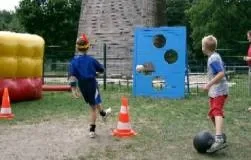
It is very important for children's health to accustom them to physical education
What is scoliosis? It is a congenital or acquired curvature of the spine, most often in childhood. About scoliosis, it is often said: 'A disease that is much easier to prevent than to cure later.' But if the ailment has entered your life, you cannot neglect it. The consequences can be very sad.
The most severe form of this disease is idiopathic scoliosis. It received the name 'idiopathic' because the causes of its occurrence are not reliably known. Among orthopedists, there is much debate, conjecture, and speculation about what is the root cause of this disease. Modern medicine believes that the most likely causes of idiopathic scoliosis may be hormonal dysfunctions, disturbances of neuromuscular balance, neurodystrophic processes in bone and muscle tissues, lack of nutrients, and heredity.
In children, the following types of idiopathic scoliosis are distinguished: infantile, juvenile, and adolescent. The onset of scoliosis in childhood (5-6 years) is less likely than at about 1 year or in adolescence (10-12 years). Moreover, boys are more prone to infantile scoliosis, while girls are more prone in adolescence.
When scoliosis is detected in children, it is very important to make a prognosis of the disease development.
For infantile idiopathic scoliosis, the prognoses are most often optimistic: scoliosis may resolve spontaneously, especially in children diagnosed before the age of one. But if this does not happen and no conscious treatment was carried out, the prognoses can be very poor.
If a spinal curvature is detected in childhood, one may be looking at untreated infantile scoliosis from an earlier time.
Adolescent idiopathic scoliosis manifests during the pubertal period, accompanied by rapid growth of the skeleton and the entire body. Prognoses for such scoliosis are quite varied: the spinal deformity may either stop or steadily progress, which is very common.
Without a doctor's examination, one can suspect scoliotic disease in a child by the most common signs: lethargy, rapid fatigue, any asymmetry of the back or chest, a prominently protruding shoulder blade, distorted waistline, shoulders at different heights, noticeable leaning of the body to one side.
Often, the onset and development of scoliosis in children is not accompanied by pain, so the child may not notice it, but parents should. To do this, regular diagnostics are necessary, showing children to specialists, especially at ages 5-6 and 10-12. The presence and degree of scoliosis are determined by several types of examination: spinal examination, X-ray, also taking into account the medical history and information about heredity.
What to do if a child is diagnosed with scoliosis? Treatment in such a case is prescribed taking into account many factors. These include age, degree of spinal curvature, magnitude of deformity in degrees, maturity of the spine and skeleton as a whole. And of course, only specialized doctors can prescribe one or another treatment.
First of all, treatment depends on the degree of scoliosis.
Deformations up to 20 degrees. Regular visits to an orthopedist, X-ray monitoring, physiotherapy, and physical activity. The exercise program should be individual.
Deformations of 25-40 degrees. Treatment with special fixing corsets. It is important that the corset is used constantly, every day, and is made by qualified orthotists. Only then can the curvature be stopped.
Deformations of more than 40 degrees. Most often, surgical correction of the spine is prescribed. Especially if the curvature is also accompanied by pulmonary-cardiac insufficiency, neurological complications, pain, or rapidly progresses.
In addition to the listed medical measures, it is important that parents teach their child to watch their posture; replace the briefcase carried in one hand with a backpack; and introduce them to physical education.
We would rather not discuss the serious consequences that advanced scoliosis in children can lead to. We hope that your vigilance, diligence, and patience in the fight against scoliosis will help avoid both bad outcomes and bad prognoses.
_