
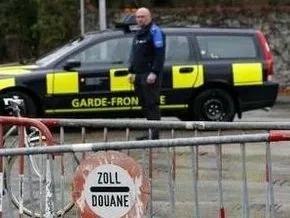
Traveling around Europe has become easier with a Schengen visa
The borders of the world are quite transparent today. Europeans can travel to any neighboring country without any problems. No additional permits are required for this. This refers, of course, to the countries of the so-called Schengen Agreement, which many European states have signed.
Russia, unfortunately, is not among them. But this does not stop our travelers from roaming the roads of Europe without much trouble. Packing the family into their Hummer, one can head off for the weekend, say, to Finland (getting a visa to this country is very simple). And from there Sweden is just a stone's throw away. You just need to buy ferry tickets.
In short, although Russia is not among the countries that signed the Schengen Agreement, its citizens also take advantage of it. And it is all the more surprising that such opportunities appeared relatively recently. Before 1985, entering any European state required obtaining a separate visa.
The situation changed on June 14, 1985, when in the town of Schengen, located in the Grand Duchy of Luxembourg, five states (the Netherlands, Belgium, France, West Germany, and Luxembourg itself) signed a historic agreement on the gradual abolition of passport and customs controls at their borders.
Ten years later, Spain and Portugal joined these countries. And from that time on, visas issued by the embassy of one Schengen Agreement member country became valid in the territories of all other states.
It was so convenient that many other countries wanted to join Schengen. And so in 1997, the visa-free area also extended to Italy and Greece. More followed. Austria, Scotland, Denmark, Iceland, Finland, Czech Republic, Norway, and Sweden also joined the Schengen Agreement. The nearest neighbors of the Russian Federation did not stay aside either: Latvia, Lithuania, Estonia, Czech Republic, Slovakia, Hungary, and Poland – today these states also issue Schengen visas.
Russian citizens, however, still must obtain permission to enter any European state. On the other hand, as already noted, the Schengen visa is also convenient for our compatriots. There are a number of countries where it is easier to get entry permission than others. So Russian citizens have beaten the famous 'Schengen paths'. Having obtained a visa to one country, they freely enter another.
Automobile tours across Europe are therefore especially popular. Especially since modern vehicles can provide increased comfort for the traveler.
Today, twenty-five states are members of the Schengen Agreement. The borders between them are quite transparent for their citizens as well as for our compatriots. Getting a Schengen visa is quite simple and inexpensive. Especially if you use the help of specialized companies providing relevant services.