
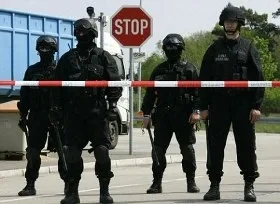
Despite the decision of the members of the European Parliament to include Bulgaria and Romania in the Schengen Area, the interior ministers of the EU countries considered that this should be postponed.
Recognizing that Bulgaria and Romania have indeed improved control at their borders, the Council of Ministers proposed to wait for the publication of the annual report on the results of the fight against crime in both candidate countries. The release of this document is scheduled for July 2011. It is expected that its study will take time until September. However, the ministers did not set even approximate deadlines after which Romania and Bulgaria could be admitted to the visa-free zone. These deadlines began to be postponed as early as 2010.
Initially, the applications of Sofia and Bucharest were to be considered in March 2011. However, due to the position of a number of countries dissatisfied with the internal situation in the candidate states, the decision was postponed (in particular, due to the problems of France and Italy with Roma from Bulgaria and Romania). At the same time, it was suggested that both these countries could be admitted to the Schengen Area no earlier than 2013.
In that same 2013, the European Union itself is expecting another expansion: on July 1, 2013, Croatia will become its full member. This was solemnly announced last Friday, June 10, by the President of the European Commission, José Manuel Barroso. 'Today is a historic day for Croatia and the European Union,' he proclaimed, noting that he will propose to close negotiations on the country's accession to the EU. 'This opens the way for Croatia to become the 28th EU country on July 1 next year.'
The final decision on Croatia's accession to the European Union is to be made by EU leaders at a summit on June 23-24 of this year.
Boris GUBKO.
