
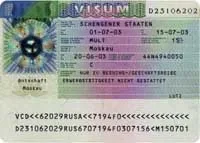
Last week, interior and justice ministers of EU countries discussed in Brussels the possibility of increasing the cost of entry tourist visas for non-residents of the European Union. No final decision has been made yet, but the price of the euro visa will in any case soon increase significantly. According to a preliminary agreement, the visa will become more expensive immediately by 71% – from the current €35 to €60, the Associated Press reported.
According to the EU ministers, the new tariffs should come into force as early as January 2007. As emphasized in EU authorities, they should compensate for the fee for introducing visas with biometric data carriers from the same time – their cost is significantly higher than that of current visas, and the European Union will let tourists pay the additional costs.
However, the European Union promises to make an exception. To prevent a possible outflow of the intellectual elite caused by the increase in travel costs, preferential entry conditions to EU countries will likely be created for them. As EU Justice Commissioner Franco Frattini promised, Schengen visas for scientists and students will be significantly cheaper than for regular tourists.
At the same time, as Frattini specifically noted, the European Union will insist that its member states do not make any concessions to any non-EU countries on a bilateral basis either. If EU members begin to ease visa rules for their neighbors or some other "favored countries," such a policy would "run counter to efforts to continue rapprochement of the EU countries' visa policies," Frattini emphasized. "I cannot but acknowledge the existence of political grounds for establishing special relations with countries such as, for example, Ukraine. And, of course, I have nothing against this," he said further. "However, my main concern is the desire for uniformity of European visa policy towards non-EU countries, rather than the nuances of bilateral agreements of individual states," ABC-News quotes Frattini.
At the same time, Frattini nevertheless admitted the possibility of establishing "special bilateral relations" with a number of countries – but at the level of the entire EU. Such countries, according to the EU justice commissioner, may include Russia, Ukraine, as well as several Balkan states. However, Frattini stressed, bilateral agreements between the EU and Russia and Ukraine are outside his competence.
Recall that right now Russia and Ukraine are negotiating with the European Union on mutual simplification of the visa regime. It is expected that the agreement will apply to entrepreneurs, participants in scientific, cultural and sports exchanges, journalists, students and schoolchildren, as well as some other categories of citizens. If an agreement is reached, they will all be able to receive multiple-entry visas for up to five years. However, this document has not yet been signed.
EU countries must make a final decision on fees for issuing biometric visas before the end of 2006 – then the new visa cost will be finally determined. But even if it really rises by 70% or even more, said Dmitry Danilenko, vice president of the tourism-specializing IS (information service) BANKO, for tourists "it will not matter at all." "For people who have found the money to go abroad for a holiday, whether it's an extra €30 or €130 makes no difference," he is convinced.
Marina LEMUTKINA.
Gazeta.Ru