
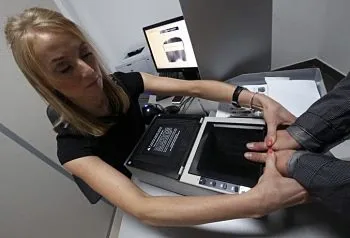
Russia has decided to introduce mandatory fingerprinting when issuing visas to Europeans.<\/em><\/p>
Russian authorities plan to introduce mandatory fingerprinting when issuing entry visas to citizens of foreign states, said the head of Rostourism, Oleg Safonov. Earlier, the European Union announced a change in the rules for obtaining a Schengen visa: from September 14, it will be necessary to provide fingerprints for this purpose.<\/p>
"The EU countries have introduced mandatory fingerprinting for Russian tourists when obtaining visas. In response to this clearly unfriendly step, we also plan to introduce a similar system, but in our opinion, this will instantly lead to a drop in inbound tourist flow," Interfax quotes the head of the agency.<\/p>
Safonov also noted that the introduction of mandatory fingerprinting when issuing visas to foreigners could lead to a drop in tourist flow to the country from abroad. According to him, mostly elderly people come to Russia on tour packages. "These are elderly people who, due to the small number of Russian visa centers abroad, will have a much harder time obtaining a Russian visa," he noted.<\/p>
From September 14, Russians will have to undergo fingerprinting to obtain a Schengen visa due to Russia being connected to the EU Visa Information System. The new procedure applies to everyone except children under 12, disabled persons whose fingerprints cannot be taken physically, as well as heads of state and government, cabinet ministers, members of delegations and their spouses, if they are visiting Schengen countries for official purposes.<\/p>
As the EU's permanent representative to Russia, Vygaudas Ušackas, previously stated, Russians are the largest recipients of Schengen visas: they account for about one third of all visas issued worldwide to Europe. In 2014, European authorities issued more than 5.76 million visas to Russians. At the same time, the official noted that connecting to the system will facilitate obtaining multiple-entry Schengen visas: the unified database will store not only digital photos and fingerprints for five years after the visa's expiration, but also information provided by the visa applicant in the application form and the results of the application review.<\/p>
For residents of Crimea wishing to visit Schengen countries, the unified visa system started working in June, after Ukraine connected to the unified visa system. Since the EU recognizes the peninsula as Ukrainian territory, residents of Crimea must apply for Schengen visas at consulates in Ukraine.<\/p>