
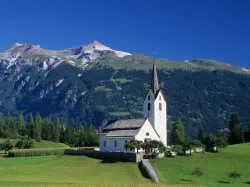
Switzerland became the first in environmental achievements among countries
The EPI system evaluates the state of a country's ecology based on 25 criteria - from water and air quality to the use of pesticides and biological variability. The leader of the list was recognized as Switzerland, scoring 95.5 points out of a possible 100. According to the newspaper, on eight out of 25 indicators (water quality, sanitation, wastewater treatment, forest health, restrictions on pesticide use) this country achieved a 100% result. Largely due to the state of the environment, average life expectancy in Switzerland, the fifth in the world in terms of population influx, is 81 years.
Second place went to Sweden, which demonstrated the lowest indicators for air and drinking water pollution, as well as carbon dioxide emissions. At the same time, the country, which showed excellent scores in the category of forest care, pays insufficient attention to the state of water resources, notes Forbes. Sweden, whose population is estimated at 9 million people, scored only 26 out of 100 points for the state of its water resources.
Closing the top three of the cleanest countries is another Scandinavian state - Norway. The country scored 100 points on air and water quality, sanitation, and ozone emission levels. These indicators were contributed, in particular, by the fact that up to 98% of all electricity consumed by the country is generated by hydroelectric power plants. Overall, Norway scored 93.1 out of 100.
As for the American continent, the undisputed leader here is Costa Rica, one of whose main sources of income is ecotourism. The country scored 90.5 points, which allowed it to become first in the Americas and fifth in the overall ranking. The good indicators of the overall state of the country's ecology are evidenced, among other things, by the fact that, unlike a number of its neighbors, Costa Rica avoided the disappearance of the Amazon forests.
The cleanest country in the Asia-Pacific region is New Zealand, which scored 88.9 points (seventh place in the world). The country's authorities pay great attention to environmental protection: while the average level of nature conservation in the region is estimated at 30 points, in New Zealand this figure is 84.9 points.
Second place in the Asia-Pacific region was taken by Japan, which achieved a 100% result in the preservation of forest resources. Low air pollution, thorough purification of infrastructure, and restrictions on the use of chemical pesticides allowed Japan to become 21st in the list of the world's cleanest countries. In addition, it is thanks to the excellent state of the environment that Japan owes its world leadership in another indicator - average life expectancy here is over 88 years.
One step ahead of Japan in the overall ranking is Croatia. The country, which scored 84.6 points on the Environmental Performance Index, became first in Eastern Europe and 20th overall. The Croatian government at one time prioritized the cleaning of coastal areas, thanks to which the country's Adriatic coast became a favorite tourist destination. At the same time, air quality in Croatia leaves much to be desired, and local biological variability experts rated at only 14 points.
Overall, as Forbes notes, the study indicates that leadership in environmental protection is confidently shifting to Europe. "25 years ago, the United States began to lose its status in this indicator," says Columbia University expert Mark Levy. "Until that moment, Europe had always had more polluted air and drinking water."