
Currently, Chinese cartoons in China are shown mainly on central television, but private channels, concerned with the simple and understandable interests of their own business and program ratings, are more into foreign animation. And no wonder: 80% of young Chinese prefer American and Japanese cartoons. They even like online cartoons, all cartoons, from old to new Disney cartoons.
But starting in September, instead of imported cartoon characters, works by local animators will appear on screens, where characters speak exclusively in Chinese and preach national values. Mickey Mouse, Cinderella, the Simpsons, various Pokemon, and numerous series will disappear from prime time. Similarly, Russian cartoons, which are no better than American ones in the eyes of Chinese authorities, will also not be shown. The vacated space will be filled, for example, by 'The Monkey King', based on legends of the mythical hero Sun Wukong.
This, by the way, is not the first attack on foreign animated fairy tales: Chinese viewers' access to Japanese animation was limited two years ago, when authorities tightened their long-standing 'request' to TV companies to reduce broadcasts of foreign cartoons. And in 2004, a barrier was set, leaving foreign products only 40% of the TV market; the rest of the cartoon content in the schedule had to be exclusively Chinese-made. It is believed that foreign cartoons fell under the mill of Chinese President Hu Jintao's program to tighten control over all areas of mass culture: cinema, print media, and the Internet. Thus, horror films have already disappeared from prime-time broadcasts, and recently the issuance of licenses for foreign glossy press was discontinued.
However, in the fight against 'wrong' cartoons, the Chinese did not invent gunpowder. Animation aimed at the mass audience regularly provokes indignation among politicians who advocate for spiritual values and moral defenders among public activists. True, most often the criticism is not of the place of production, but of the content of the cartoons.
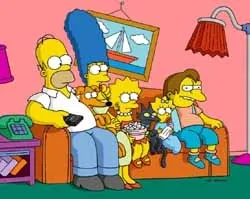
Perhaps the unluckiest can be considered one of the most popular family cartoons - 'The Simpsons', which zealous moral guardians have accused of everything. At home, in America, the yellow family was criticized by the 'Parents Television Council' for mocking the religious feelings of believers. In 2002, 'The Simpsons' angered the administration of Rio de Janeiro, which almost filed a lawsuit against the creators of the series, as it was dismayed by the presented image of Rio from the 1950s. According to the city's leaders, this could damage the tourism business.
But the Simpsons always managed to get their creators off the hook. However, in Arab countries, the Dubai satellite network MVS, which bought 30 episodes of the cartoon, assimilated the Simpsons in an Eastern clever way for the Muslim population, veiling all that is 'forbidden'. I think such a metamorphosis deprived the cartoon for 'big children' of all its 'zest'.