
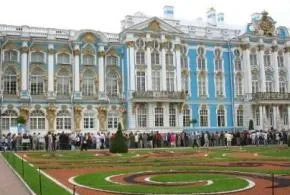
In Russia there are many attractive tourist sites, but citizens still prefer outbound tourism
Marketing research conducted by special companies states that the greatest demand among Russians is for cheap tours (80% of the segment), which is associated with relatively low incomes of the population. Expensive tours and their associated costly services are purchased by only 20% of the population.
Among the purposes of tourism that define the market of tourist services, more than half is beach tourism, i.e., visiting sea resorts in warm climate zones. The desire to change the dank dampness for sea bathing is quite understandable given the realities of the Russian climate. Business tourism (negotiations), scientific (seminars, conferences, congresses), sightseeing (visiting historical sites, museums) are less significant in the total number of tours purchased. However, Russians attach great importance to comfortable recreation, i.e., the organization of everyday life and tourist infrastructure.
According to the same marketing research, the bulk of tours are sold by network travel agencies, united by a common brand, a unified pricing policy and a common information space. The so-called franchise networks are a popular form. Independent travel agencies tend to decline, although currently their share of the tourist services market reaches a third of the total volume.
Tourism as an industry in the global economy firmly holds the third position, second only to the oil and gas industry and the automotive industry. Actual profitability depends on the specific region, demand for services and activity of travel companies. The growth of tour sales in Russia has an annual increase of about 20-25%, significantly outpacing the country's overall economic growth.
Scientific forecasts state that by 2016 the level of sales of tourist services in the Russian Federation is expected at $20.4 billion. Despite the general increase in the cost of transportation and related services, traveling abroad for holidays remains very popular among Russians. If domestic tourism is properly organized and inbound tourism, i.e., the flow of foreigners to Russia, is increased, then the economic development of many regions of the country can be significantly stabilized.
_