
Trekking: Nepal and Southern Europe
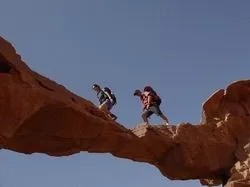
For hiking, you need at least mountains. Preferably not with too sheer cliffs - trekking is not mountaineering. A normal trekker's tour implies routes with laid trails, with organized campsites for overnight stays and meals. The third condition is "that there is something to see." One of the main tasks of a trekker is not just to wander along mountain paths, but meaningfully - to get acquainted with foreign customs and culture. Therefore, a proper trekker will not go to the nearest unnamed mountain, but will go to truly interesting places.
Nepal holds the palm of primacy - here is an ideal combination of diversity of mountain routes and relative accessibility of ancient local traditions. Most trekking routes run through high-altitude areas, through bamboo and rhododendron forests, among tiny villages, gorges, waterfalls and Buddhist shrines. Complete isolation is guaranteed - locals don't even speak English. But they observe tourist precepts, so lodging and food (both extremely exotic) are always guaranteed. The cost of a 12-day tour, including airfare to Kathmandu, from $1.700
However, there are also more economical options. Romania and Bulgaria are distinguished by favorable climate and picturesque mountain ranges, so all conditions for good trekking are present. Southern Europe is not as exotic as the Himalayas, but takes revenge with medieval fortresses and monasteries. Food and accommodation prices are among the lowest in Europe. Moreover, you can even bring children here, since many routes are very easy. The cost of a 12-day tour with travel - from $350.
Rafting: Thailand and Karelia
The main thing is the presence of a river with a sufficiently noticeable current so that rafting on an inflatable boat does not turn into a lazy stroll. On the other hand, too rapid flow of water and sharp stones are not suitable as threatening the integrity of the raft. The ideal option is mountain-plain rivers, which slightly slow down their flow when entering flat terrain, but have risky rapids. Rafting is a group descent, and the group is led by an instructor. Therefore, you cannot, having gathered in a friendly group, arbitrarily go on "fast water". Look for places of organized descents.
Thailand is considered the birthplace of rafting, as a result of which Thai river routes have gained international fame, and the level of professionalism of Thai instructors has received the highest approval from specialists. Thai rafting is designed for professionals, amateurs, and even those who are simply overcome by curiosity: there are programs from zero to advanced level. Traditionally, people go rafting to the north of the country - the rivers Kwai and Maeklong. The routes are designed with additional adventures in mind - cave walks, swimming in hot springs, excursions to hill tribe settlements. The cost of a 12-day tour with 4 days of rafting and airfare to Bangkok - from $1.500.
You can choose an economical option in Russia. There, Karelia is considered the traditional home of rafting; on this territory flow many rivers suitable for rafting with powerful rapids and water drops: Okhta, Shuya, Chirko-Kem, Suna. You will have to live in tents, eat in field conditions, but the organizers will provide equipment. The cost of a week-long tour with travel from Moscow to Petrozavodsk or Kem - from $250.
Kayaking: Wales and Crimea
For kayaking on whitewater, you need a mountain river with riffles and a rapid current. Also experience in kayaking and using special equipment for the safety of the descent. Kayaking is widespread in southern mountainous countries, including Turkey, but we will talk about the most and least expensive options.
Few people associate Great Britain with mountain rivers, nevertheless it is there that kayaking routes are laid for those who do not spare money for exoticism. In Wales there are three suitable rivers: Teifi, Dee and Usk. They themselves are not fast or deep, but they are valued for hundreds of treacherous, invisible rapids. World celebrities often come here to have fun on the water, so the surroundings are mostly built up with high-class hotels, which affects the price of the tour. But Wales regularly hosts kayaking competitions with a serious prize fund. The cost of a week-long tour with airfare to Cardiff - from $1.900.
The raftable rivers of mountainous Crimea - Auzun-Uzen, Kokkozka, Chernaya - have average capabilities, so they are accessible even to beginners. You will have to live at local tourist bases; if desired, you can set up your own tent. As such, tours do not exist, but at the tourist bases there are instructors who gather small groups for a fairly modest fee ($5-7 per day). Add to the expenses the road to Simferopol, transfer to the base and payment for accommodation at a tourist base or campsite (from $5 per day).
Yachting: Aegean Sea and Belarus
For a yacht you need big water, wind and picturesque surroundings. But since most tourists do not have their own vessel, a club is needed where a yacht can be rented. Another option is to buy a yacht tour, within which the rented yacht will be waiting at the intended departure point. Yachts are considered an attribute of rich people, so ordinary tourists do not even dream about them. And completely in vain.
The Aegean Sea for a yachtsman is simply a dream: shores indented by bays, absence of squalls, many islets where you can moor at a "green anchorage". It is possible to rent yachts in Greece or Turkey, with or without sailors, for one day or a whole month. And no one forbids going out of the shallow Aegean basin into another water area. The cost of renting a sailing-motor yacht for 12 people is from $3.500 per day.
In the neighboring country there will be a more economical option. Hot climate and warm sea are not obligatory companions of yachting. Lake Naroch, Zaslavskoye Reservoir, the systems of the Braslav or Blue Lakes in Belarus are distinguished not only by water expanses, but also by moderate rental prices - from $300 per day.
Diving: Maldives and Egypt
The main condition for diving is cleanliness - a diver needs transparent water like air. It is also desirable that under water there awaits not a barren bottom, but all kinds of sea gifts - corals, fish, crabs, starfish, shells...
In the Maldives, the sea is blue and transparent as a tear. This is a world created for diving - atolls, coral reefs, a colorful mosaic of inhabitants of the sea kingdom. To attract customers, local tourism authorities allow a lot - feeding fish, descending into reef grottoes, and onto sunken ships. But touching corals is not allowed. The cost of a one-week tour is from $1.300; dives are paid separately (on average $350-500 for ten dives). In expensive hotels, one dive per day is included in the room rate.
Diving in Egypt is different in that compared to the Maldives, here it is... crowded. Too close, too shallow, too crowded. But in terms of cleanliness and picturesqueness, the water area is in no way inferior to the best world resorts. The cost of a one-week tour to Egypt is from $230 (diving costs $25 for half an hour or $55-60 per hour).
Gliding and hot air balloons: New Zealand and the Czech Republic
You can glide only from a gentle slope, so rocky mountains are clearly unsuitable. Moreover, sharp stones increase the risk of an unsuccessful landing. Another condition is updrafts that will pick you up and carry you not down, but forward and upward. Companies that organize such tours are aware of the climatic features that provide the 'right' wind at different times of the year on different slopes of the world. And the tourist can choose a specific slope himself.
New Zealand's mountains are distinguished by long foothills covered with grass and undergrowth. Hang gliding is developed here along with paragliding and even hot air balloon trips. You won't be able to fly far on a balloon; tourists are not allowed into free flight, but the 'tether' is long enough to rise to a great height and see the 'end of the world'. The cost of a 12-day tour to New Zealand without airfare is from $900; you should add payment for the rental of a hang glider, paraglider, or a balloon ride - at least $100 for a one-time pleasure lasting an hour.
Similar services in the Czech Republic cost about the same, but the travel and accommodation are several orders of magnitude cheaper. The Czech mountains are quite gentle, but often too forested. Nevertheless, gliding is developed here, and bright hot air balloons float over the hills everywhere. The natural risk - accidentally flying into Poland, Austria or Germany - is included in the insurance policy. The cost of a one-week tour to the Czech Republic is from $170.