
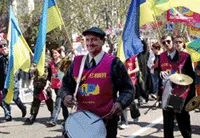
As Vremya Novostei reports, this year in the ranks of the conscious comrades gathering under red banners and portraits of the founders of communist ideology to celebrate the International Workers' Solidarity Day, no representatives of the many-thousands-strong army of workers and peasants of Greece will be seen. In this fraternal country, May Day will be celebrated with a ten-day delay. This decision was made by the Greek Workers' Confederation.
As is now confirmed almost every year, the proletarians of the nineteenth century, who secretly gathered at May Day outings and did not think about stockpiling potatoes for the winter or the delights of barbecue in the open air, chose an extremely unfortunate date for celebrating solidarity with each other. Now, in this spring season, our domestic workers have a mountain of their own affairs, and there is no time to think about other people's troubles. Laying out flower beds and planting out pansies and dill seedlings in their permanent place. Airing out old mattresses at dachas after the winter. Washing windows. And finally, opening the shashlik season on a just-awakened green lawn. As the permanent leader of the Communist Party certainly could have noticed, the density of the masses of people surrounding him and his comrades on May 1 is thinning every year. Having added six or more hundred-square-meter plots of land, dachas and vegetable gardens to their chains, the proletarians have begun to behave in a thoroughly opportunistic manner, preferring to spend their weekends not on the streets of a stuffy city, but away from it.
However, the Greek comrades have problems of a somewhat different nature. The fact is that Greek trade unions and communists, whom no one has ever recognized as the guiding force of society, have become accustomed to considering Solidarity Day not a holiday, but a reason to fight for their rights. Greek proletarians today still prefer such time-tested forms of struggle as demonstrations and strikes. But if people dutifully turned out for demonstrations, then in recent years there have been some problems with strikes. The fact is that May 1 in Greece is a non-working day, just like in our country. And going on strike on a day off is not very effective - the protest becomes invisible. Except that transport workers' unions can remind us of themselves, and even then not too loudly: one day off without public transport can be endured, but, for example, a strike by airline employees that could attract attention is practically impossible under current legislation. Moreover, on May 1, 2005, in this Orthodox country, as in ours, the main holiday - Easter - is celebrated. And even conscious Greek communists are unlikely to desecrate Bright Sunday with participation in a strike.
In this difficult situation, the Greek Workers' Confederation made a paradoxical but elegant decision. If a strike on Solidarity Day does not fit into the calendar, then either Solidarity Day must be cancelled, or the calendar must be 'adjusted'. After long and lengthy debates, the second option was chosen. May Day in Greece will take place on May 11 and will be marked by a general 24-hour strike. This year, the trade unions plan to protest against the government's recent measures to improve the economic situation in the country, which have led to higher taxes. The unions demand that workers' wages be increased in line with the increase in the tax burden.
Those who have been to Greece note that during general strikes, which occur there several times a year, life in the country literally comes to a standstill: institutions, banks, most shops, and public transport do not work. In this way, the proletarians fighting for their rights provide an extra day off even to their ideological opponents from the private capitalist sector.