
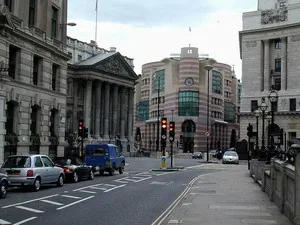
Despite the fact that the automobile was invented relatively recently, right-hand and left-hand traffic have ancient traditions. Right-hand traffic appeared as follows: once most of Europe was covered with dense forests, and communication between settlements was carried out along such narrow clearings that horsemen could barely pass each other. Usually both horsemen and pedestrians were armed with swords hanging on the left and shields, which they held in their left hand. When meeting, they tried to pass each other so that the side of the body protected by the shield was facing the oncoming person, that is, they kept to the right side. This tradition was preserved even when roads widened and carts, carriages, and horse-drawn vehicles appeared, and then automobiles. In France, this traffic order was established by law in the 18th century, and subsequently spread to all French and Dutch colonies.
And the British are to 'blame' for the existence of left-hand traffic. As you know, England is located on islands, and the sea route was once the only way for its inhabitants to communicate with people from other countries. There was always a huge concentration of ships in ports, and they often collided. To establish order, the maritime department issued a decree, the essence of which boiled down to the rule 'keep to the left side.' That is, ships had to let oncoming vessels pass on the right. Gradually, this principle began to be applied to land traffic of carts and carriages. And with the advent of the automobile, the well-known conservatism of the British played a role - they did not change anything regarding road traffic. Subsequently, the rule spread to all countries under British influence: it is still followed by India, Indonesia, Pakistan, Japan, Thailand, Great Britain, Kenya, Nepal, Malaysia, Sri Lanka, Australia, Hong Kong, Ireland, New Zealand, Singapore, Jamaica, Maldives, and the Bahamas.
• When going on a road trip abroad, take care in advance that your car's trunk always has spare tires and necessary tools. After all, it is best to buy tires in Kiev in advance than to overpay for them later at a Polish auto repair shop or at a German gas station. And on a long trip, a spare tire will never be superfluous.
Our driver can find it extremely difficult to switch to the other type of traffic, so if you have no experience driving in a country with left-hand traffic, and you absolutely cannot do without a car, we advise you to use the services of a hired driver. Prices for this type of service in Europe range from $20 to $30 per hour.
_