
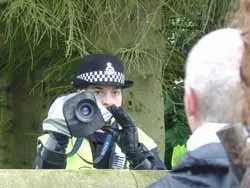
Currently, according to Section 44 of the Terrorism Act 2000, any police officer has the right to stop and search a person or vehicle that is in an area where there is a risk of a terrorist attack, even if they are not suspected of breaking the law. A Home Office spokesman said the new law would give police the power to stop and question anyone anywhere in the country about the terrorist threat.
Although British law enforcement officers can currently stop a citizen on the street, they are not allowed to check documents and ask questions about their route and purpose of travel. The new rules will allow police to check documents and ask a citizen questions about where they came from and where they are going. Similar rules were introduced in Britain during World War II. They are currently applied only in troubled Northern Ireland.
The legislative reform, designed to help British special services more effectively counter terrorists, was initiated on March 29, when Blair announced the transformation of the Home Office. It was divided into two departments. The 'Justice and Prisons' department is to oversee those convicted of criminal offenses and prisons and to work on crime prevention. The 'Justice' department specializes in fighting terrorism. The main coordinator of all anti-terrorist measures and responsible for the security of the United Kingdom became Home Secretary John Reid. He was tasked with further development of anti-terrorism legislation.
In 2005, the opposition rejected a law initiated by Blair that would allow detention without trial for up to 90 days for persons suspected of involvement in terrorism. This time, Tony Blair accused opponents of a 'dangerous misunderstanding of reality'. According to him, the opposition 'puts civil liberties above the security of the nation'. After three suspected terrorists recently escaped from police, the British prime minister again proposed drafting a law allowing such persons to be detained without trial. The draft of the new anti-terrorism law is to be published shortly.
Opposition parties and human rights organizations in Britain opposed the new anti-terrorist initiative, accusing Blair of forgetting the principles of democracy and violating civil rights.