
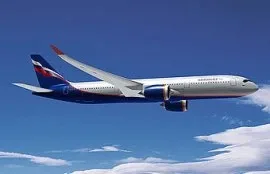
The inaccessibility of foreign trips in Soviet times was compensated by the ease of crossing the expanses of one's own country
Many specialists, upon starting work, were warned that due to access to state secrets they were not allowed to travel abroad, and even all cases of their communication with foreigners must be immediately reported 'to the appropriate authorities.' There were unjustifiably many such 'secret specialists,' since almost all enterprises fulfilled some kind of military orders.
However, the inaccessibility of foreign trips was compensated by the ease of crossing the expanses of one's own country. Airline ticket prices were ridiculously low. For example, a flight from a Ukrainian city to Moscow cost about twenty Soviet rubles, and a flight from Moscow to Krasnoyarsk cost about sixty rubles. People made long-distance flights to celebrate New Year together or just to socialize because they missed each other.
Students traveled even cheaper: the railway ticket discount was 50%, and from Kharkiv to Moscow one could go for five rubles on a student ticket, spending one night on the road. Shopping was often a reason for trips to Moscow. Provincials, having arrived in the capital, created queues in central stores, buying clothes and shoes for themselves, relatives, and acquaintances. Those who were more energetic could buy sofas or wardrobes and send them in a baggage car. Such troublesome acquisition of goods was due to the shortage of goods in Soviet stores. However, the notorious Soviet shortage was often connected not with the absence of goods, but with their cheapness.
The Baltic republics were 'almost abroad.' It was in the Baltic cities that Soviet filmmakers shot Switzerland, England, Paris... Clean old towns, Catholic cathedrals, cool sea scenery attracted tourists.
But getting to Warsaw was already a problem: it was 'abroad.' Even more 'abroad' were the countries of Western Europe. At that time, progressive Western politicians were not at all concerned about the flow of arrivals from the East – on the contrary, they strongly criticized the Soviet government for the 'Iron Curtain.'
So, has it become easier to travel? Maybe it has. But, unfortunately, no one has flown from Krasnoyarsk to Kyiv just like that – to socialize, just because they missed each other.
_