
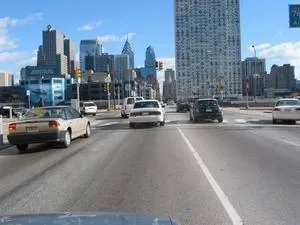
Photo by Alexander Kovalchuk
New York
It became the first point of our route solely because it is easiest to get to from our native parts. However, if you have time, it is worth staying in this multi-million cosmopolitan city. Everyone has probably heard that it is the largest business center in the world. But not many people know that over a thousand premieres take place every year in New York's numerous theaters. That is why there are almost never full houses there. Even to the most prestigious Broadway halls, tickets can be bought on the day of the performance. The most authoritative are considered to be Carnegie Hall, the Metropolitan Opera, and Radio City Music Hall in Rockefeller Center, which I especially recommend.
Whatever they say, New York's skyscrapers overwhelm. Therefore, for purely medical purposes, it makes sense to visit Central Park, located in the very heart of Manhattan. But the best way to take a break from the bustle is in Coney Island. On this peninsula in the southern part of Brooklyn, there is a popular beach and a marine aquarium where you can admire whales, dolphins and sharks in open reservoirs.
Do you want to get to know New York more thoroughly? Then start with the New York Convention and Visitors Bureau (Columbus Circle area, corner of 59th Street and Broadway), where you can get maps, brochures, a subway map and the necessary advice on all matters related to your stay in this city. When moving around New York on your own, it is best to use the subway. It is, of course, not our metro, but there is a guarantee that you won't get stuck in a traffic jam. A rental car is out of the question - parking is difficult. We took a rental car on the day of departure for Boston.
Boston, Buffalo, Chicago
The luxurious Interstate Route No. 95 runs along the coastline of Long I. Sound in the state of Connecticut, crosses the tiny state of Rhode Island, its charming capital Providence - the center of the jewelry industry in the USA, and in a little over an hour we are in the main city of Massachusetts - Boston, very beautiful and cozy, thoroughly imbued with living history. Boston is one of the most famous outposts of the struggle of the English colonies of North America for independence. Carefully preserved 18th-century buildings emphasize the uniqueness of the city. Among the notable attractions are Harvard University, the American Academy of Arts and Sciences, and the Museum of Fine Arts, founded in 1630.
Boston is a city for living, which cannot be said of New York. We were convinced of this once again when we stayed with friends from the former Union. A lunch on the lawn by a three-story house bought on credit, a boat trip on the ocean on a rented yacht (maybe I'll also buy a yacht), dinner at a fish restaurant, a promenade along the embankment, coffee, aged whiskey and a cigar while having a leisurely conversation about “how are things back home?” and “how are things here?”. It turned out that America is good, with the exception of some trifles. For example, the son was registered with the police for a penknife found at school, and neighbors threaten to sue for a lawn not mowed in time.
In the morning we took a ride around the old town, visited the mentioned museum and along Interstate Route No. 30 headed towards Buffalo, whose main attraction is Niagara Falls. The sight is impressive, but unbearably noisy. The endless rumble prompted us to take a few pictures and immediately rush off to Chicago.
It is the second colossal city of the USA after New York. But Lake Michigan, on whose shore it stands, is by no means the Atlantic Ocean. It clearly lacks the strength to cope with the suffocating heat. Despite the fact that Chicago is a major scientific and cultural center, its railway hub makes the greatest impression. Apparently, there is nothing like it anywhere in the world. As for science, the University of Chicago was the first to produce a nuclear chain reaction, and representatives of the so-called “Chicago school” invented “monetarism” to our misfortune. Another “attraction” of Chicago is the subway. You will hardly find darker and dirtier metro stations anywhere. That's monetarism for you.
Minneapolis
The difference between Minneapolis and other large US cities is that its central high-rise part, or downtown, as it is commonly called here, is isolated. It does not flow, like New York or Chicago, into five-story poor neighborhoods, only to give way to areas of cottages and villas. Minneapolis, in fact, is downtown itself. A complete complex in its shining perfection. There are no Harlems or Brightons here. The entire city can be walked around without going outside. For this purpose, covered gallery-passages between individual buildings are arranged at the level of the third and fourth floors. Such a solution can hardly be called excessive, given the rather severe winters in these parts. Minneapolis has offices, banks, galleries, theaters, prestigious shops. The largest department store in the world is right here. A kind of city within a city. Multi-story parking garages are especially admirable. Countless numbers of them. Using them, each time I recalled our capital with a shudder. And sterile cleanliness. No offense to New York or Chicago, but they are dumps in comparison with Minneapolis.
Permanent residents here are extremely few. Satellite cities, such as Plymouth, are intended for this. Although from Plymouth, as well as from other similar places, there is no need to go to Minneapolis unless really necessary. Between several cities like Plymouth there is a certain Center, which has a large supermarket, various service facilities, a fitness club and much else needed for daily life.
After seeing the city, we set off along Interstate Route №35. In the Albert Lea city area, we switched to Interstate Route №90, which connects Boston to Seattle by the shortest route - the administrative center of Washington State. At a small store at a gas station, we tried to ask a young lady where the interchange was. It turned out the girl is convinced that Washington State is located in the same place as the capital of the USA. 'Logical,' Mikhail Zadornov would have said.
Black Hills and Colorado Springs
Having easily clocked 650 miles on the odometer, we traveled through a third of Minnesota and crossed almost all of South Dakota. The entire trip, with stops for refueling the car and stomachs, took just over nine hours. Fantastic? American roads!
On the approach to Black Hills (Black Hills) we met a lone, sad bison. But on South Dakota's promotional brochures, there are huge herds of them.
Through a tunnel carved into the mountain range, we entered the town of Keystone and found ourselves in a completely different world. Imagine: a narrow hollow between mountains, with a stream of crystal-clear water flowing through the middle, and above it deliberately rough bridges; underfoot, emerald greenery, saturated to blackness on the steep slopes overgrown with centuries-old pines. Houses from the Wild West era are so harmoniously integrated into the surrounding landscape that they seem part of pristine nature. A fine, fine drizzle is falling.
We dined at a decent Mexican restaurant with Mexican beer 'Corona' and green lime. 'Corona' is the only decent beer of the American continent available in the US. In its absence, I strongly recommend ordering European beer. And whiskey too.
After a hearty meal, despite the continuing drizzle, we went for a walk around the town. The feeling of unreality grew stronger. The streets are deserted. Footsteps on wooden decking resonate in the second floors looming above us and return as an echo. Saloon doors sway for no reason and creak mournfully. From dark corners, slot machines disguised as genuine one-armed bandits stare out. Surreal.
In the morning, we headed to Crazy Horse. For lack of time, I never figured out whether that name belongs to a national park or a sculptural composition depicting two fighting mustangs. The bronze work of the Pole Korczak Velkovsky makes a strong impression. However, not Klodt. Or maybe this name is somehow connected with a monument that will become a reality in five to ten years. So far, only a five-meter plaster prototype can be seen. It is a naked Indian seated on a fire-breathing steed, pointing his finger somewhere in the manner of Lenin. One is to guess - in the direction of the treacherous Yankees encroaching on the lands, freedom, and belly of his people. The plaque on the model states that this is only 1/34 of the actual size. So it turns out the sculpture will be about 150 m high. The ambitious Americans will carve it, no more no less, out of a whole mountain. And it's just like them - we already saw the rock-carved faces of four American presidents, about thirty meters each, as we approached. Unthinkable, titanic work and a sea of money. What wouldn't you do for the attractiveness of your native land? Impressed by the obvious symptoms of gigantomania, we headed toward Colorado Springs.
In the town of Stargis, we turned onto U.S. Route №85 to reach Torrington City, already in the state of Wyoming, where we joined Interstate Route №25. Without stopping, we rushed through Denver, the capital of Colorado. The heat was hellish. On melting asphalt, the car barely obeyed the steering wheel. We arrived in Cobrado Springs late in the evening with the intention of not lingering here. It didn't work out. There is a lot of interesting things. First of all, the King George suspension bridge connecting the park of the same name with Canyon City. This marvel of engineering spans the Arkansas River canyon at a great height (1.053 feet) in a single span. The Miramont Castle museum and the delightful, fragrant Victorian garden next to it deserve attention. Western fans can visit the Wild West Museum with a saloon, sheriff's office, jail, barber shop, forge, and other paraphernalia of the Wild West. For connoisseurs of beauty - Van Briggle Art Potteri with excellent ceramics. There is even a zoo 'Asian Highlands' (Asian Highlands). But time doesn't wait, and in the morning we are on the road again. We move towards...
Santa Fe and Flagstaff
In Albuquerque, we changed Interstate Route №25 to Interstate Route №40. A luxurious mountain landscape rich in coniferous vegetation turns into a low-growing deciduous forest, which is replaced by shrubs. But then mountains appear ahead again, and everything begins to repeat itself in reverse. We passed a man-made gorge, and the picture suddenly changed dramatically. Around are massive rock formations, and behind them - red volcanic tuff of the most bizarre shapes. Then to the horizon stretches a flat, like a board, plain with lonely ranches. Next to each is a multi-bladed windmill. It also serves as a pump. Water is in great shortage. You know, New Mexico.
In Santa Fe, we stayed at the Marriott motel. To be honest, one's tongue does not turn to call it a motel. A two-story suite. It includes: a living room with a fireplace; a kitchen with a stove, microwave, oven, dishwasher, cutlery; two bedrooms; two toilets; two bathrooms. When traveling as two couples, the pleasure of staying here would be less than $15 per person. At the same time, at your disposal are a fitness center, an excellent pool, billiards (paid), courts, lawns, gazebos, and barbecue equipment.
The town of Santa Fe can safely be called an open-air museum. Adobe houses in a typical Mexican style. There are many museums, most of whose exhibits are located right in flowering courtyards, in squares and on plazas. We found especially significant the Institute of American Indian Arts, which houses the most valuable collection of American Indian art in the United States; the Museum of Indian Art and Culture (the name speaks for itself); the Museum of Fine Art, presenting artists who worked in the state of New Mexico (from old masters of the classical genre to modern avant-gardists); the Museum of International Folk Art, which introduces folk crafts. If time is short, go to Canyon Road, where numerous galleries, shops and restaurants are located.
The next point of our destination is Flagstaff. We viewed this town only as a transit base, as a springboard for a raid on the Grand Canyon. When we arrived in Flagstaff, the sun had already set. After much wandering, we found the restaurant "Village Inn". Those who find themselves in a similar situation should take note of it. Waking up in the morning, we discovered that the motel stands at the foot of a volcano that gives the impression of being active. Its summit is covered with ash, and below is a frozen black river of lava. The feeling that it is moving even now. Grandiose! But ahead...