
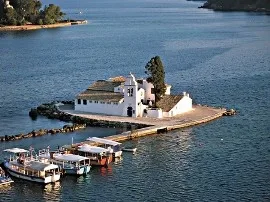
Corfu is one of the most picturesque islands of Greece
It is worth noting that the height of olive trees on the island is higher than in other Greek resorts. The total area of the island is 570 square kilometers, its length is 60 km, width in different places from 4 to 30 km, and the coastline length is about 217 km. The understated beauty of Corfu with breathtaking landscapes amazes even seasoned tourists.
Myrtle thickets, orange trees, raki vines, pines, oak groves, tangerine and lemon trees, as well as olive trees that sometimes rise higher than cypresses, create a charming landscape of the island of Kerkyra. The idyllic picture is complemented by sun-drenched pebble and sandy beaches and the transparent, gentle sea perfect for swimming.
Thanks to its favorable geographical position, many rulers wanted to take possession of the island. The secret is simple: the island of Corfu is located at the crossroads of trade routes between East and West, at the entrance to the Adriatic. To control shipping in the Adriatic region, one had to control Corfu.
It was because of this island that the war between Corinth and Athens began, known as the Peloponnesian War. At different times, the island was ruled by the Roman Empire, the Sicilians, and the Angevin kingdom. While under Roman rule, the inhabitants of the island adopted Christianity.
For more than 400 years, the Venetians ruled the island. Their rule left a significant mark on the history of Corfu. The mighty Venice of those times managed to protect the island from attacks by the Ottoman Empire, but ceded Kerkyra to Napoleon.
The French contribution to the development of the island cannot be overstated. They advanced science and culture, founded the first Ionian Academy, cultivated potatoes and tomatoes, drew up street plans, and even built a miniature "Rue de Rivoli."
French rule lasted until 1814, when Napoleon's army was defeated. The French were replaced by the British, to whom Corfu owes its fine administrative buildings, roads, and reservoirs.
On May 21, 1864, Corfu reunited with its historical homeland: it once again became part of Greece. This date is widely celebrated annually – for the islanders it is a truly great holiday.