
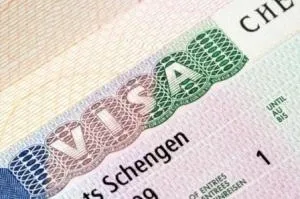
26 countries have signed the Schengen agreement. Roughly speaking, a Schengen visa is a sticker that is affixed to the applicant's passport upon successful review of previously submitted documents. The visa is issued by the consular department of the foreign embassy of the country you intend to visit. There are different categories of visas: transit, tourist, work, student, and so on.
There are also many subtypes of non-immigrant visas. For a positive result in obtaining a visa, each applicant needs to collect the required list of documents, pay the consular fee, and actually submit the documents for review to the consular department or visa center of the country you intend to visit. The consular fee is a financial charge levied on the applicant for processing their application.
As for citizens of our country, a certain group of people has a simplified visa application process. For example: holders of diplomatic passports, journalists, scientists, consular departments issue longer-term visas, lasting from one year. Such a visa has the prefix 'multi'.
There is also the concept of a transit visa. What is it? For example: a person is flying in transit through a country that is in the European Union to a country with which we have a visa-free regime and intends to leave the airport – a transit visa is required. If the traveler does not plan to leave the transit zone of the airport, a transit visa is not required.
The Schengen form contains the following information: type, number of entries into the country, the validity period during which you can visit the country, start and end dates, as well as other information. When going through passport control, the traveler must present their passport with a valid visa. Also, for passport control, an insurance policy and supporting documents depending on the purpose of the trip will be required.
Also, every person entering the Schengen area must have financial means with them. Without financial means, passing passport control may become impossible, as it is necessary to prove to the authorized border service officer what financial resources the foreign citizen will use to stay in Europe.
_