
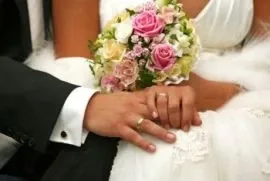
Even in ancient times, wedding rings carried a deeper meaning than ordinary decorations
Since ancient times, humanity has used rings as decorations. Ancient people made them from stones and bones of killed animals. Later, wooden, metal, ceramic, plastic, and gold rings appeared. Rings were worn as earrings in ears or nose, but of course, the most common use was wearing them on a finger.
Signet rings were also used, in which a hole was made for a leather or metal band to hold the signet on the hand. They were as distinctive a mark as, say, a family crest and performed appropriation and inheritance functions. An item with an imprint was considered to belong to the owner of the signet.
A father passed a ring to his son, making him the new owner of the wealth acquired over a lifetime; in philosophical schools, a student who received a ring as a gift from a teacher also became a teacher by right. Rings were passed down from generation to generation and were an invariable attribute of aristocratic families with deep roots.
It is noticeable that rings had a significant impact on people's lives. This resulted in a special attitude towards wedding rings as well. They signified not only union in marriage but were a symbol of power, nobility, and wealth.
However, modernity pays special attention not so much to the rings themselves as to the engagement and wedding process of which they are a part. If you look at the types of wedding rings, you can distinguish simple and decorated ones. The decorations on the ring come in different designs, sometimes very exclusive, so it is worth considering which ring among all this variety will perfectly suit your couple.
You can amaze your other half with the beauty of diamonds or pearls in a wedding ring, choose a base of traditional red gold or platinum, or even opt for 'black gold'. The shelves of jewelry stores are simply bursting with all kinds of goods and names.
Very attractive are wedding rings with custom engravings on specially adapted parts.
Newlyweds usually ask to have the date of their wedding inscribed on the rings. You can also engrave the husband's name on the wife's ring, and vice versa – the wife's name on the husband's ring. Sometimes on such rings you can find a line from a prayer or a poem. Perhaps the couple has a personal life episode associated with that particular line, and they decided to preserve a lasting memory of it in this way.
In general, to wear or not to wear a wedding ring is a very personal matter, and you are free to decide what to do.
_