
"I'm Just Tired"
Vladislav's career was always accompanied by luck. The talented architect interned in London, quickly established himself in the market and began earning decent money. Soon he started his own firm, and by and large his family had no problems.
"We could afford to fly to Europe for weekends, vacation several times a year at expensive resorts, bought a penthouse in an elite residential complex. I could consider myself a successful person," says Vladislav. However, at some point his usual lifestyle began to weigh on him. "I'm just tired. I'm sick of endless negotiations, constant rush, the constant feeling that you're running late, that you need to hurry, to run."
To the surprise of friends and family, a year ago Vladislav bought ten hectares of land in the Karelian wilderness and moved there with his family permanently. Now they have a small farm, a household and a large two-story log house. The family is engaged in subsistence farming; Vladislav takes the children to a rural school, and his wife teaches them English and music at home.
But if at first the settlers enjoyed nature and tranquility, now Vladislav has begun to doubt whether he made the right decision. "More and more often it seems to me that I acted rashly, and sometimes I even regret that I cut off so hastily. The business can't be brought back, and after living on the farm, I'm afraid I've lost my edge. I increasingly blame myself for making the wrong decision. Although now I'm not sure of anything: what if when we return to the city and I rebuild my life, I again want the wilderness?" doubts the new farmer.
Vladislav is trying to figure himself out and understand what he is really looking for (peace or dynamic city life and business success), but so far he cannot give a definite answer to this question.
Psychologists Dmitry Ershov and Elena Bakhareva comment:
"Successful and wealthy people throw themselves into the arms of downshifting because success is often just the tip of the iceberg, while beneath the water are high dedication and tough complex decisions that change a person, and he feels not for the better. Constant tension and the feeling of life passing by – that is what pushes people to such steps.
The example is not very typical in the sense that such a step is more likely to be taken by a person who is not as creative as Vladislav. Creative successful people, as a rule, find it easier to find a flexible way of self-realization without 'downshifting'.
One of the reasons for such a relocation may be that in fact Vladislav learned to earn money but never learned to Create. In such cases, there are no right or wrong decisions. He could have lived his life differently, but he lives like this. Not better and not worse, just differently. For active people who make complex decisions and change their lives, sooner or later this new life becomes boring, and negative emotions from the past life fade, reflection emerges.
What is gone cannot be returned, so Vladislav can only value what he has gained. Let him try to find a compromise so that he can do business and live in nature away from everyone. Modern technology can allow this."
"Somehow It All Whirled and Spun"
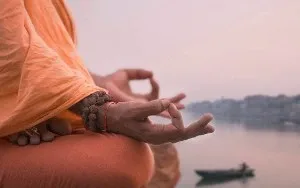
When leaving for the ocean in India, Dmitry didn't even think his trip would stretch to seven whole months. He planned to live there for a month, get a break from the city bustle, and then return to work with renewed energy.
"Somehow it all whirled and spun. I met guys there who had been living on the ocean coast for more than a year. I bought an inexpensive motorcycle, and we rode along the coast, stopping overnight in real villages, in small hotels, and lived at a temple for a long time.
Time passed: a month went by, then another. I didn't want to go back at all, and I kept telling myself 'next week' and stayed again," says Dmitry. In the first month of free living, he lost four kilograms, another five kilograms disappeared over the next two months. "I think it's because we were constantly on the move, did yoga, ate healthy natural food," he believes.
Alas, money tends to run out: no matter how much Dmitry tried to save, after seven months the cash ran out, there was no local source of income, and he was forced to return to Moscow.
"I bought a ticket with my last money, arrived and realized that I can't live here, I can't stand seeing these crowds of people with impenetrable faces who are always rushing somewhere," Dmitry says about his feelings about Moscow. By profession, Dmitry is an interior designer. Before his departure, he earned good money and had a solid clientele, but four months have passed since his return, and he still cannot start working and engage with reality.
"I've developed some kind of depression, a longing for freedom. I feel like I'm in a cage, but I can't do anything. It seems there is no way out, and that scares me the most," complains the designer.
Psychologists Dmitry Ershov and Elena Bakhareva comment:
"Dmitry cannot integrate into the society that was previously understandable and familiar to him because he has seen an alternative that he hadn't seen before. In any case, fear and fright are always bad advisors, and important decisions must be made with a clear head. Not everything that is scary is bad, and not everything that is not scary is good.
Dmitry's approach to this situation is too infantile. Moreover, the story does not mention what usually keeps a person in his homeland. Does he have no parents, friends, a beloved girlfriend, a dog dear to his heart?
The thought that a low mood is a manifestation of longing for freedom may be correct, but it may also be completely wrong. In any case, right now his heart tells him to act this way, and any resistance to this desire will cause suppressed emotions in him.
We need to examine depression in more detail, because there is another path that can lead to less clear-cut results, but it is long, difficult, and associated with personal growth and awareness of one's true goals. Having advanced along it, Dmitry can either strengthen his conviction in the correctness of his imminent trip to India, or choose a different – third, fourth, fifth route in his life.
Everything will depend on what he considers important for himself at this stage of life, but the choice must be made consciously and thoughtfully.
"Downshifting is not for me"
"Drop everything and go to Thailand, if not forever, then at least for a year," – this thought haunted manager Vladimir for half a year. He became less and less interested in work, more often "withdrew into himself," colleagues and management noted his constantly absent gaze and loss of work enthusiasm. A nervous breakdown became the signal for radical changes.
"This never happened to me: I drank for a week, turned off my phone, and on Friday in the middle of the workday I showed up at work drunk and told colleagues and management everything I think about office slavery and corporate ethics," recalls Vladimir the circumstances of his departure.
Worried about his unstable emotional state, he wrote a resignation letter of his own accord, moved out of his rented apartment, gave valuables to friends for safekeeping, and flew to the coast of the Andaman Sea. At first he liked everything: the relaxed atmosphere, nature, daily evening merry gatherings with like-minded people with songs and dances. However, after a while the monotonous "doing nothing" began to bore him.
"A month passed, and I suddenly realized that I had had enough of all this. I wanted so much to go home, to work, to do something. I realized that downshifting is not for me," says Vladimir.
Vladimir could not return to his previous job (his position was taken), but he found another, no less successful job. "I have a new team, a new job, new prospects, I am full of energy and plans. I believe that from time to time you need to change something in life, otherwise you will stagnate and fall into a funk," he is confident.
Psychologists Dmitry Ershov and Elena Bakhareva comment:
"There could be several reasons for Vladimir’s condition: overexertion, failures, and something else that remained off the record. Mental and emotional exhaustion is a fairly common situation for workaholics and careerists. Maybe Vladimir just needed a long vacation.
Vladimir’s opinion that at times you need to radically change something in life cannot be called universal. For some – yes. For others – no. The assessment of the position should come from a cumulative analysis of many factors, but, as a rule, if the general line of life is chosen correctly, such "exercises" are harmful: life is short and you need to accomplish a lot. Vladimir’s breakdown smacks of infantilism.
But there are also pluses. They can be found in the fact that Vladimir is determined enough to seek a way out of his difficult situation not in alcohol and drugs, but in travel. True, he too did not avoid alcohol abuse, but these are the costs of the situation and the culture in which we live."
Vera KRAMSKIKH.
