
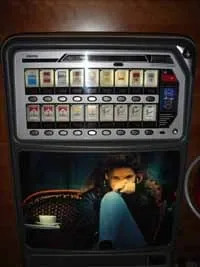
As the Sueddeutsche Zeitung newspaper reports, from January 1, 2007, teenagers will lose the opportunity to buy tobacco in street vending machines. The ban on selling tobacco products to minors has existed in Germany for a long time. However, while it was quite simple to comply with in stores, anonymous and automatic street trade completely ignored the social program of the German government. But the authorities managed to 'explain' to the iron vending machines that teenagers do not have the right to buy cigarettes on their own. Soon, the devices that spit out cigarette packs will stop working with cash – the buyer will be able to pay for a nicotine dose only with a personalized plastic debit card named Geldkarte, the so-called 'money card'. These cards are already used in Germany instead of small change, holding up to €200 in the account. The vending machines will simply be equipped with a special reading device that will request from the card chip information not only about the amount of money in the account, so as to deduct the required sum, but also data on the buyer's age. If the owner turns out to be a minor, the purchase will not take place.
The good initiative of respectable burghers has only two problems. But they are quite significant. For companies operating such vending machines, retrofitting is too expensive. According to Sueddeutsche Zeitung, the measure to protect youth health will cost tobacco magnates approximately €300,000. "The ratio of profit and expenses is becoming increasingly unattractive for vending machine owners. It is already unprofitable to invest money in low-profit outlets. Some ancient mechanical machines cannot be reconfigured at all," the site Newsru.com quotes the general director of the Federal Association of the German Wholesale Trade in Tobacco Products (BDTA), Peter Lind. Currently, there are about 600,000 tobacco vending machines in Germany. And experts predict that by the end of the year, due to high costs, their number will decrease by about a hundred thousand.
Another problem is the unpreparedness of the federal payment system. According to the Association of German Banks, there are currently 64 million money cards of various types in circulation, including special debit cards for children and teenagers. However, only 40% of all money cards currently contain information about the owner's age. The Federal Association of German Banks will try to fill this gap as much as possible by 2007. But most likely, it will still not be possible to reach the 100% mark in such a short period.
It is noteworthy that Germany is moving in fits and starts toward cleansing the lungs of its citizens. Thus, in August 2002, a ban on smoking at railway stations appeared. Then, after a year of lull, the authorities attempted to ban smoking in public catering establishments, entertainment centers, schools, government institutions, and hospitals. However, this revolutionary proposal by the Deputy Minister of Health and at the same time the government's commissioner for narcotic drugs, Marion Caspers-Merk, met with such a stormy protest from opposition parties and owners of establishments that it was never implemented. Further radical steps in the fight against the 'death industry' were postponed for several years.