
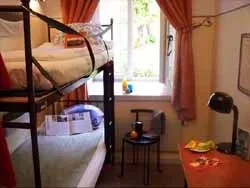
As reported by Novye Izvestia, none of the inmates want to serve their sentences in their home countries. Which is understandable: where else would they be given such comfortable conditions with €300 in pocket money? The opposition proposes solving the problem radically: to negotiate with some African country where a Norwegian prison could be built and operated cheaply.
In recent days, newspapers published in Oslo have been filled with headlines such as: "Foreign criminals relax in Norwegian prisons", "Lithuanians and Poles consider our jails sanatoriums", "Foreign bandits are not afraid of getting a sentence in Norway". The authors of these publications are outraged that the foreign "criminal element" robs the country twice: first, by committing robberies and assaults, and then by forcing Norway to pay large sums for their stay in local hotel-type prisons.
Keeping one criminal costs the state €200 per day. This amount includes pocket money, which is given at the rate of €300 per month. Given that everything else is free – food, accommodation, and entertainment – residents of Eastern European countries, not to mention people from "third world" states, consider imprisonment in Norway to be economically worthwhile.
"We must put an end to foreigners sitting in our prisons and planning new crimes there," the newspaper Aftenposten sarcastically quotes Justice Minister Knut Storberget, who said this at the end of last year, on the eve of a big tour of Europe. The minister visited 16 countries, trying to negotiate with the heads of the relevant agencies of those states to have the "guest criminals" from there, sentenced in Norway, serve their sentences at home. Principle agreements were reached, but due to various technical problems, the situation has not changed since then. Only 1% of foreigners are deported to their home countries to serve time. Norway, which is not an EU member, is particularly irritated by the reference of some EU member states that they cannot sign a bilateral agreement: the matter must be decided with Brussels.
But a single EU-Norway treaty is impossible, as Norwegian commentators note. Oslo does not want to deport citizens of some countries at all, because they would face lighter sentences or only a verbal reprimand at home. Others, on the contrary, Norwegians would gladly push out of their borders, but this cannot be done. A typical example is drug crimes, a real scourge of Scandinavia. "Belgians and Dutch are eager to go home, where they would receive a much milder sentence, but that is precisely why we want them to serve their sentences in Norway," comments lawyer Cecilie Nakstad. "Lithuanians, on the other hand, dream of sitting in Norway. They admit that everything is corrupt at home, criminals with money secure good conditions for themselves, while the rest have to suffer."
Eastern European bandits, thieves, and smugglers are not even scared by the "horror stories" of Norwegian authorities that they would have to serve time in solitary confinement, most of the time deprived of communication with cellmates, which is an irreparable loss for any person. Foreign criminals politely but firmly reply that they are ready to suffer in a one-room apartment with all amenities, which is what Norwegian solitary confinement is, because only such a severe psychological ordeal can lead them off the crooked criminal path onto the straight road of righteous life.
The parliamentary opposition, represented by right-wing parties, believes that the government simply does not dare to take radical measures. "Storberget put so much effort into traveling to other countries and persuading their authorities to take back their bandits, but nothing happened. The number of foreign criminals only grows because they see that our prison is better than freedom at home," says Jan Arild Ellingsen, a member of the parliamentary justice committee.
It must be admitted that his claim is partly justified, just look at the reason for riots in Norwegian prisons in recent years. At times inmates were outraged that the prison kiosks were banned from selling pornographic literature, at other times bandits were forbidden to engage in bodybuilding in the gym, or pork was found in the menu, unacceptable for Muslims and overlooked by the administration.
The opposition proposes solving the problem radically: to build a special prison for criminals from poor countries, which has already been nicknamed "kebab jail" by the public, or to negotiate with some African state where a Norwegian prison could be built and maintained cheaply. But another proposal aroused much greater interest in the Ministry of Justice: to negotiate with individual states for Norway to pay them for each criminal that the homeland agrees to accept and put behind bars.