Money
Moscow Is Not Copenhagen
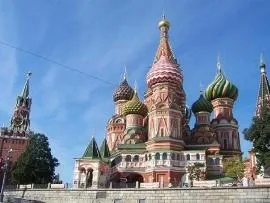
Moscow is not the most expensive nor the richest city in the world<\/em><\/p>
Prices in Moscow lag behind the world leaders by 40%, while the average salary of working Muscovites is only a third of the income of New Yorkers. As a result, residents of the Russian capital can buy half as many goods and services with their salaries as the average worker in most developed-world megacities. Surprisingly, however, the sale of jewelry in Moscow<\/a> is thriving - a reflection of the capital's status.<\/p>
The cost of 122 basic goods and services, calculated at official exchange rates, in Moscow amounts to 66% of one of the most expensive cities in the world - New York. Moreover, when including rental housing, the price level in the business capital of the USA surpasses all other major cities in the world, while Moscow lags behind the city of millionaires by 40%.<\/p>
Wages of employees in 15 major employment sectors in Moscow amount to only 31% of New Yorkers' salaries. However, after deducting taxes and other mandatory payments, the situation of residents of the Russian capital looks slightly better: their income rises to almost 36% of the earnings of New York residents after all taxes.<\/p>
Only slightly more than Muscovites are the incomes of residents of Seoul, Hong Kong, and Taipei, the capital of Taiwan. And residents of Singapore, Rio de Janeiro, and Istanbul fall just short of them. Meanwhile, Muscovites' incomes have confidently surpassed those of residents of Prague, Tallinn, and Warsaw (not exceeding a quarter of New York levels), and even more so those of Budapest and Riga (less than 19-20% of New Yorkers' incomes). And they are three times higher than the incomes of Kyiv residents.<\/p>
As a result, the purchasing power of Moscow salaries does not exceed half that of New York residents and most major Western European cities. Our closest neighbors in the ranking are Hong Kong, Ljubljana, the capital of Slovenia, and Johannesburg, the business capital of South Africa. Interestingly, in terms of purchasing power of their incomes, Muscovites look even slightly better than residents of Rome, not to mention employees of Seoul, Tallinn, and Prague.<\/p>
The purchasing power of incomes of residents of Bratislava and Warsaw is almost a quarter lower. Residents of Riga, Bucharest, and Budapest can buy a third fewer goods and services with their wages than Muscovites. According to 'Vremya Novostey,' the consumer basket of residents of Bangkok, Kyiv, and Delhi is only a third of that of Moscow.<\/p>
