
Photo from the archive of Zagranitsa
Meanwhile, as Gazeta notes, the intrigue developed as follows. The Church and the left argued that Sunday should under no circumstances become a working day. The right, on the contrary, are convinced that relaxing labor legislation will benefit the Swiss economy and make life easier for many people.
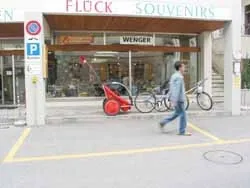
Anyone who has been to Switzerland at least once knows: it is a beautiful, rich, calm country, life here flows slowly and without much excitement. The Swiss value this life, and that is understandable. But on Sunday, an unprepared tourist risks easily falling into depression: there are no cars or people on the streets, no children crying or dogs barking; shops, cafes, and most restaurants are closed. All you are left with is to admire the scenery, breathe fresh air, and drink tap water, which is even cleaner than bottled water.
If you still want to buy water or something else on Sunday, there is only one way out: you have to go either to a railway station or an airport. Only here, in accordance with Swiss labor law, can you buy products that may come in handy on the road. Article 39 of the federal law on railways permits the opening at stations of retail outlets that "meet the needs of passengers traveling by rail." This means that small shops located in station buildings have the right to work on Sunday, even if their branches in other parts of the city are closed.
Trade unions regularly oppose this situation, claiming that in the vast majority of station shops that open their doors on Sunday, children's shoes, clothing, and other goods are sold that, in their opinion, a traveler has no need for. According to Swiss trade union activists, an ordinary employee should be able to rest on Sunday, and the need to go to work on that day would inevitably harm his family life. The Church shares this position, insisting that it cannot be allowed for "the economy to shape personal, spiritual, and social life."
It came to a referendum, in which Swiss residents were to decide the fate of 150 shops located at railway stations and airports and open on Sundays. Paradoxically, but a fact: the Swiss showed unprecedented activity and voted to leave the shops alone.
– In my opinion, it is very convenient when there are places where you can buy everything you need on Sunday, – Geneva doctor Pierre Hegg said in an interview with Gzt.ru. – For example, your train leaves in half an hour, and you remember you left your shirt at home. What to do, wait until Monday? Instead, you go and buy it. It can really help out. Moreover, given the unemployment we have, the operation of such small shops on Sunday could provide additional jobs for people who cannot find work.
– The Swiss have probably already gotten used to everything being closed on Sunday?
– Yes, we have indeed been taught from childhood that almost nothing can be bought on Sunday. There are small shops at gas stations, there are 3-4 duty pharmacies that work until late evening and have medicine prices 20% higher than usual. It is also true that on Sunday the city streets are empty and restaurants are closed. But we are not bored! After all, all this has its pluses: at least on a day off you can enjoy silence. Don't think that empty streets and the calm of Sunday oppress us. Perhaps it really traumatizes tourists accustomed to a different pace of life, but not us! People who work all week, on the contrary, enjoy the opportunity to rest from the hustle and bustle and not see either shops or crowds. I think that even if shops were open on Sunday, there would be quite few people in them.
I really like the atmosphere when there are people around, voices, everything in motion that never stops for a moment. But that is also good in moderation. Sometimes you want to be in silence, peace, and safety, and in this sense there is no better country than Switzerland.