
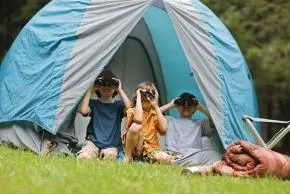
There are three stages of a student's state during vacation, and only the last one is suitable for putting a textbook back into the child's hands.
In addition to learning a language, you can acquire other skills during the holidays. For example, you can go to the music academy The Collective Sound Academy. This is essentially a music summer camp for 8- to 18-year-old young performers (guitarists, vocalists, pianists), where over three weeks from 300 to 700 "students" can take an accelerated course on "How to Become a Star". Three weeks of training at such an academy will cost 3600 dollars. For classes, you can choose either Bournemouth in England, or Portland in Oregon, or the town of Costa Mesa in California.
Science camps often operate on university campuses – for example, Oxford Royale Academy or the school of mathematicians at the University of Toledo. Yale University recently opened its own summer camp, where classrooms and campus stand empty from May to September. The SuperCamp has been running at Stanford University for several years now. It is usually a ten-day course with a special program, accessible to schoolchildren of any age. Specially trained teachers from Stanford open up such horizons for "underachievers" that afterwards almost all of them start getting B's and A's at school. The rule "There are no bad students, there are bad teachers" is the foundation of this camp.
But the emphasis here is not only on studying. It is considered equally important to help children discover their leadership ambitions, and for some, just to teach them how to make friends. The daily routine is as follows: the first half of the day is study, the second half is mandatory team games and real communication, when computers are forbidden and you have to learn to find friends in person (it's no secret that this is a big problem for many modern schoolchildren). At the camp, they teach communication and memorization techniques, helping children understand themselves. Many, by the way, don't even know what kind of memory they have – visual, auditory, or emotional, so music, color, and movement are used in lessons. When children figure themselves out, studying and memorization go much faster. Many camps now operate according to the SuperCamp program not only in the USA and Europe (say, in Switzerland) but also in Asia and Latin America.
The French Center for Science Holidays offers several programs at once. You can choose between astronomy, the architecture of the future with stories about solar panels and eco-friendly materials, and archaeology with work on real excavations.
Elena ZIGMUND.
