
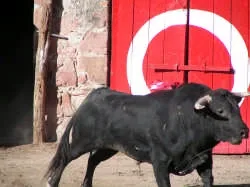
Most residents of Spain would not want to part with their beloved spectacle
The blame lies with economic troubles. The crisis has forced many Spaniards to save money, to give up what until recently seemed an indispensable attribute of their lives. Even the famous bullfight fell victim – an expensive pleasure and, as it turned out, far from affordable for everyone in these crisis times. Oscar Ceresal, the mayor of the town of Manzanares el Real, which has only about 7,000 residents, stunned the townspeople with the announcement that the budget for a four-day fiesta with toreros and bulls amounts to €125,000 and would consume over a quarter of the city's budget allocated for culture, sports, and social welfare.
In Manzanares, such heated debate flared up that the mayor had no choice but to put the question of holding a bullfight to a local referendum. The authorities sent out nearly 6,000 ballots to adult residents of the town. About 1,200 people responded to the question of what to do about the bullfight. 53% voted for the abolition of bullfights, 34% for holding them. Another 12% proposed holding the bullfight in a "truncated format": reducing the number of fights and releasing only young bulls into the arena, which usually serve only to "warm up" the audience.
At the city council meeting where the results of the Manzanares residents' vote were announced, heated arguments also flared up more than once, threatening to turn into a fistfight. The main argument of bullfighting supporters was that the referendum was not sufficiently representative – only 22% of the town's population participated. The authorities insist that the expensive pleasure has become unaffordable for the city, but their opponents stand their ground: without the bullfight, the local festival will lose its charm and appeal.
To calm the seriously heated passions, Mr. Ceresal may adopt a compromise solution. Most likely, the bullfight, if it takes place in August, will be held in a significantly reduced form. It must be said that the majority of those who voted in Manzanares for the abolition of the spectacle were not guided by any ethical norms. They are not its opponents and do not participate in the debates that have been raging in Spain for several years about whether bullfighting is acceptable in a modern developed European country. Their main concern is the economy.
It seems the crisis plays into the hands of opponents of the traditional national "sport" – as bullfighting is often called in Spain. The strongest "anti-bullfighting" sentiment is manifesting in Catalonia. Of the 56 cities in the country that have already declared they are in favor of abolishing bullfighting, 53 are in this autonomous province, which usually seizes any opportunity to prove its uniqueness. However, second in acceptance of bullfighting is Aragon – a province that is very Spanish. On the opposite pole are southern Murcia and Valencia, where most of the population cannot imagine life without the adrenaline-raising spectacle.
Dozens, if not hundreds, of city councils have significantly reduced or entirely canceled financial support for bullfights, which are mainly funded from local budgets. Holding fiestas and maintaining numerous schools last year, according to Alejandro García, one of the leaders of the national movement "Stop Our Shame," cost Spanish taxpayers €600 million. More than 1,300 farmers breed bulls specifically for fighting. Formally being meat producers, they receive EU subsidies of €220 per year per bull. Interest in Los Toros (as the spectacle is called in the country) is objectively declining. According to polls conducted by state sociological services, less than a third of Spaniards are now interested in bullfighting. A quarter of a century ago, nearly half of the country's residents watched it, and today almost 40% favor a ban.
Sergey LAVINOV.
Novye Izvestia