
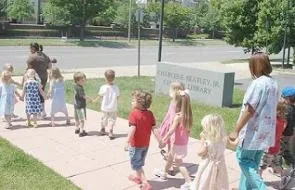
The queue to enroll a child in kindergarten is not only a Russian problem; European preschoolers also face a shortage of places.
The number of municipal preschool institutions that survived perestroika and repeated crises remains the same or increases by a very small percentage, while the number of those wishing to enroll in kindergarten is steadily growing. And since the state is unable to fully provide the population with free nurseries and kindergartens, and the need for places continues to grow, it is not surprising that private preschool institutions have appeared – as they have abroad.
Their main difference is that a parent or guardian, when applying for a place, is almost guaranteed to reserve it. A refusal can be obtained in very rare situations related to temporary troubles in the kindergarten itself. In any case, if a refusal is necessary, the parents or guardians of the child are offered one or more alternative options.
If time permits, the child can be admitted to kindergarten after resolving the problems that served as obstacles. If the situation is a bit more complicated or the parents need to urgently place their child in a preschool institution, they will be given addresses and phone numbers of recommended institutions located nearby.
Another feature of a paid kindergarten is that it can have either a specific focus – for example, an artistic, musical, or mathematical bent – or be broadly specialized, like an 'erudite' type. Some municipal schools have found this innovation useful and have also begun implementing in-depth subject classes.
In addition to all of the above, the problem of educating 'unusual' children in kindergartens (for example, those with speech impairments) remains relevant. Preschool and indeed any educational institutions for such children are still catastrophically few; fortunately, paid options for education and care come to the rescue.
We will not dwell on the fact that furniture, toys, literature, and educational methods in municipal kindergartens are hopelessly outdated, and the quality of food leaves much to be desired. The owners of private preschool institutions, which are a kind of business, carefully monitor everything that children come into contact with during their stay in their kindergarten.
Therefore, by sending their child to a paid kindergarten (if it has a recommendation or a positive review – that would be wonderful), parents can be as calm as fathers and mothers can ever be when entrusting their child to others, even for a short period of time.