
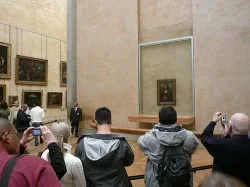
You can avoid the crowds during tourist season by following simple rules
That is why Venice is a great place for close observation of tourists' habits, the problems they create for everyone else - locals or those who came here not for idle wandering. Moreover, every year the crowd becomes larger and more annoying.
I understood how exhausting the tourist season is: huge numbers of people cram into museums and churches, and in the case of Venice, constantly ride gondolas, crowd the squares. All this kills the charm of such places. But I also managed to develop a plan to avoid the usual 'hand-to-hand combat'.
You don't have to enjoy Venice with the procession of people that follows the same route every morning. First, the crowd fills St. Mark's Square, then flows into St. Mark's Basilica, packs the Bridge of Sighs, and finally spills into an angry, tired queue in front of the Accademia Gallery, then, exhausted, people head home by early evening. The same in Paris: if you plan everything correctly, you won't have to push through groups of tourists gathered in the square to enjoy Notre Dame Cathedral.
Go out into the city closer to evening
Of course, there is a certain charm in queuing at the ticket office before the museum opens. That's exactly what I did when I visited the Sistine Chapel about 30 years ago. Once inside, you practically run through the Vatican Museums to enjoy a couple of minutes of silence before the crowd catches up.
You can also start your visit a few hours before closing: many tour groups leave the museums. Note that some attractions are open late in the evening, and it usually becomes much quieter by that time.
For example, on Wednesdays and Fridays the Louvre is open until 10:00 PM, on Fridays and Saturdays the Metropolitan Museum of Art in New York is open until 9:00 PM, on Thursdays and Fridays the British Museum receives visitors until 8:30 PM, and the National Gallery in London is open until 9:00 PM on Fridays.
Fight the crowd, not the heat
In hot countries, lunchtime can be the quietest part of the day. For example, most tour groups avoid walking through the Egyptian Valley of the Kings in the midday heat. But when I was there three or four years ago, the guide took us there before 3 PM. The valley was completely deserted, and since we spent most of the time in cool tombs, the sun didn't bother us too much.
Don't skimp on tickets
Some museums raise admission prices on certain days. For example, at the Louvre this happens on the first Sunday of each month. But by saving a couple of euros, you doom yourself to visiting the museum at the busiest time.
Some museums, such as the Uffizi Gallery in Florence, sell tickets that indicate what time you should enter, allowing you to avoid two-hour queues.
Use alternative entrances. This will help you avoid the crush at the main entrance. Also, nothing will stop you from taking a different route than those who enter through the main entrance.
Visit churches during services
You will have to show respect for the congregation and sit through the entire service. However, this will benefit you: during the service you will better feel the special atmosphere of Notre Dame Cathedral in Paris, St. Mark's Basilica in Venice, or Westminster Abbey than just visiting these places as part of a tour group.
Avoid weekends
On weekdays your rivals will be other tourists; on weekends locals will join them. Note: many museums are closed on Mondays.
Don't disdain lesser-known attractions. Most of us wouldn't miss the chance to visit the Louvre and come face to face with the Mona Lisa, or go to Rome and see the Sistine Chapel?
But if you've already been there or prefer to enjoy art in silence, small galleries will be more attractive for you. For example, if you like Monet's work, you can see a rich collection of his creations at the small Marmottan Monet Museum. There are even more paintings there than in the crowded Musée d'Orsay. In Venice, the paintings and sculptures presented in the half-empty Correr Museum have no less cultural value than the exhibits of the Accademia Gallery.
Find a guide
A good guide will recommend both the time to visit museums and routes that will avoid meeting tourist groups. Finding a good guide is quite difficult. The main thing is to refuse those guides who offer their services near the attractions. Most travel agencies have lists and contacts of qualified guides who can be contacted in advance.
I love audio guides: they allow you to enjoy the view and get information at the same time. But they can become a real disaster because tourists constantly come up to you to listen to the commentary.
Nick Trend.
Translation by Gzt.ru