
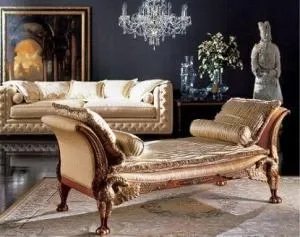
The Empire style owes its appearance to Napoleon Bonaparte
Initially, there was a desire for interior decoration of rooms, but the scope of modern design is much broader. Nowadays, designers work together with architects, clients, and builders, making joint decisions on finishing works and materials, developing apartment designs in Kyiv, apartment design in Dnepropetrovsk.
The history of interior design is determined by the development of artistic styles, influenced by culture, customs, scientific inventions, and new materials. Each era has its own color palette, style, and fashion. The concept of interior beauty changed as the era changed.
Over time, experience in interior design accumulates, and details in room decoration become more complex. For example, in apartment interior design, every little thing matters, from curtains to figurines and vases. Each person's style makes its own adjustments to the details and affects the interior of the entire room. In apartment design, every detail is important, and if you remove just one, something will be missing.
Every historical period brings something new to modern interior design. Styles such as Classical, Medieval, Baroque, Empire, Art Nouveau, High-tech, Contemporary, Art Deco, Romanesque, Gothic, and others have become widespread in interior design. The ethnic direction is represented by styles such as Japanese, Chinese, Egyptian, Scandinavian, and Spanish.
The Classical style dates back to the 17th century. Its main criteria are simplicity, moderation, precision, and symmetry. Light tones and clear lines are characteristic of this style.
The Baroque style was formed in the 16th century. This style is marked by solemnity, opulence, and grandeur. Fountains, candlesticks, chandeliers, carved furniture, marble elements, mirrors, and statues are widely used.
The Gothic style came from the 13th-15th centuries, bringing mystical elements and elements of church architecture – for example, rose windows and stained glass. Stone, iron, bronze, and marble are used in decoration.
The Romanesque style dates back to the 9th century. It is characterized by massive elements, ornaments in the form of leaves and scrolls for decorating doors and windows. Chairs with very high backs, chests, and round arches are all typical of the Romanesque style.
Art Nouveau dates back to the 19th-20th centuries. New materials, innovative details, especially glass, multi-level floors and ceilings – all this is Art Nouveau.
The Contemporary style – use of tile, wood, metal in restrained colors with a bright accent.
The Empire style emerged after the revolution at the end of the 18th century, gaining great popularity during Napoleon's time. Attributes of the style – cornices, columns, consoles, friezes – everything that recalls Ancient Rome. Furniture is made in the image of ancient lion paws.
Source: Interior Design.
PR