
French authorities want to outlaw the hijab
The parliamentary commission's report practically guarantees that a ban on wearing the hijab in certain public places (specifically, in government institutions and hospitals) will soon be approved by the National Assembly and become law in France. When the vote will take place is not yet known.
The report was prepared by a group of 32 parliamentarians who studied the issue over six months. In France, discontent is growing every year over the fact that many newcomers from Arab countries retain their Muslim identity by strictly observing the canons of their religion.
The Hijab as a Challenge
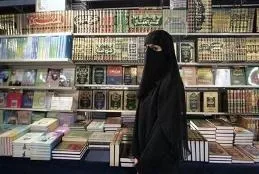
The increase in the number of women wearing hijabs is especially noticeable on French streets. The hijab is a cloak of dense black fabric reaching to the feet, which completely covers a woman's figure, leaving only the eyes exposed. In the report published on Tuesday, the burqa – a Central Asian variant of the Muslim cloak, where a netting is also placed over the woman's eyes, making the woman completely covered in fabric – is equated to the hijab.
“Wearing the full hijab is a challenge to our republic and absolutely unacceptable,” says the report of the French parliamentary commission. The authors of the publication recommend banning the wearing of the hijab in all government institutions, hospitals, and public transport. In their opinion, this is justified not only from a value perspective but also from a security perspective. Under a hijab, a female terrorist could hide explosives or weapons, French parliamentarians fear.
Muslims Will Be Restricted but Respected
Earlier, Jean-François Copé, leader of the right-wing Union for a Popular Movement, which has an absolute majority in the French parliament, demanded a ban on hijabs in all public places, including streets. However, the parliamentary commission decided not to resort to such strict measures, as a total ban on hijabs could conflict with European Union human rights laws.
In addition, the report recommends that all state institutions refuse service to women in traditional Muslim attire. This applies to service at French consulates around the world, at border customs points, and in hospitals.
At the same time, the document condemns Islamophobia, which is becoming increasingly widespread in France and the EU as a whole, and demands respect for the Muslim diaspora. To this end, it recommends creating a national school for the study of Islam, holding public discussions on the issue of xenophobia, supporting the construction of Islamic cultural centers and mosques, and granting official status to important Muslim holidays.