
According to the press secretary of the German Federal Customs Service, Astrid Pinz, this is due to the fact that prices for these products and their tax rates in the new and old EU countries differ greatly. If a carton of cigarettes costs 15 euros in Poland, then in Germany it is twice as high. Prices for alcohol and petrol diverge in much the same way.
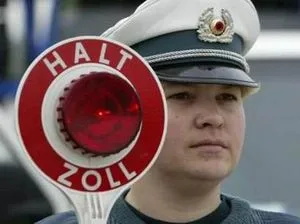
The federal finance minister Hans Eichel is partially financing Germany's healthcare reform through revenues that flow into the state treasury from the taxation of tobacco products. And the revenues from the ecological tax on motor fuel replenish the pension fund. So controls on the import of products from the new EU states will continue. True, they will now be carried out not at the border itself, but on major highways near it. On various sections of the autobahns, it is planned to organize duty shifts for customs officers - for these purposes, 15 mobile special groups are to be created. Officials are given the right to stop every 'suspicious' car - to check whether it contains contraband goods.
The norms for importing various products into Germany have already been determined. A person entering has the right to carry no more than 200 cigarettes, cigars or cigarillos (or 250 g of loose tobacco), 10 liters of spirits, 90 liters of wine (including - a maximum of 60 liters of sparkling wine), 110 liters of beer, as well as 20 liters of petrol in an additional canister. For the Baltic countries, restrictions will remain in force until the end of 2009, for Poland, Hungary and Slovakia - until the end of 2008, for Slovenia and the Czech Republic - until the end of 2007. In addition, from the Czech Republic to Germany it is allowed to carry only 50 cigars or 100 cigarillos.
Even stricter requirements apply to persons who regularly cross the border on their way to work and residents of border regions located within a 15-kilometer zone. They are allowed to carry no more than 40 cigarettes or cigars, or 50 g of loose tobacco. At the same time, more lenient requirements are imposed on those entering German territory from Malta or Cyprus. They are allowed to carry up to 800 cigarettes, 400 cigarillos, 200 cigars, or up to one kilogram of tobacco.
If the quantity of tobacco products transported across the border exceeds the established norms, the surplus will be confiscated and destroyed, and the violator will pay the tobacco tax.