
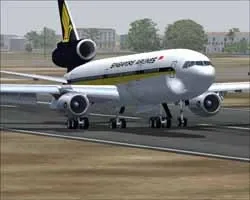
Singapore Bans Liquids and Drinks in Carry-On Luggage
Restrictions on carrying liquids and drinks in carry-on luggage for air passengers have come into effect in Singapore. They will be similar to measures applied in recent months in North America, the European Union, Australia, New Zealand, Japan, Korea, China, Taiwan, Hong Kong, Egypt, Brazil, and a number of other countries. The only exception will be permission to carry empty bottles and other containers with a volume of more than 100 ml.
As for containers holding liquids, drinks, gels, and creams, their volume may be no more than 100 ml. Exceptions will be made for medications and baby food. Tables have been set up at Singapore airport for passengers wishing to repack their luggage, and new rules have been posted. Additionally, about 100 airport employees will initially work in the departure hall, helping passengers navigate the new situation.
EU Faces Demographic Crisis by 2025
The European Institute of Family Policy predicts a demographic crisis in the European Union by 2025 and calls on the authorities and governments of member countries of this regional organization to implement policies that stimulate population growth. "In Europe, population growth is declining; from 2025, negative demographic dynamics are expected in the European Union," said a report released in Brussels by institute head Eduardo Hertfelder.
According to experts, in the EU between 1994 and 2006, natural population growth amounted to 19 million people. Moreover, this demographic indicator was 80% provided by immigrants. According to demographers, in Europe today, the share of the population aged 65 and older exceeds the total number of adolescents under 14.
According to the head of the European Institute of Family Policy, the growing demographic crisis is due to a number of socio-economic factors. In particular, over the past decade, the number of abortions in Europe has increased by 30%, reaching 1 million 200 thousand per year. In terms of the number of induced abortions among EU countries, the absolute leaders are Belgium and Spain, where the volume of such procedures has also increased by 50% over the past decade. Hertfelder also noted an increase in the number of divorces among Europeans: according to statistics, on average, there is one divorce for every two marriages. The population of the 27 EU countries is about 500 million people.
At Domomdedovo Airport, Taking Off Shoes Not Required
At the largest Moscow airport, new-generation radar scanners SafeScout 100 for non-contact passenger screening have been integrated into the security system. The project involved GE Security and Borlas Security Systems, as well as the aviation security service of Domodedovo International Airport.
Currently, four SafeScout 100 scanners are operational at the airport. One scanner is installed at the business class passenger passages in the international departure area and in the domestic departure area. Two more SafeScout 100 scanners are located in the general screening area for international departures. The use of the SafeScout 100 scanner allows passengers not to remove shoes and belts when passing through screening, and also eliminates the mandatory tactile screening procedure introduced at Russian airports in October 2004. The scanner's throughput is up to 600 people per hour.
SafeScout scanners are used in government institutions, transport hubs, penitentiary systems, and military facilities in the United Kingdom, Israel, the United States, Japan, Mexico, Thailand, and Middle Eastern countries.
Saudi Arabia Issues New Banknotes
In May, Saudi Arabia is conducting a currency issue. The kingdom's new paper money will come in six denominations: 1, 5, 10, 50, 100, and 500 riyals. They will be provided with enhanced counterfeit protection.
The 500-riyal banknote, which features the founder of the modern Saudi state, King Abdullah ibn Abdulaziz Al Saud, will remain unchanged. Also unchanged will be the 20- and 200-riyal banknotes issued several years ago during the celebration of the kingdom's 100th anniversary.
The new issue of banknotes will feature a portrait of King Abdullah. Old paper notes will be withdrawn from circulation as the new money is introduced.
The first Saudi money was issued in 1952. Over the years, four issues have been conducted. The current one will be the fifth. As explained by the country's finance minister, Ibrahim al-Assaf, the introduction of new Saudi riyals will be carried out gradually.
Britons Defend Their Familiar Pounds and Inches
The European Commission has decided to abandon plans to forcibly convert the United Kingdom to the metric system, writes The Daily Telegraph.
According to British MEP Giles Chichester, he received confirmation from EU Commissioner for Trade and Industry Günter Verheugen that dual labeling of products in metric and British systems of measurement will be permitted for an indefinite period. The corresponding regulation is expected to be issued in 2007. Maintaining the English system of measurement will facilitate trade between the UK and the US, which uses the same system.
According to the results of a recent study conducted by the British Weights and Measures Association, 80% of the population prefer the English system of measurement over the metric system. Meanwhile, 70% of people, most of whom are between 18 and 24 years old, are only familiar with weight measured in pounds and ounces.
The use of the English system was supposed to become illegal from 2010, but this provoked numerous protests from the British Weights and Measures Association and market traders.
Many Americans Believe They Cannot Afford a Child
More than half of Americans, considered one of the wealthiest nations in the world, believe that a child is beyond their means. Thus, 54% of the 19,920 respondents surveyed by Newsweek magazine said that the financial aspect limited their plans to have offspring.
Spending on the most basic needs of a child - food, clothing, toys - amounts to up to $10,000 per year in the budget of 37% of respondents. And this is the lowest threshold of expenses. For the remaining 63%, a child costs over $15,000 and even $20,000 per year. And this does not include expenses for nannies, educators, and governesses, which cost up to $15,000 per year for 22% of respondents, and even more for 7%.
Education is also not included in the category of daily expenses. Such a luxury as a private school can only be afforded by 23% of Americans, the rest are content with free public educational institutions, which do not enjoy a high reputation.
However, half of parents open a savings account for their child's future college almost from infancy - which is indeed an expensive pleasure. The survey showed that 43% of American children have a personal computer, and 45% have a mobile phone.