
European Parliament outraged by aviation rules
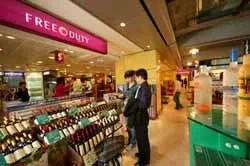
Members of the European Parliament called on the Vice-President of the European Commission responsible for transport, Jacques Barrot, to lift the restrictions on carrying containers with liquids in aircraft cabins that were introduced in November 2006 in EU member states.
The restrictions stipulate, in particular, that each passenger may take containers with a total volume of no more than one liter into the aircraft cabin. Moreover, the volume of each container (including perfume bottles and bottles of soft drinks and alcohol), which passengers are also required to keep in transparent plastic bags sealed by airport security, must not exceed 100 ml.
In the opinion of the parliamentarians, such "draconian measures" have led to "passengers being defenseless against the absolute power of individuals in uniform." According to data submitted by European Parliament deputies, at Amsterdam airport alone, security confiscates approximately 1,600 liters of alcoholic beverages and perfume products every week. The MEPs expressed doubts that these restrictions are an effective measure in the fight against terrorism in air transport. So far, no studies on this matter have been conducted.
European Commissioner Barrot promised the European Parliament deputies to conduct an assessment of the effectiveness of security measures applied in EU airports. Noting that he himself is "not happy with their introduction," he expressed hope that the restrictions would be lifted with the introduction of new security technologies.
Security requirements for passenger air transport in EU states were tightened after the prevention by London police of a series of terrorist attacks on flights in August last year. The terrorists intended to bring liquid explosives onto aircraft in drinking containers.
European Union to open up for guest workers
The European Union plans to more actively attract workers from countries that are not EU members. According to Deutsche Welle, a so-called "blue card" – an analogue of the American "green card" for immigrants – will be introduced for this purpose. It is expected that the directive on the "blue card" will be presented in September 2007.
The holder of a "blue card" will be able to look for work in any EU state without additional bureaucratic obstacles, and if employed, they will be allowed to bring their family. The European Commission decided to introduce the "blue card" because the birth rate in EU states is constantly declining. At the same time, population growth from immigrants is not as significant as, for example, in the USA or Canada. A solution to the problem may be to use the potential of Africa, where there is a demographic explosion. The European Commission also hopes for specialists from Eastern Europe and India.
The first experimental job center has already been opened in Mali, offering work in agriculture, construction, and tourism. Spain and France have agreed to employ residents of Mali, while the authorities of Denmark, Italy, and the Netherlands are still considering.
Automated system to account for migrants in Russia
Russian ministers approved the Regulation on the State Information System for Migration Registration. The corresponding announcement was published on the official website of the Russian government.
According to the Regulation, this system will consist of a central database for recording foreign citizens temporarily staying and temporarily or permanently residing in the Russian Federation, automated records of address and reference units of the Federal Migration Service (FMS), as well as "other information systems containing information about foreign citizens and stateless persons."
The government appointed the FMS as responsible for coordinating the creation of the new system and ensuring its operation, while instructing the Ministry of Internal Affairs, the Ministry of Information and Communications, the FSB, and the Federal Service for Technical and Export Control to develop the full range of necessary regulatory legal acts that will regulate all aspects of the system's operation.
Immigrants threaten dominance of Anglican Church in Britain
Roman Catholicism could become the dominant religious denomination in Britain, surpassing in the number of its adherents the country's traditional Protestant Anglican Church, which after the Reformation period that began in Europe in the 16th century renounced the authority of the Pope and conflicted with the Roman Catholic Church, writes The Times.
The increase in the number of Catholics is linked to their mass migration to Britain. According to forecasts, in the coming years, hundreds of thousands of adherents of the Catholic Church will arrive in some areas of the country where the population that traditionally practices Catholicism lives.
The publication notes that in 2005 the number of devout believers from both denominations equaled one million people. These figures are conditional because they only count those who regularly attend Sunday masses. However, the Anglican Church claims that it is not entirely correct to talk about a decline in the number of believers, as 1.7 million people attend religious services in their churches monthly. And this figure is stable.
Representatives of the Catholic Church, on the contrary, note that it is not possible to indicate the exact number of their adherents because immigrants prefer not to publicize their religious beliefs. Overall, in 2005, 25 million residents of England, Wales, Scotland, and Ireland identified as Anglican, and 4.2 million as Catholic. The main growth of Catholic believers in Britain comes from people of Polish origin. Since 2005, the number of Poles in London alone has increased by 600,000.
The growing influence of the Catholic vicariate in the UK is linked to immigrants turning to church representatives for help with employment and social protection, preferring them over secular institutions. Dioceses in most counties have already been instructed to study the needs of immigrants and start providing targeted assistance.
London turned out to be the most prestigious place for an office
The most prestigious place to locate an office is London. This is stated in the report "Office Space Across the World" published by Cushman & Wakefield. The British capital, the researchers write, also held first place last year.
In London's West End, a square meter of office space will cost companies €2.009 per year. This is 35% more than the rental rates in Tokyo, which took second place in the ranking. In the Japanese capital, a square meter costs €1.493 per year. Third place went to Hong Kong with €1.448 per square meter per year.
The document contains data on rental costs in 211 locations in 51 countries. The authors of the survey found that in 94% of cases, rental costs increased or remained at the same level, and only in 6% of cases did they decrease.
Irish people have fallen out of love with Guinness
Irish beer Guinness is losing popularity at home, writes The Telegraph. The owner of the Guinness brand, Diageo, admitted that over the past six months, sales of the legendary dark drink, which has been produced for 250 years, have fallen by 10%. According to the company's management, this is due to the 'extinction' of Guinness consumers.
"Here's what's happening in Ireland: 50-60-year-old men who came to the pub five or six times a week and drank five or six pints of beer (about 2.5 liters) per visit have been replaced by younger customers who visit the pub three times a week and manage only two or three pints (just over a liter)," says Diageo director Paul Walsh.
However, alcohol experts claim that it's not just about demographics. The author of a book on beer, Roger Protz, believes that "Guinness is not the same as it was 20 or 30 years ago. It has become more watery, and an unpleasant bitterness has appeared." Company representatives claim that they have not changed the drink's recipe.
Irish Catholic priests have given Guinness producers another reason to be upset - they have called on their flock not to drink beer during Lent. Thus, the Irish will have to give up their favorite drink on St. Patrick's Day.