
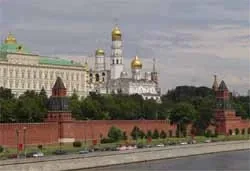
Moscow – the most expensive city in the world
Moscow has overtaken Tokyo and became the most expensive city in the world. This is stated in a report based on an analysis of the situation in 144 major cities worldwide. Moscow's rise by three places was facilitated by a jump in real estate prices. Second place in the list went to Seoul, which took fifth place last year. Third place went to Tokyo, fourth to Hong Kong, fifth to London. Life turned out to be cheapest in Asunción, the capital of Paraguay.
Italy to legalize Ukrainian migrants
Before autumn, the Italian government plans to grant the right to work to 460,000 illegal migrants from non-EU countries. A significant part of them are Ukrainian citizens. This was reported by Giorgio Alessandrini, a representative of the Italian State Council for Economics and Labor, at the conference 'Ukrainian Immigration in the New European Context,' held last week at the Ukrainian Catholic University in Lviv.
According to Giorgio Alessandrini, about half a million permits for the legalization of immigrant labor are requests from Italian employers. At the same time, the government itself had planned to issue three times fewer permits. There will be no general legalization, as there was in Italy in 2002, the professor added.
In turn, according to sociologist Natalia Shegda, Ukrainians are fourth in number among all labor migrants in Italy. 'At the beginning of 2006, according to the Italian Ministry of Internal Affairs, 117,000 Ukrainians were registered, but the Ukrainians themselves claim that there are at least 600,000-700,000 of them,' the expert noted. The overwhelming majority of labor migrants are from Western Ukraine.
European Union 'handed over' to America information on airline passengers
The European Union has agreed to provide the United States with detailed information about passengers flying from Europe to the United States. The agreement on transferring personal passenger data as part of the fight against terrorism was concluded back in 2004, but last month the European Court annulled it due to a legal technicality.
EU diplomats at a meeting in Brussels decided that the essence of the new agreement would remain the same, but its legal basis would change. According to one of the diplomats, the agreement will be signed by October - by the time the existing agreement expires.
Earlier, members of the European Parliament expressed concern that the transfer of passenger data violates their privacy rights. However, the European Court's ruling of May 30 challenges only the legal framework of the agreement, which has been in effect for two years.
The document will require ratification by EU member states, but it may be put into effect before the ratification process is completed. Washington expressed confidence that the EU will overcome legal difficulties and that the court's ruling will not affect passenger traffic from European countries to the United States.
European Union to force US diplomats to obtain visas
The European Union will force American diplomats to obtain visas to work in European countries if the US does not agree to visa-free entry for all EU citizens, reports the British newspaper The Guardian. This concerns new EU members in Eastern and Central Europe, whose citizens still have to apply for entry visas when visiting the US.
Of the old 15 EU members, only Greeks need to obtain US visas. As for new EU members, visa-free regime applies only to Slovenian citizens. A European Commission representative stated in this regard that the US should recognize the new borders of the European Union not only at the political but also at the practical level, ending discrimination against new EU members.
On June 21, a one-day US/EU summit took place in Vienna with the participation of George Bush, who planned to smooth over differences between partners that arose after the start of the operation in Iraq. The EU representative noted in this regard that the US visa policy depends on the number of troops sent by a particular country to Iraq or Afghanistan. He cited Poland as an example, for which visa restrictions may soon be relaxed because it actively participates in operations in Afghanistan and Iraq.
Earlier, Americans explained the maintenance of the visa regime for new EU members by the fact that more than three percent of their citizens applying to the US embassy receive visa denials. In addition, according to American diplomats, the number of citizens of these countries staying in the US with expired visas remains high. The lack of biometric passports in some countries also plays a role.
Europeans dissatisfied with water on their beaches
The European Union conducted a check of seawater quality on its beaches before the peak tourist season. Its results unpleasantly surprised local officials. 'Some violations have been recorded in every one of the 20 European resorts, especially on lakes and rivers,' said EU Environment Commissioner Stavros Dimas. This is especially relevant for our compatriots, because Europe is the most popular destination this summer for tourists who have decided to vacation abroad.
The dirtiest beaches, according to Dimas, are in Poland and Malta. The commissioner did not specify what violations were recorded in these countries. However, it is known that the water was checked for the presence of coliform bacteria (E. coli), as well as fuel oil and oil, and foam from cleaning and detergent agents. 'Their entry into the body can cause vomiting, skin problems and breathing problems,' Dimas explained.
You can relax on the beaches of Greece without any concerns for your health. All sea beaches and beaches on inland waters here meet minimum cleanliness criteria. That is, some violations do occur, but they do not harm human health. And 98% of local beaches also meet the maximum requirements. On the coast of Spain, 99% of beaches meet the minimum requirements, and just over 92% meet the maximum. Italy is in third place: 94% of its beaches meet the minimum set of criteria, and 92% meet the maximum.
The EU commissioner did not provide a detailed report on other countries, but based on his speech, one general piece of advice can be given: it is better to vacation on the sea coast, since only 65% of beaches on rivers and lakes within countries are considered clean. "This is due to the fact that we are unable to control what happens within a country, and the authorities do not want to wash their dirty linen in public," Dimas said.
Prostitution partially banned in Finland
Finland's parliament passed a proposal to partially ban prostitution by an absolute majority. From now on, a man may be charged with having sex with a prostitute and paying for her services, but only if the woman is a "victim of procuring or human trafficking." In this case, the client faces six months in prison or a large fine.
In neighboring Sweden, a law banning the purchase of everything that priestesses of love can offer has existed since 1999 and takes into account all aspects of the sex trade. The act of purchase itself is criminal, regardless of whether the woman offers herself independently and voluntarily, through intermediaries, or under coercion. At the same time, the prostitute herself, one way or another, remains a "victim" in the eyes of justice.
The Finns decided to take a different path, or rather, to soften the "Swedish model" for male buyers. Many commentators on the new regulation, both in Finland and Sweden, are truly puzzled: how will the court prove that a client, while using the services of a prostitute, knew that she was being forcibly coerced into selling her own body? It turns out that a man must first ask the "night butterfly" in detail about what brought her to the street, who specifically advised her such activity, whether she is a victim of forced debt repayment or "slave trading."
Europe is currently talking a lot about unifying laws concerning prostitution, but different traditions and, above all, religions prevent EU countries from uniting on this issue. By the way, after the Swedish innovations of 1999, organized activity in this area, as Swedish newspapers wrote, "flowed from the streets to the Internet," where it became almost impossible to control. The only "plus" was the flow of reports from citizens who suspected that "illegal sex" was being practiced in one or another neighboring apartment.