
Photo: Ukrinform
Anti-globalists and WTO gather in Hong Kong
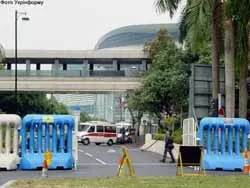
Representatives of all 149 WTO members and many non-governmental organizations arrived at the Sixth Conference of the World Trade Organization, which is taking place from December 13 to 18 in the Special Administrative Region of Xianggang (Hong Kong). Anti-globalists also honored the event with their presence, forcing organizers to set up barricades.
In Estonia, the number of residents without citizenship is decreasing
According to the Estonian Citizenship and Migration Board, the number of people who received Estonian citizenship through naturalization has for the first time exceeded the number of residents who have not yet decided on their citizenship, RIA Novosti reports.
As reported by the office of the Minister for Population Affairs, Estonia's active citizenship policy is the foundation of the high rate of naturalization in Estonia. "The number of people who have not decided on their citizenship has decreased from 33% to 10% compared with the first years after Estonia restored its independence. These figures also indicate that previously widespread perceptions of excessively difficult exams for obtaining citizenship are beginning to fade," said Minister for Population Affairs Paul-Eerik Rummo.
According to the minister, auxiliary materials for passing exams on knowledge of the Constitution and Estonian laws should be distributed more widely, and consultations should be organized for all those who wish. "Next year, very favorable opportunities will open up for this thanks to European Union projects, which will not only increase the distribution of information materials but also enable 10,000 citizenship applicants to complete Estonian language courses free of charge," Rummo stated.
Currently, there are 136,533 people living in Estonia who still do not have citizenship of any country, and 137,617 people who have received Estonian citizenship through naturalization.
Turkey's "dry law" may extend to resort Antalya
Serious disputes have flared up in Turkey over authorities' plans to extend the ban on alcohol sales to the resort province of Antalya. They propose creating special "drinking areas" there, analogous to Europe's "red light districts."
The ruling Justice and Development Party (AKP), led by Prime Minister Tayyip Erdogan, which has partially succeeded in introducing the "dry law" in the state catering sector, justifies its initiatives by saying that the ban on alcohol consumption will contribute to strengthening the family and protect young people from bad influence. "What is happening is causing extreme concern. The AKP, despite the negative reaction from public organizations and the media, continues to persist in the known direction. This approach is based on the ideology of fascism," said Deniz Baykal, leader of the Republican People's Party (CHP), in an interview with the newspaper Milliyet.
"This is a matter of freedom. A person has the right to decide for himself what kind of life to lead. Those who make such decisions (banning alcohol sales) have no idea about human rights and do not understand the negative consequences such bans may have for the region's economy," the opposition leader noted.
Omer Meli, the CHP representative in Antalya, in turn said that the plans being nurtured by the ruling party "reveal its true face." "The decisions made by the AKP will lead the country to a Sharia regime," he said.
The intentions of municipalities controlled by the AKP to ban alcohol sales have caused serious concern among representatives of the tourism industry. "Antalya is a tourism region. If we provide services to tourists coming from all over the world, we are, of course, obliged to provide services related to alcohol sales," said Osman Ayk, head of the Mediterranean Region Hotel Owners' Union, to journalists. He recalled that "the Turkish Riviera" is visited by more than 10 million tourists a year, generating income exceeding $9 billion.
Austria has settled with Nazi victims
Austria has completed paying compensation to Nazi victims who were employed in forced labor on its territory during World War II. The total amount of payments was $350 million, which was received by 132,000 former forced laborers or their descendants.
These amounts were paid by the Austrian Reconciliation Fund, which was financed by the government and Austrian businesses. A similar fund was created in Germany, which is to complete payments within six months.
The Austrian Fund offered different levels of compensation depending on the status of Nazi victims. Former slaves received $9,000; forced laborers employed in industry received about $3,000; and those whose labor was used in agriculture received $1,700. In total, about one million people from occupied territories were deported to Austria, which had been annexed by Nazi Germany, during the war.
Red Cross approves new emblem
In Switzerland, representatives of 192 countries signed a document introducing the third official emblem of the International Committee of the Red Cross and Red Crescent - the Red Crystal - into official use, Reuters reports.
The adoption of the new emblem will allow Israel to join the international charitable organization. Previously, that country categorically refused to join the Committee, believing that both of its emblems too strongly resemble religious symbols of Christians and Muslims.
Swiss diplomat Didier Pfirter, who oversaw negotiations on the adoption of the new emblem, said: "The protocol is signed. Unfortunately, this decision was not unanimous, but the overwhelming majority of countries voted in favor." Some Muslim countries opposed the adoption of the new symbol, which they regarded as a concession to Israel.
Washington adopts ban on smoking in public places
The Washington City Council overwhelmingly approved a ban on smoking in bars, restaurants and other places of work and recreation. However, Mayor Anthony Williams said he might not sign the bill.
The council voted 12 to one in favor of the ban. Under the law, smoking is still allowed on outdoor areas of bars and restaurants, in private hotel rooms, and in tobacco shops.
Belgian Liege named most crime-ridden city in EU countries
The city of Liege, located in western Belgium, has been named the most crime-ridden city in the European Union member states. According to a special European Commission study, the average number of recorded crimes in Liege is 256 per thousand residents.
For comparison, in Brussels the figure is 153, in Paris - 146, in London - 61, in Madrid - 38, in Vienna - 29, in Riga - 26.
The study was based on data for 2001 on more than 250 cities provided by 25 current EU member countries.