
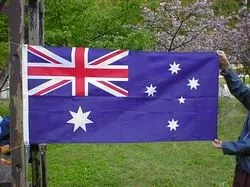
Australia to accept 20,000 immigrants
Australia has announced that it will soon accept 20,000 qualified foreign specialists. According to the BBC, this is the largest overseas recruitment campaign since the 1960s.
Australia needs auto electricians, bricklayers, doctors, car mechanics, accountants and representatives of some other professions. Special informational exhibitions will be organized in London, Berlin, Amsterdam and Madras to attract the needed personnel.
"First we plan exhibitions in these cities. Next year we hope to organize something similar in other cities of the world, in accordance with the information we will have by then," said Abdul Rizvi, a representative of the immigration department. According to him, the Australian government "will search everywhere for people with specialties needed by the country."
Australia is often criticized for its too strict immigration policy. However, as commentators note, there is currently a very large shortage of labor in Australia, and this could undermine the country's economic growth.
In the 1950s and 1960s, Australia conducted a large-scale campaign to attract immigrants from Great Britain. About a million people agreed to move then.
Ukraine abolished visas for all US citizens
President of Ukraine Viktor Yushchenko made a change to his decree of June 30, 2005, "On establishing a visa-free regime for citizens of the United States of America," reports Interfax-Ukraine.
Now Article 1 of this decree reads as follows: "Establish from July 1, 2005, a visa-free regime for entry into Ukraine and transit through it for American citizens, if the period of their stay in Ukraine does not exceed 90 days." Previously, the visa-free regime was established for US citizens if they, within six months from the date of their previous entry into Ukraine, re-visited Ukraine for a period of no more than 90 days.
From September 1, 2005, Ukraine introduced a visa-free entry and transit regime through its territory for citizens of the EU, Switzerland, and Liechtenstein, if the period of their stay in Ukraine does not exceed 90 days. In response, all European Union countries agreed to grant the European Commission a mandate to negotiate the liberalization of the visa regime with Ukraine. Countries such as the Czech Republic, Estonia, Latvia, and Slovakia began issuing free visas to Ukrainians from May 1 to August 31. In July of this year, Ukraine also introduced a visa-free entry regime for Japanese citizens.
Tourist numbers in Spain increased
The number of foreign tourists in Spain has increased, but tourism revenues in the country continue to decline, reports RIA Novosti. As Deputy Minister of Trade and Tourism Pedro Mejía stated at a press conference in Madrid, in the first seven months of this year Spain was visited by 31 million 450 thousand tourists from abroad, which is 6.1% more than in the same period of 2004.
According to him, thanks to this, a new record for the number of foreign holidaymakers has been set in the country for the first time since 1999. Mejía noted that among foreign tourists in Spain, the British rank first, Germans second, and French third. Their favorite holiday destinations are the seaside resorts of the autonomous regions of Catalonia, the Balearic and Canary Islands, and Valencia.
At the same time, according to Spanish statistics, the volume of spending by foreign tourists in Spain has decreased. Tourism revenues, which five years ago accounted for 17% of Spain's gross national product, have now fallen to 12%. Foreigners coming to the country save more because prices in the country are rising by an average of 7% per year. Tourists are increasingly less likely (in 2005, 5.9% less than in 2004) to buy tours, looking for cheaper accommodation. In addition, more and more often (in 38% of cases) they choose low-cost charter flights of foreign airlines.
Syria banned smoking on public transport
Syria's Ministry of Transport has banned smoking on all types of public transport. This decision was made by the Syrian transport authority, reports RIA Novosti. From now on, smoking is prohibited on buses, planes, trains, and ships belonging to Syrian transport companies, as well as at all bus and railway stations, airports, and seaports.
Such a measure, according to ministry officials, was taken in the interests of employees working in the transport sector as well as passengers, and is intended to reduce the harm caused by smoking to citizens' health and the environment. In addition, according to the ministry's decision, it is now forbidden to sell cigarettes and other tobacco products on transport and in all institutions related to transportation.
The ministry plans to place posters with social advertising in its buildings and on transport, calling for giving up smoking and informing about the dangers of cigarettes. Ministry employees and all subordinate institutions have been tasked with monitoring strict compliance with the decision.
Britons to swap the euro for a few penny coins
Britain has announced the start of an open competition for the design of the reverse of the 1, 2, 5, 10, 20, and 50 pence coins issued by the Royal Mint, reports the Daily Telegraph. The new design will have to "reflect modern Britain" and will appear on the coins only if approved by the UK Chancellor of the Exchequer Gordon Brown. The winner of the competition, in which anyone can participate, will receive 30,000 pounds sterling.
The current design of the listed coins was created in the late sixties in preparation for the transition to the metric system, which took place in 1971. The twenty-pence coin appeared a little later, in 1982. The one-pound and two-pound coins will not be changed, as their redesign was carried out relatively recently.
The task practically does not limit the imagination of designers, however the Royal Mint notes that heraldry has long been an important part of images on British coins, and perhaps it is worth using it creatively on the reverse of coins. In addition, the subject matter of images may include, for example, UK landmarks, as well as symbols of political, social and cultural achievements.
The announcement by the mint, according to opponents of the introduction of the euro, shows that Britain does not intend to use the single European currency in the near future, since there is no point in spending large sums on replacing coins if they will be displaced by the euro anyway.
The Treasury, in turn, notes that changing the design of coins has nothing to do with the government's policy on joining the euro, since if such a transition does occur, it will have sound economic grounds.
Chinese tourists are the most 'aggressive buyers'
Upon arriving in a foreign country, it may at first seem that domestic tourists are exclusively engaged in shopping, while Chinese tourists are exploring landmarks. But in reality this is not entirely true. According to statistics, Chinese tourists have the highest purchasing power, reports Travel.ru.
Moreover, in recent years they have fallen into the category of 'aggressive buyers', buying up absolutely everything - from clothes on sale to expensive antiques. The policy of Turkey's advertising campaign in Asian countries is such that shopping is pushed almost to the forefront among other tourist temptations. And this is not surprising. If 30 years ago Arabs were considered the richest tourists, now it is the Chinese economy that is recognized as the fastest developing in the world. And although shopping in China has always been at approximately the same level as Turkey, the Chinese themselves prefer to make purchases outside their homeland. Sometimes it reaches anecdotal situations when an avid buyer, stopping during a tour near some statue, asks: 'Is this for sale?'
Moldova banned the sale of second-hand clothing
The Moldovan government has banned the import of used clothing into the republic since September 1. As ITAR-TASS reports, Deputy Prime Minister Valerian Cristea told journalists about this. He justified this government decision by the danger of the spread of infectious diseases among users of this clothing, which enters the republic in the form of 'humanitarian aid'.
'Humanitarian aid from foreign countries in the form of used clothing must arrive in the country in a civilized way. Charitable organizations should be directly involved in its delivery, and the coordination of this activity should be handled by the agency for material resources, public procurement and humanitarian aid,' said Cristea. He also reported that 'the government will give companies selling used clothing the opportunity to sell their remaining stock until the end of February 2006. 'After this period, the sale of such clothing in the country will be banned,' the Moldovan deputy prime minister emphasized.
The association of small businesses of the republic opposed the decision of the Moldovan government to ban the sale of used clothing. Its representatives told journalists that the ban would hit the population, more than 60% of which buys second-hand clothing. The association intends to hold protest actions. Businessmen are also preparing a counter-proposal to the government - to allow the trade in used clothing on the basis of a special entrepreneurial patent.
_