
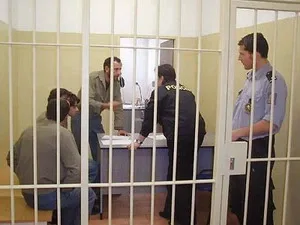
The bill applies to those who arrived in the country before April 1, 2001. 2,300 people whose cases were deemed most serious have been allowed to stay. However, the majority of refugees will either have to leave the country voluntarily within the next three years or wait for deportation.
The parliamentary majority supports these plans. However, many prominent members of Dutch society oppose them, including the Council of Churches and a number of mayors. “Many refugees live in critical conditions. They have physical and mental problems, their families are destroyed, and it is unsafe in their homeland,” says a letter from the Council of Churches to the government. The well-known human rights organization Human Rights Watch also condemned the bill. “Among these immigrants are people from Afghanistan, Somalia and Chechnya,” said Human Rights Watch representative Diederik Lohman. “There is a risk that if they return, these people will be subjected to violence or repression. They should not be deported.”
Since the Middle Ages, the Netherlands has been considered the cradle and stronghold of liberalism. By the 17th century, the Golden Age of Holland, the country had become a favorite destination for refugees from all over the world and had finally gained a reputation as the most liberal country in Europe. Up to half (and in some places significantly more - for example, in Leiden) of the population of large cities were foreigners.
Who are refugees in modern Holland? They are foreigners who, on the basis of the Geneva Convention on Refugees (1951), fear persecution in their own country due to religious or political beliefs, nationality, race, or membership in a particular social group. Anyone seeking asylum - with family or alone, with or without documents, with money or destitute - first ends up in a special box behind barbed wire, where they are interrogated. They tell terrible stories - real or imagined - about life in their home country, an interpreter translates, specialists check and recheck their stories, and so on for several days.
If the asylum seeker is not caught in an obvious lie, they are transferred to a camp. There they have their own room or apartment, a kitchen where they can cook national food, a shop, pocket money, a school where they immediately begin to teach them Dutch. Psychologists and charitable organizations visit refugees. They sometimes spend years like this waiting for a residence permit. Those who have gone through this path call the first days a total nightmare, almost Gestapo, and talk about the time spent in the camp as a strange time without a future - status may be granted, or may be refused. To stay in Holland, these people were ready to do a lot. After the tightening of refugee admission rules, they will have it even worse.
However, the Netherlands did not limit itself to expelling refugees and almost simultaneously introduced laws tightening the rules for admitting foreigners to work.
There are several reasons for "tightening the screws" in Europe. These include the threat of terrorist cells appearing along with immigrants, and the spread of crime. But the most important problem is related to the enlargement of the European Union: on May 1, ten new countries will be admitted to the EU - Hungary, Cyprus, Latvia, Lithuania, Malta, Poland, Slovakia, Slovenia, the Czech Republic and Estonia. The ninth wave of new Europeans from the East, poorer and eager for work, is already eroding the former hospitality of the old-timers of a united Europe.
The European Commission even proposed including biometric data in the passports of citizens of EU member states. Previously, digital photographs and fingerprints were planned to be introduced only for visas of foreigners entering the European Union. The Commission hopes that new passports will appear at the end of 2005.