
Can this return be considered triumphant, and a diploma from a Chinese university or business school a guarantee of a successful career? Arguments for and against - in a review by the magazine "Career".
Who, where, and for how much?
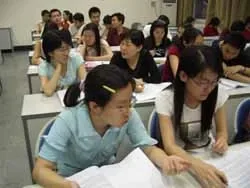
According to the Ministry of Education of the People's Republic of China, over the past 20 years China has sent about 320,000 of its citizens to more than 100 countries and received more than 340,000 foreigners. Currently, about 85,000 people from other countries are studying in China, and by 2007, it is expected that there will be 120,000. Over 80% of "laowai liuxuesheng" (foreign students) are from Asian countries (every second one from South Korea), the rest - Americans and Europeans - roughly equally. Every tenth student in Beijing is a foreigner.
The Chinese government not only generously sponsors the education of its citizens abroad (in 2004, 4,150 grants were issued, in 2005 - 7,245), but also supports foreigners (6,163 grants in 2004). According to various estimates, about 2-2.5 thousand Russian students study in China. Of these, about 100 are "through state channels", within the framework of exchange quotas between the educational departments of the two countries (by the way, the lion's share of quotas is taken by children of Russian diplomats and representatives of other government agencies).
Just 20 years ago, the total number of foreign students in China did not exceed 8,000. The number of incoming students began to grow rapidly in the 1990s, and China hopes that this trend will continue at least until 2008. According to representatives of the Ministry of Education of the PRC, the reason for the growing interest in studying in China is most likely the phenomenal growth of the country's economy and the understanding that knowledge of the Chinese language significantly expands career opportunities. The increased flow of foreign students also reflects the growing interest in China as a historical and cultural center of Asia.
By the way, in recent years, departmental restrictions on the admission of foreign students have been lifted. Now universities can independently recruit students from abroad without asking the government for permission. In practice, this means that any foreigner can apply to one or another higher education institution in China and enroll there on a general basis (to the best universities - on a competitive basis, applying for a grant or immediately preparing for paid education).
More than 390 universities have a certificate for teaching foreigners. The leaders in the number of foreign students are Beijing Language and Culture University (quota - 9,112 foreigners per year), Fudan University in Shanghai (3,324), and Peking University (4,189). By the way, these higher schools are the best in the PRC.
What career prospects attract our students to China's higher education? Most compatriots go to study the language (the majority choose a one-year internship), sometimes the language and foreign trade. Such a "symbiosis" is typical of linguistic universities, which have special faculties for foreigners studying both Chinese and a specialty at once. Importantly, after a year of preparation, all subjects begin to be taught in Chinese.
Studying in China is cheaper than in most foreign and even capital universities. Average rates are $2,500-3,000 per year (in elite universities several times more expensive); a month of study at language courses will cost about $420-450. The "expenses" item should also include accommodation (a place in a standard double room in a dormitory costs $700-800 per semester) and food (about $200 per month).
Working on a student visa is prohibited, but most foreign students find ways to circumvent the ban. However, with rare exceptions, the work is temporary or one-off (translations, teaching a foreign language, or, typical for China, participation in filming various commercials and TV series).
Who lives well in the Celestial Empire
Today, young people from America and Europe consider China one of the most favorable labor markets. A senior manager at an international company here can earn up to $100,000, and not per year, but per month! But it is worth remembering: according to research by McKinsey & Company, no more than 10% of specialists produced in China, for example, in foreign economic activity, can be considered sufficiently qualified to work in large corporations. And this is the key indicator of the quality of higher education...
The Prospects.ac.uk portal, popular among English-speaking students, warns future graduates: in China, it is easier for foreigners to find jobs as English teachers (Russians, in this case, try to pass as native speakers) than in any other specialty. Much less often there is an opportunity to break into the media, trade, and joint ventures; this often requires personal connections.
Despite the fact that Chinese companies are looking for candidates with good managerial and communication skills, which the local population lacks due to mental characteristics, they prefer to see Chinese people in junior and middle management positions, preferably those with a foreign education and work experience abroad. But for a leadership position in the representative office of a multinational company, they may "bring in" an expat from the head office. Or find a specialist on the spot, from among those already working in other Chinese firms.
Those who have managed to find work in the PRC will have to go through the bureaucratic procedure of obtaining a work permit and the corresponding visa. In 2004, according to official data, there were about 60,000 workers from other countries in China (unofficially, several times more). These are mainly people from Japan, the USA, South Korea, Germany, and Singapore, employed in management, marketing, production, finance, services, and education.
China for Russians
Irina Shipilova, one of the coordinators of marketing activities of Chinese universities in Russia, believes that if for the European part of the Russian Federation knowledge of Chinese is an exotic accessory with vague prospects of application, then in Siberia and the Far East it is already necessary. “Residents of these regions, knowledge of Chinese and China gives new opportunities for employment and career growth. But people go to China not for diplomas, but to communicate with native speakers, learn about the philosophy of education and adapt to the mentality of the nation, which gives an advantage over those who are far from Asian culture.”
What can a graduate of a Chinese university who wants to work in the Celestial Empire expect? On a specialized forum, of more than 200 job advertisements in China, about 40% are positions for office managers, business assistants, as well as accountants and lawyers, tourism managers, quality control and logistics, purchasing/sales and client relations, marketers. Another 25% are offers for translators, guides and escorts. In addition, there is a need for heads of representative offices or company representatives in China (15%), models “for filming in movies and advertising” (5%), teachers of music, dance, painting, physical education (5%), as well as programmers offering the creation of online stores, web developers, English/Russian teachers, engineers, designers, dancers, musicians, waiters and even... Ded Morozes (10%).
Summing up
For those who plan to connect their career with China, a successful start requires not so much a Chinese diploma as a good knowledge of the language, experience working with Chinese people, understanding of their business culture and mentality. A year spent on a language internship at a Chinese university is the minimum without which it is hardly possible to get by. Everything else depends on your personal abilities, as well as the ability to be in the right place at the right time.
This opinion is also shared by Tuyana Rodionova, a graduate of the Shanghai business school CEIBS (the school ranks 21st in the world according to the Financial Times rating). She and some of her foreign classmates worked for two or three years in Chinese offices and at enterprises of international corporations. Then they were sent to study in executive programs (including MBA and Diploma in Management) at CEIBS, the best business school in China. Moreover, at the expense of employers. By the way, for those who planned to part with Asia sooner or later, the program helped them change Roche in China for Roche in Switzerland or Palmolive in China for L'Oreal in Paris.
In other words, with a diploma from a truly good business school - even if Chinese, but meeting Western standards - the radius of your possibilities will multiply, especially if you do not intend to spend your whole life in China. But even if you do not want to part with the Celestial Empire, a diploma from such a school, combined with excellent knowledge of English and Chinese, will help you rise to new corporate heights.