
Crossroads of Rimini
Italy is very diverse, and everywhere it is the best. Where to go in early summer: to Liguria or Rome? To Naples or Venice? The road maps of Italy - is there a more fascinating solitaire in the world? They beckon with names that resonate in the soul like music. Thus Julius Caesar once thought, looking at the map of Italy. Caesar made his choice by crossing the Rubicon. Should we not follow his example? Especially since the Rubicon River is located in places beautiful and convenient for traveling to the most tempting cities of Italy - near the famous resort of Rimini, in the Emilia-Romagna region.
Emilia-Romagna got its name thanks to roads. Via Emilia, built in 187 BC by consul Marcus Aemilius Lepidus, leads from Rimini to Milan. It strung Bologna, Modena, Parma and Piacenza along its path. Etruscan traders and Roman legionaries walked along this road, and Julius Caesar walked along it across the Rubicon towards his glory. Via Romea is not so straightforward: winding along the Adriatic coast, it leads to the ancient temples and Byzantine mosaics of Ravenna, to the canals of Venice. "The Pilgrims' Way" - that is how its name is translated. Once upon a time, pilgrims wandered along it to worship the Eternal City.
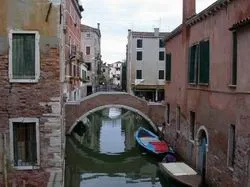
These two roads meet in Rimini to dissolve in the radiance of summer, in the serenity of the sea and in the quiet rustle of fountains. They meet at a bridge thrown across a river that has long ceased to be a river and serves only as a mirror for the red fortress walls and colorful fishermen's houses, serves as a haven for yachts and barges, a home for wild ducks and white swans. But most importantly, it remains a backdrop for the white stone arches of its bridge. The Bridge of Tiberius, built 2,000 years ago, still serves faithfully: it honestly connects the historic center with the fishing quarter of San Giuliano.
On Piazza Tre Martiri stands a monument to Julius Caesar: here he delivered his famous speech about the choice made. Oh, Julius Caesar made the right choice: on the entire coast there is no resort as charming as Rimini. Its wide promenades are filled with wind and sun, and parks with birdsong, its exquisite villas are immersed in flowers, and shady streets are always ready to share coolness. Its medieval center with narrow streets, with time-worn cobblestones of squares, is full of surprises. It preserves palaces and fortresses, ancient churches with frescoes by Vasari and strange brickwork of walls.
Near the bronze Caesar, at the crossroads rises a marble arch. This portal, called the Arch of Augustus, has entered its third millennium. The arch was erected in honor of Emperor Octavian Augustus, the chief builder of ancient Roman roads. One of them begins here - Via Flaminia. Gently winding among the hills, it leads from Rimini to Rome. Pilgrims also walked along Via Flaminia - this is reminded by a monument near the village of Saludecio. However, warriors also galloped along this road: it was here, at the junction of Romagna and the Marche, that the border between the possessions of the Dukes Malatesta and Montefeltro passed.
From Rimini, from the crossroads of roads, you can leave along each of them - any journey through Emilia-Romagna will give amazing discoveries and vivid memories. Along these roads you can reach the peaks of the magic triangle: Rome, Florence and Venice.
Via Emilia
There is no point in going from Rimini to Milan or Parma. But it is worth driving to Bologna (114 km). The Emilia road leads further and further from the sea, leaving mountains on the left, and on the right unfolding views of the great Po Valley. There, in lush gardens, sweet pears ripen, ripe figs burst on the branches, and green kiwis fill with juice. And in deep cellars, in the dungeons of castles, cheese matures, and velvet-thick Sangiovese wine matures to accompany it on the feast table.
We pass ancient Cesena, the city of faience Faenza - and find ourselves in Bologna. What nicknames has this city been honored with! It is La Rossa ("Red") - because of the pink houses and tiled roofs. It is also the Learned - because of the oldest university in Europe, opened in 1088. It is also Porticata - because of the arcade streets, the total length of which is 45 km. The city became like this in the 13th century, when residents expanded houses by adding floors with arcades. Another nickname for Bologna is La Grassa, which means "plump". And what else could the gastronomic capital of Italy be?
Bologna is incredibly charming. Arcade streets save from sun and rain, cross the space with shadows and highlights, play with chiaroscuro. Under their painted vaults hide shop windows and restaurant tables. Narrow streets lead to squares with palaces, to ancient churches with sculptures by Bernini and Michelangelo. Piazza Maggiore is adorned by the Basilica of San Petronio, the patron saint of the city. It was built for 300 years, but was never finished - the facade remains only half faced with marble. The "leaning" towers bend over the old city. They were built by the most noble and wealthy families, and in the Middle Ages 180 towers rose above the city. Now there are 23 left. Torre Garisenda in its shortened form has a height of 50 m with a lean of 3 m. Once it struck the impressionable Dante, and he described it in the "Divine Comedy". Next to Garisenda is the 100-meter Asinelli with a slight lean - the "tower of donkeys". From its height opens a panorama of Bologna.
Via Flaminia
Via Flaminia leads into the mountains, to the famous "Rimini hills". On the hills stand ancient castles, fortified cities and even the dwarf state of San Marino. Here 800 years ago Dante traveled, collecting legends and impressions.
"Montefeltro" - written on the map is the name of a mountainous region. We climb higher and higher along the serpentine road, and our obliging imagination paints not Roman legionaries, but stern Dukes of Montefeltro in scarlet cloaks on black horses, with a retinue of brave knights. They appear in the sunny haze, silently looking at uninvited guests, and their flags flutter above the crenellated walls of towers, and coats of arms with an eagle adorn the heavy gates and stone arches. On road signs, village names replace one another: Mondaino, Montegridolfo, Saludecio. And these villages themselves - mysterious, ancient - emerge on the summits.
The capital of this country is the city of Urbino, which once housed one of the most brilliant courts in Europe. Even now it amazes the imagination: the ducal palace with tall and elegant round towers, narrow streets climbing steep slopes, the echo carries the clatter of hooves and the neighing of horses. Raphael was born here, Pietro della Francesca worked here, here time stopped 600 years ago, when Federico da Montefeltro, enriched in battles, built his dream - his perfect city.
Part of Via Flaminia is called the "panoramic road" - for the stunning views that open from it. It leads from the seaside Pesaro to the village of Gradara. Gradara was owned by Montefeltro's neighbor and enemy - the lord of Rimini, Duke Malatesta. A love story took place in the castle of Gradara - and what is Italy without love? Duke Malatesta had two sons. He decided to marry the elder one to the daughter of the lord of Ravenna, the beautiful Francesca. However, Giovanni was not young, lame, and ugly. So that the girl would not flee from the altar, they presented the younger brother, the handsome Paolo, for her acquaintance. Needless to say, they fell in love at first sight! However, on the wedding night, instead of the stand-in Paolo, the real husband appeared to Francesca. The lovers began to meet secretly. But the laws of the genre demand blood - and it was shed. Once, during a rendezvous, a husband appeared from a hatch in the floor and killed both. Five operas, a symphony, and a tragedy by d'Annunzio have been written about this story. But Dante was the first to tell it. According to his version, Paolo and Francesca did not unclasp their embrace even in hell. This story happened in the 13th century, but since then little has changed in Gradara. Tourists are shown the castle and the place of action - Francesca's room. By the way, ironically, the last refuge for Dante, exiled from Florence, was given by Francesca's nephew - the lord of Ravenna Guido Novello da Polenta. There, in Ravenna, Dante is buried.
Via Romea
The Pilgrims' Road is the most cheerful: bright sun, densely populated Adriatic beaches, hot roofs of Rimini and Riccione, the peaks of the Apennines melting in the hot haze, a postcard sky overturned into the sea, rainbows hanging in the spray of fountains and children splashing. Along the road stretch resort towns with their beaches, parks and water parks, dolphinariums, discos and "Italy in Miniature". 150 km of sandy beaches, palm-lined embankments and childish delight with which we run to meet the sea, to meet the gentle Adriatic wave.
Rimini - the city of Federico Fellini and Duke Malatesta - is considered the capital of this happy life. From it stretches a continuous chain of resorts: elegant Milano Marittima with villas under the flat crowns of pines and hotels on the beach. Cesenatico with a canal built by Leonardo da Vinci and a museum of ancient fishing boats at the mouth of the canal. Riccione with fashionable boutiques, whose windows are updated earlier than in Milan. Luxurious Cattolica and musical fountain - designer Alberta Ferretti is diligently turning it into the best resort in the world. Respectable Pesaro with the Rossini Theater and the house where Rossini was born. They are very different, these little towns, but they are united by the captivating spirit of real resort life, happy and carefree.
If you break out of their captivating captivity and allow Via Romea to take you north, very soon completely different landscapes will begin. We will again find ourselves on the Po Valley - in its widest part, facing the sea. Through it flows the great river Po, dividing into branches, leaving room for lakes and space for imagination. There, in the straight canals, fishing huts with flags of nets are reflected, in the morning haze the towers of castles and campaniles appear, there blue lagoons catch the reflections of clouds, and pink flamingos fly over the water, shining in the sun.
If you do not want to inspect the mosaics of Ravenna, allow yourself just one stop - at the ancient abbey of Pomposa. In the cool church, the floor is laid with ancient Roman mosaics, and marble columns decorate the lancet windows of the campanile. And on the walls frolic Novgorod white lions and Sirin birds. Next to the abbey there is a small tavern, whose owner collects sand from all corners of the Earth.
But the main treasure of the Earth awaits ahead: Via Romea leads to Venice. The best thing is to arrive in Venice by sea, so as not to drive past a monstrous industrial zone and not to stand in a traffic jam on a narrow road. Leave your car in the harbor of Chioggia and take a scheduled motorboat there - it will bring you to the San Zaccaria stop not far from San Marco. Venice will open to you from the water, it will slowly grow above the lagoon, above the San Marco canal, above all your past life. And your heart will skip a beat, anticipating a miracle, and the miracle will arise between water and sky, and become close, tangible, real.
Perhaps this day in Italy will seem to you the most important or even the only one. Venice will remain in your heart, in your dreams, in the shimmer of Murano glass. But then everything will fall into place. And for a long time you will remember the sunny beaches of Rimini and the pink palaces of Bologna, the sky-high towers of Urbino and the painted houses of Saludecio. Before your eyes will arise the arrow of Via Emilia, stretched across the plain, and the bends of Via Flaminia, tightening the kilometers with tight loops, and the narrow Via Romea leading to Venice.