
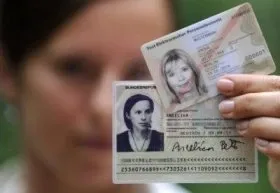
New identity cards (ePA) no larger than a credit card
This voluntariness for decades has meant a free choice between a cheap (but bad) or prestigious (but expensive) apartment, buying groceries at an organic store or a discount supermarket, and more recently, using the old international passport (which entails the need to apply for visas to enter certain countries) or the new "biometric" one, which allows almost everything but costs a pretty penny.
Since last year, according to a decision of the Bundesrat, German citizens have been offered to voluntarily acquire new identity cards (ePA), no larger than a credit card, and surpassing that card in terms of applications: a photograph stored on a microchip, fingerprints (optional) and an electronic signature guarantee the consumer a simple and accessible scheme for virtual correspondence with authorities and secure online shopping. With the help of the new Ausweis, its owner can clearly identify himself not only in person but also on the Internet, which will significantly hinder fraud.
The German federal government allocated seven million euros for a television advertising campaign intended to lead citizens to the idea of replacing their old identity cards with new, electronic ones. The testing of the ePA by respected entrepreneurs cost 80 million: mail-order companies (in particular, the book retail giant Amazon), the insurance company Allianz, some airlines, and even the Schufa agency for monitoring the financial reliability of citizens. Many of them quickly realized the benefits of using electronic documents, and therefore already now offer their holders preferential conditions compared to "conservatives" who prefer paper passports and standalone credit cards.
In February of this year, the Free Democratic Party criticized the plans of the "senior" coalition partner, citing the "untimeliness" of the transition to the ePA due to the difficult financial situation in the country and proposed postponing the innovation by about ten years. "The not yet fully proven security will cost the consumer too much," said the party's vice-chairwoman Gisela Piltz, pointing to the need to check the "overall financial sense" of the reform. The liberals, rapidly losing the sympathy of the electorate after coming to power, made the right move by pressing on the voter's sore spot – financing a mythical project from the taxpayer's pocket, while also securing support from the opposition (for the future, in which the "yellows" may not be entirely on the same path as the CDU/CSU bloc).
"As an exception, the Free Democrats came up with a good idea," admitted then Jan Korte, domestic policy expert of the Left Party, and spoke in favor of supporting the liberals' idea at all levels. The Greens went even further – they provided a mathematical justification for the liberal démarche. As reported by Korte's colleague from the eternal environmentalists, Wolfgang Wieland, the Consumer Protection Association estimates approximate annual costs for the electronic identity card at 40 million euros and does not guarantee complete security when concluding virtual transactions, because "hackers are always one step ahead of the law."
The criticism fell on deaf ears. As the head of the German Interior Ministry de Maizière claims, the "mini-computer in the wallet" guarantees reliable protection against forgery for at least ten years – that is the validity period of the new domestic passport costing 28.80 euros. And few listen to the dire promises of computer experts from the hacker association Chaos Computer Club, who claim that they can read data from a passport lying in the owner's pocket without coming closer than two meters. Read and, of course, copy – to conduct illegal internet transactions, or even something more dangerous. Much more important is that the current 8 euros for an identity card (only 20% of which went to the treasury of the issuing municipal services) did not cover the work of civil bureau employees. Now, thank God, everything will be resolved to the great satisfaction of the bureaucracy.
Nobody is forcing German citizens to replace their current identity card with the "technical novelty" by November 1st: the old Ausweis is valid until the end of the period indicated on it. It's just that many services, including virtual mail-order and Schufa, will limit their services in the coming months to only those customers who have an "electronic" signature. So the innovation – like many others in Germany – threatens to become voluntary-forced.
Elena OBODOVSKAYA.
Russkaya Germaniya