
And I'm going for Ayurveda
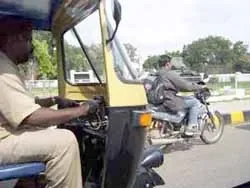
It is best to explore the country's most popular tourist coastline on a moped (200-300 rupees per day without petrol), which can be rented on every corner here. The obstacles to a breezy ride will be broken unlit roads, local daredevils, and the absence of traffic lights and signposts. It is safer and calmer to use the services of an auto-rickshaw or taxi. For a reasonable sum, they will take you to any point in the state, wait as long as required, and bring you back.
People go to South Goa for comfort, quiet, and Ayurvedic treatments. Most hotels are four- or five-star: sedate European families and wealthy Indians come here. However, within a week you could die of boredom here, even if you are a diving enthusiast - through the murky water you will see nothing but boring sand. And although the staff is still far from European standards, Indians try very hard. In one of the hotels, nameplates are hung on room doors, for example "Apartments of Mr. Ivanov" - you must admit, that is pleasant. On a guest's birthday, a small cake will definitely be brought, though sometimes the dates get mixed up.
Less respectable North Goa is lively and dynamic. People with high demands are not recommended to go here: the vast majority of hotels are three-star or less; in them you will be offered a room of varying degrees of neatness with a refrigerator, air conditioner, bathroom, and tea-and-coffee set. You can stay in a villa, apartments, or a flat. Lovers of secluded recreation rent basic bungalows ($5-10 per day) on the most beautiful beach of Palolem. Here, for 500 rupees (if you bargain), local fishermen will take you to see dolphins.
For a long time Goa was a Portuguese colony; independence was gained only in 1961. Therefore, Catholics make up almost half of the state's population, and there are as many Catholic churches as Hindu temples. There are few architectural sights in Goa; worthy of attention are, for example, the Basilica of Bom Jesus with the relics of Saint Francis Xavier, the Church of St. Francis of Assisi, and the Hindu temple of Shri Mangeshi. They are all in Old Goa, which is easier to reach on your own.
By train, bus, or taxi you can get to the neighboring state of Karnataka, where the ruins of Hampi are located - the capital of the once powerful Vijayanagara Empire (350 km from the border with Goa). The buildings date from the 13th-15th centuries, and there is indeed plenty to see - this is the real India. Karnataka also has the Bengal tiger reserve.
Breaking into Bollywood
You can also pop over from Goa to Mumbai (Bombay). The flight takes only one hour. Mumbai is a relatively new city (founded by the British in the 17th century), and tourists seeking antiquity have basically nothing to do there. But to understand that Goa is truly India-light, it is worth flying there. As banal as it sounds, Mumbai is indeed a city of contrasts. You will rarely see such a mixture of poverty and wealth as in Mumbai. Take, for example, the Colaba district, home to the city's most expensive hotel, the Taj Mahal (a standard room about $250 per day), with a Louis Vuitton boutique on the ground floor and rooms overlooking the embankment and the Gateway of India triumphal arch. The luxury ends half a meter from the hotel entrance - on the same embankment, homeless people sleep sprawled out and it smells of excrement. You can go on an excursion to Bollywood (Mumbai is considered the center of India's film industry), but it will not bring any special impressions. The film studio consists of several hangars in which the filming process moves sluggishly, and you most likely will not be allowed to watch it. Sometimes light-skinned tourists are invited to participate in a film, and they are even paid a fee - from 500 to 1,000 rupees per day of shooting. It is far more interesting to arrange your own tour of the city by auto-rickshaw, stopping at places that interest you; the driver will also come in handy when visiting the Kalbadevi and Bhuleshwar bazaars, otherwise you will get lost.
By moving about 40 kilometers away from Bombay, you can also find antiquities. For example, the Kanheri Buddhist cave monastery. Many generations of monks carved out the temple complex from the 2nd to the 9th century AD.
Do Without Spices and Crocodiles
Returning to Goa, it is better to decline the sightseeing tour of Panaji (without any special attractions), the spice plantation (tourist jungles trampled by visitors), and the crocodile farm (crocodiles do not live in Goa). The exception is the most expensive excursion - a two-day trip to the jungle. Tourists who have passed the inevitable test of spices will be sent to a camp consisting of several clay houses (amenities are minimal, but you can spend one night), pens for elephants and oxen, and a kitchen. However, even in such a confined space, you can break away from your fellow travelers to chat with the manager of this enterprise, a black man named Pete. Over a game of billiards (the table is crooked, the cues are even crookeder) and a bottle of beer, he will tell you what an elephant can be bought for in India, what music Goan youth listen to, and why tourists cannot be shown these very reptiles on the crocodile excursions. The two-day program includes elephant and ox riding, a trip to a village, an evening by the fire with Goan dances, a tug-of-war in the company of an elephant, a night hike with torches to a Hindu temple, a morning trip to a waterfall, a yoga session at the same temple, and swimming with elephants. Cons - the hours-long gathering of tourists from hotels. Pros - where else will you sit right on an elephant that douses you with water from its trunk. The feeling is: I am the king of the world!
Seedy places are concentrated in the north of Goa. In the Cubana club, the crowd is mostly European, entry costs less than $10, for which you can get drunk on local alcohol, get a massage session, and fall into the pool - which is mainly what Russian tourists do. In Paradiso, they play Goa trance, and the clients are fans of mind-expanding substances. The disco is located on the seashore on a small elevation, from where you can see the mat-covered shore and old women in saris selling tea, water, and chicken eggs. It is better to find out about the location of the next impromptu trance party, which takes place right on the seashore each time in a new place, on Anjuna beach - the most hippie in Goa. This is a very strange and colorful place: nine out of ten beach characters look like Bob Marley, and French, Americans, Spaniards, Germans, English, Portuguese, huddled in small groups, smoke joints in broad daylight, although drugs are completely banned in India.
If you go a little further into the coastal coconut grove, you will come across a rickety shack around which about 50 mopeds are "parked" - another sure sign of a hippie hangout. Uninitiated people had better not stick their noses in there. Once a week, on Wednesdays, a flea market bustles and boils here. Sellers of scarves, saris, spices, drums, elephants, and Goa trance CDs come from Goa and neighboring states. Making your way through the rows of all sorts of stuff, you feel like at least Indiana Jones in Cairo. As soon as you ask the price of some trinket, a string of other nearby traders immediately lines up behind you, and each one humbly waits his turn to offer his goods. Here, for 50 rupees, with professional help, you can wrap yourself in a sari, take a photo, and unwrap yourself back. You can also meet an Indian double of Elvis Presley giving a concert in a hastily set up cafe. Similar events take place in Mapusa (on Fridays) and Arpora (a daily night market open until midnight).
Angry People Are Not from Goa
Any European resort would envy Goa's level of safety - walking alone on the streets even late at night is completely safe, as is a lone fair-faced girl visiting every disco without exception. You can lose your belongings only in some hotels, so it is better to leave all valuables in the safe. There is a risk of being robbed right on an excursion to a waterfall: the robbers will be monkeys. Walking through coconut groves, watch your head: according to statistics, 5% of deaths in Goa are caused by ripe coconuts falling on the head.
The population in Goa is very, very friendly. Every passerby considers it their duty to shout "Hello!" at you and smile radiantly. At first this is perceived as fawning: for Goans, you are just a tourist, a source of income. But on the second day you realize that people in Goa are sincere like nowhere else in the world, although no one is immune to sideways glances even here. "People with evil faces are definitely not from Goa. They come here from other states to gawk at European women," locals explain. And understandably so: such a number of décolleté girls with bare navels is not to be found anywhere else in India.
Goa Facts
* Credit cards are accepted only in large shopping malls, expensive restaurants in the state capital Panaji, and four- or five-star hotels. You can withdraw money at any branch of UTI Bank, of which there are plenty in Goa. Identifying signs are a white-and-red pavilion with a mandatory guard at the entrance. Telephone and Internet access in Goa are literally at every step.
* Goan food is much simpler than Indian food. Mostly it is vegetables prepared in various ways. If you are worried about your stomach but want to try seafood, ask the cook to grill it, but without spices and fat, which, as a rule, only spoil freshly caught fish. Indians especially love chickpeas, which they try to use in almost every dish - even in appetizing pastries similar to samosas, the filling is made of chickpeas mixed with pepper. The popular Indian puri flatbreads exist in two versions: for themselves, Indians roll out mixed flour, butter, salt, and a lot of pepper to the thickness of a sheet of paper, then put the circles in a deep fryer, where they puff up and take on the appearance of a well-beaten pillow - pretty, but barely edible. "Tourist" flatbreads are richer and less fatty and spicy.
* The national drink of Goans is feni vodka made from cashew nuts, similar to moonshine. The drink has an unpleasant property: containers that have held this liquid cannot be used for anything other than feni, as they are soaked with a most terrible, indescribable smell. Indians coming to Goa from other states may leave feni dishes in a hotel room if they do not like the service. It will be problematic to settle a new guest in a room that smells of feni. Goans are mastering dishes of Russian cuisine - borscht, cutlets, dumplings, which are served both in small cafes on the shore and in five-star hotels, but the results of the experiments so far leave much to be desired.
* In almost every cafe and restaurant you can (and should) wash your hands, but it is even better to bring antibacterial hand gel with you. Drinks with ice are best excluded from your diet. God only knows what water was used to make it.
* On any beach you can get dreadlocks braided, get a massage, buy silver bracelets (of lousy quality). You can even get your ears cleaned. The cleaning tools resemble gun ramrods, but judging by the review book that every "cleaner" has, daredevils can still be found.
* Indian tea is better to buy not at markets but in shops. Buying it from hands, there is a risk of getting tasteless chaff. We recommend packs marked Masala. This is traditional Indian tea with spices - ginger, basil, cloves, cardamom, cinnamon, etc.
* A reminder of the colonial past - majestic mansions in Chandor, built by the Portuguese. For 50-100 rupees, which will go towards restoration, you can visit Braganza House, built in the 17th century. Guides around the house will be members of the Braganza family. On the neighboring street there is another mansion, whose Indian part is more than 500 years old, while the part built by the Fernandez family is just under 200. An underground tunnel leads from the house to the river.
* You can practice yoga and reiki, and get an Ayurvedic massage session not only on the beach, but also in a more civilized manner, for example at the Purple Valley Yoga Centre in Anjuna. Ayurvedic massage - 500 rupees, yoga lesson - 400.
* Drugs, including soft drugs, are banned throughout the country. If you are caught even with a small portion of hashish, you face up to 10 years in prison. However, most offenders get off by bribing a police officer.