
This curious document accompanies a letter to Rostourism signed by the Chief Sanitary Doctor of the Russian Federation Gennady Onishchenko, which states that cases of exotic diseases brought by tourists from abroad continue to be registered in Russia. Here, evidently for added drama, they tell of some tourists from Bashkortostan who contracted cholera after a trip to India, where they washed fruit with tap water and bathed in the Ganges River.
Perhaps it was for such 'extremists' that the 'Memo for those traveling abroad' was written, which tour operators and travel agencies are strongly advised to give to everyone. Indeed - what if someone again wades into the sacred waters of the Ganges?
And to prevent all the foolishness that a reckless tourist might commit, the memo contains obscure recommendations and prohibitions.
'Before your trip, prepare and carry a first-aid kit that will help you with minor ailments, save you time searching for medicines and avoid problems communicating in a foreign language,' the document says. The advice seems reasonable, but each country has its own list of prohibited drugs. And a naive tourist might not even think that some familiar 'headache' pill found during customs inspection could lead to deportation or even prison.
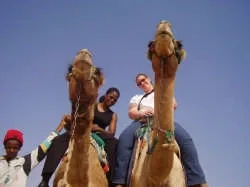
Next - about staying in the country. 'Do not touch cats, dogs or other animals! This is dangerous in almost all countries. If you come into contact with an animal and are bitten, scratched, or simply slobbered on, thoroughly wash that part of the body with soap and water.' Fine, you can simply shy away from cats and dogs. But where do you get soap and water urgently if an act of slobbering happens, say, during a camel ride in the desert?
'When relaxing outdoors, it is necessary to avoid contact with animals... wear clothing with long sleeves, trousers, boots with tight gaiters or socks, use repellents. In the evening and at night, use an electric flashlight even in cities.' Well, the outdoors can be dealt with, although it would be better to clarify that they mean wild nature, not cultivated forest parks. But the 'flashlight even in cities' brings to mind 'Night Watch' and the call 'Everyone come out of the twilight.'
Further: 'Eating is permitted only at designated food outlets where products of guaranteed quality from industrial production are used.' What is this about? Nowadays, nobody can guarantee the quality of products - even if they are industrially produced. And who is supposed to designate these food outlets? Then there's more: 'It is forbidden... to consume traditional national cuisine.' How can that be? In Japan without sushi? In Ecuador without mate? In Kenya without maize?
Or: 'Swimming is permitted only in pools and designated bodies of water. It is forbidden to lie on the beach without a mat, or walk on the ground without shoes.' The sea and ocean as 'non-designated bodies of water' are excluded, even if there is a hotel beach. And lying without a mat is generally harmful. And walking without shoes is indecent.
The document ends with the pompous 'Remember - your health is in your hands!' This phrase can also be interpreted in two ways. On the one hand, take care of yourself. On the other, drowning people's rescue is the work of the drowning themselves. In that case, the meaning of this memo is quite questionable. Or perhaps not. After all, the proper authorities charged with caring for tourists can now give themselves the appropriate checkmarks.